
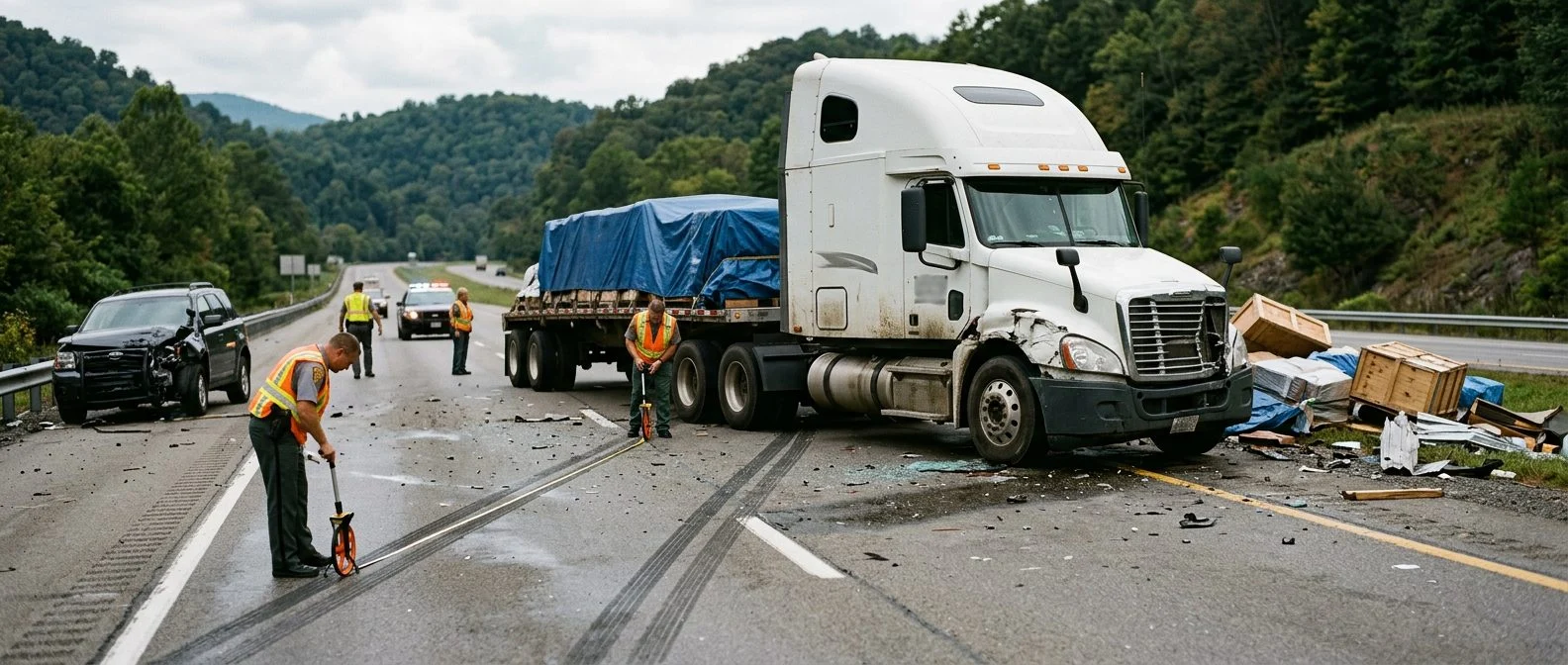
Owner-Operator Truck Accidents · West Virginia
Hurt in a Truck Crash With an Owner-Operator? Learn Who May Be Responsible
An owner-operator crash can involve the driver, the company that leased the truck, and others. Big Bubba Injury Law helps families across West Virginia sort out the details in a free case review.
Published October 24, 2026
An owner-operator truck accident in West Virginia can involve more than one responsible party. The driver, the company that leased the truck, and sometimes a broker, shipper, or maintenance company may each play a role. Who is responsible depends on who controlled the truck, the load, and the schedule when the crash happened.
What an Owner-Operator Truck Crash Is and Who It Affects
An owner-operator is a driver who owns or leases a commercial truck and hauls freight, usually under a lease to a motor carrier. The motor carrier is the company that holds the operating authority. You can often find its USDOT number painted on the truck.
That split creates paperwork and questions. The driver’s name may appear on one set of documents and the carrier’s name on another. The truck’s owner, the company that dispatched the load, and the company that loaded it can all be different. After a crash, each one may point to someone else.
This page is for people hurt in these crashes and for families who lost someone, including:
- Drivers of cars and pickups hit by a semi
- Passengers in any vehicle involved
- Pedestrians and cyclists struck by a commercial truck
- Families in wrongful death cases
Crashes happen on busy interstates such as Interstate 79 and Interstate 81, and on winding mountain roads. If you’re dealing with one now, the firm offers a free case review. It is confidential, with no obligation to continue.
If a leased semi truck hurt you or someone you love, you may have a claim, and the firm can review what happened with you. Talk it through with Big Bubba — the first case review is free, confidential, and carries no obligation.
Why a Leased Driver’s Status Does Not End the Carrier’s Responsibility
Leasing a truck does not automatically remove responsibility from the company that uses it. Federal rules tie the carrier to the equipment it operates.
A carrier may use a truck it does not own, other than through an equipment interchange under § 376.31 or under the exemptions in subpart C, only if it meets the conditions in 49 CFR § 376.11, starting with a written lease. The written lease must meet the requirements contained in 49 CFR § 376.12, which include clearly specifying who is responsible for costs such as fuel, tolls, and detention (waiting time at loading or unloading). It must also say who loads and unloads the freight (49 CFR § 376.12). Federal law also lets regulators require a carrier to control and be responsible for leased trucks as if it owned them (49 U.S.C. § 14102).
A signed lease does not settle the question alone. The firm looks at how the arrangement worked on the day of the crash. Who assigned the load? Who set the pickup time and route? Who could tell the driver to keep going? Those facts often matter more than the title on a form.
Many people assume only the driver can be held responsible. That assumption can leave out a company with real control over the trip.
Parties Who May Be Held Responsible
The driver, the leasing carrier, and sometimes a broker, shipper, or repair company may each share fault. Which of them is responsible depends on what caused the crash.
- The driver. Unsafe driving, such as speeding, distraction, impairment, or fatigue, can make the driver responsible.
- The leasing carrier. A carrier can answer for its own choices in hiring, training, supervising, and dispatching drivers. It can also answer for trucks it controlled.
- Hours-of-service violations. Federal rules require carriers to have drivers record duty status with an electronic logging device (49 CFR § 395.8), but a motor carrier may require a driver to record duty status manually instead of using an ELD in the situations that section lists. Logs showing a driver was over the limit can be key evidence. Logs showing a driver was over the limit can be key evidence.
- Maintenance and equipment. A repair shop or inspector may be responsible if faulty work contributed to brake, tire, or steering failure.
- Load and cargo. A shipper, broker, or loader may share responsibility when an unsecured or overweight load contributed to the crash.
Jackknife crashes and rollovers, including those involving coal or water trucks, can raise these same questions. The firm looks at each party’s role separately.
Evidence That Shows Who Controlled the Truck and the Load
The strongest evidence shows who directed the trip, who maintained the truck, and how long the driver had been working. That evidence can disappear quickly, so early action matters.
Key records include:
- The lease agreement and any amendments
- Bills of lading and dispatch messages showing who assigned the load
- Electronic logging device data and driver logs for the day of the crash
- Inspection, maintenance, and repair records for the tractor and trailer
- Police reports, photos, and scene records
- Insurance certificates and the USDOT and operating details on the truck
Carriers must keep driver records of duty status and supporting documents for at least six months from the date of receipt (49 CFR § 395.8). That short window is why preservation matters. The firm can send preservation requests to the carrier and other parties, asking that records and the truck be kept.
If you can do so safely, photograph the truck’s door, DOT number, and trailer number. Keep medical records and notes from every appointment.
Insurance Questions After an Owner-Operator Crash
Several insurance policies may apply after an owner-operator crash. Federal and state rules set limits on some of them.
The carrier must have that coverage in effect before operating (49 CFR § 387.7). Carrier policies may be larger than this minimum.
West Virginia also caps one type of damages in certain commercial motor vehicle cases. Under W. Va. Code § 55-7-32, in a civil action for personal injury or wrongful death involving the operation of a commercial motor vehicle that requires a commercial driver’s license, compensatory damages for noneconomic loss that each injured or killed person can recover from the employer defendant may not exceed $5 million for each occurrence, regardless of the number of claims or theories of liability. The section applies only to causes of action arising after its July 1, 2024 effective date, and starting January 1, 2026, that limit rises each year with the Consumer Price Index, up to a ceiling the statute sets. The cap is not available if the employer lacks at least $3 million in commercial motor vehicle insurance for that occurrence. It also does not apply in several situations, including when an operator or driver is found to have operated the vehicle in excess of the allowed hours of operation.
Insurers may contact you early. You can speak with the firm before giving a recorded statement or signing papers.
How the Firm Handles These Claims, Step by Step
The firm starts with a free case review, then works to identify responsible parties and preserve evidence. It presents the claim to insurers and files suit when needed.
- Free case review. The firm listens to what happened and reviews any papers you have. The review is confidential and carries no obligation to continue.
- Identify responsible parties. The firm looks at the driver, the leasing carrier, and any broker, shipper, or maintenance company.
- Preserve evidence. The firm sends preservation requests for logs, dispatch records, maintenance files, and the truck.
- Investigate liability and damages. This includes medical records for serious injuries such as traumatic brain injury or spinal cord injury. For families, it includes records of wrongful death losses.
- Present the claim. Some claims settle through talks with insurers. Others need a lawsuit.
West Virginia generally requires a personal injury lawsuit within two years after the right to sue arises (W. Va. Code § 55-2-12). In a wrongful death case, the personal representative of the deceased person’s estate brings the action and generally must commence it within two years after the death, subject to W. Va. Code § 55-2-18 (W. Va. Code § 55-7-6).
The firm handles car accidents, truck and commercial vehicle accidents, catastrophic injuries, traumatic brain injury, spinal cord injury, and wrongful death. We serve all 55 West Virginia counties, including Charleston, Huntington, Morgantown, Wheeling, Martinsburg, Parkersburg, Beckley, Clarksburg, Fairmont, and Weirton. Support staff help with records and scheduling.
Not sure what your next step is?
Talk it through with Big Bubba — the first case review is free, confidential, and carries no obligation.
Frequently Asked Questions About Owner-Operator Truck Crashes
Here are short answers to common questions about these crashes.
Can I sue the owner-operator driver?
Yes. A driver can be a responsible party for his or her own unsafe driving. The firm reviews the driver’s role alongside the carrier’s.
Can the leasing trucking company be responsible too?
It can be, especially when it controlled the truck and the trip. Federal lease rules help show how that control worked.
How does West Virginia’s fault rule affect my claim?
West Virginia uses comparative fault, which measures each person’s share of fault as a percentage (W. Va. Code § 55-7-13a). Your own share can reduce what you recover.
What if a broker arranged the load?
A broker or shipper’s role in a crash depends on how the load was arranged and handled. That depends on how the load was arranged and handled.
How long do I have to file?
A wrongful death action must be commenced within two years after the death of the deceased person, subject to the provisions of section eighteen, article two, chapter fifty-five (W. Va. Code § 55-7-6). W. Va. Code § 55-7-6 reads: “The provisions of this section shall not apply to actions brought for the death of any person occurring prior to July 1, 1988.” A personal injury claim is generally subject to two years under W. Va. Code § 55-2-12.
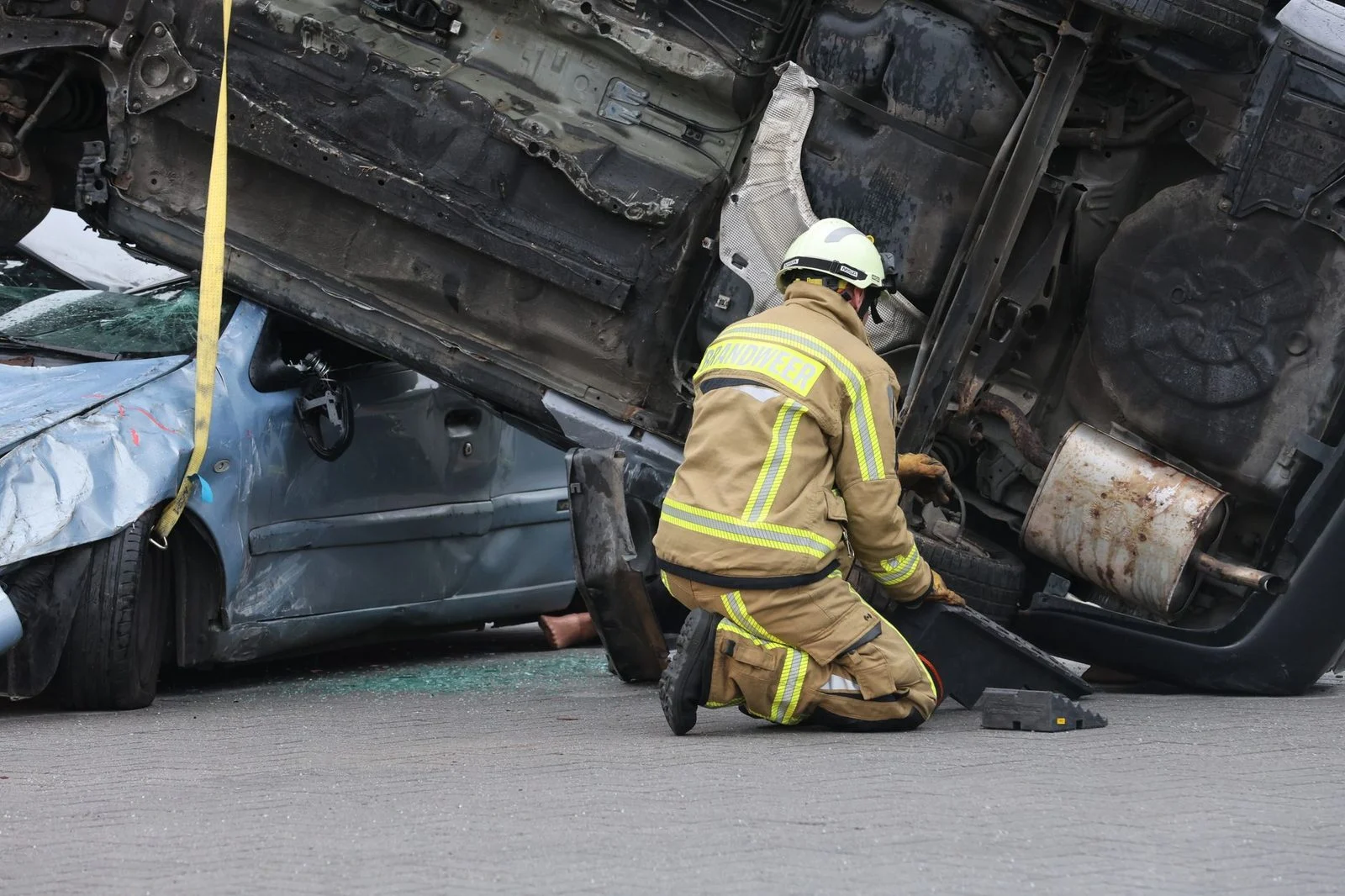
If an Owner-Operator Truck Hit You or Someone You Love
If a leased semi truck hurt you or someone you love, more than one company may be responsible. Serious injuries, long hospital stays, and brain or spinal cord damage make these decisions harder. Logs, dispatch records, and the truck itself may still be in the carrier’s hands, so acting while those records exist helps protect the facts. If a leased truck has put you or your family in this position, tell the firm what happened and let its team review your situation with you.