
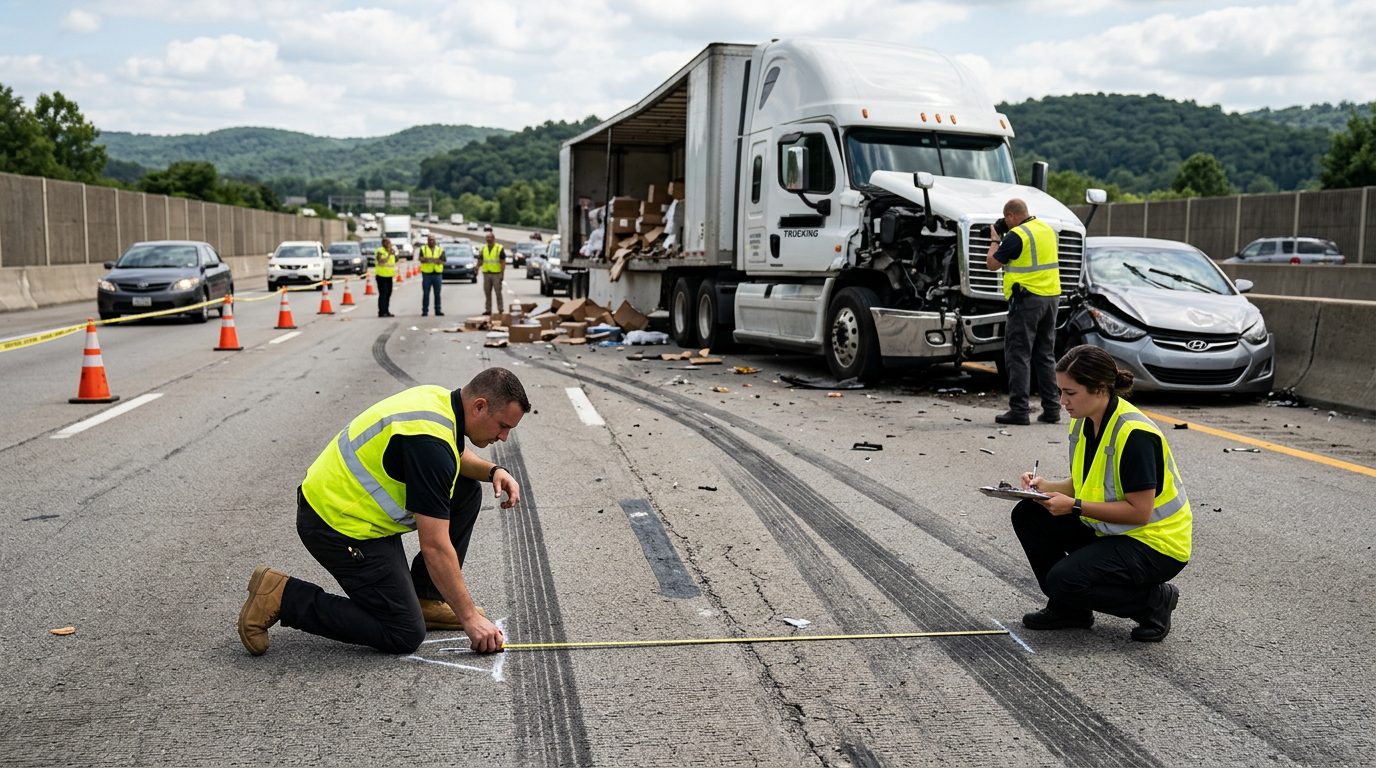
Tow Truck Accidents | West Virginia
Hurt in a Tow Truck Crash? Talk With Big Bubba Injury Law
We represent people injured in tow truck, truck and commercial vehicle crashes across West Virginia, including families in wrongful death cases. Start with a free case review.
How the firm can help after a tow truck crash
Commercial vehicle focus
We handle car accidents, truck accidents and commercial vehicle accidents, including crashes involving tow trucks and the businesses that operate them.
Serious injuries
We handle catastrophic injuries, traumatic brain injuries, spinal cord injuries and wrongful death cases.
Families included
We represent families who have lost a loved one in a crash and want to understand their options.
Reach out directly
Call the firm or request a free case review to tell us what happened.
Published October 22, 2026
For a tow truck accident lawyer West Virginia residents can reach, the first question is who may be responsible. A tow driver is not always the only party. The company that sent the driver, the equipment owner, the loader, and other drivers can each share fault. Big Bubba Injury Law represents people seriously hurt in car and commercial truck crashes, catastrophic brain and spinal cord injuries, and families in wrongful death cases. We serve Charleston, Huntington, Morgantown, Wheeling, Martinsburg, Parkersburg, Beckley, Clarksburg, Fairmont, Weirton, and communities across the state.
What a Tow Truck or Car Hauler Crash Involves
A tow truck or car hauler crash involves a vehicle built to move other vehicles. These vehicles fall into three groups:
- Tow trucks and wreckers: trucks with a winch or lift that pull disabled or wrecked cars.
- Flatbed and rollback carriers: trucks that carry a vehicle on a flat or tilting bed.
- Car haulers, or auto transport trailers: large trailers that carry several vehicles at once.
These crashes often happen where traffic is already slowed or confused. Common settings include highway shoulders, lane closures, the scene of an earlier wreck, loading and unloading in traffic, and narrow rural roads.
People hurt in these crashes include drivers and passengers in the disabled vehicle, tow operators working on foot, and other motorists. A crash with a tow vehicle often raises more questions than a standard two-car collision.
Not sure what your next step is?
Talk it through with Big Bubba — the first case review is free, confidential, and carries no obligation.

Who Can Be Held Responsible
Several parties can share responsibility, and the facts decide which ones. Possible parties include:
- The tow or hauler driver. Unsafe backing, poor lane position, or missing warning lights can make a driver responsible.
- The equipment owner or maintenance contractor. A failed winch, hitch, or trailer part may point to whoever owned or serviced it.
- The party that loaded the vehicle. On a car hauler, an improperly secured car that shifts can cause a crash.
- Other drivers. A driver who cut in, braked suddenly, or ignored the scene can share fault.
Under W. Va. Code § 55-7-13c, each defendant generally pays only its own share of fault. The same section makes a defendant jointly and severally liable when its drunk or drugged driving is a proximate cause of the harm.
Evidence That Shows Who Caused the Crash
The evidence that shows fault usually sits in the police report, the scene, and the company’s records. Key items include:
- The police crash report, including the officer’s notes on traffic control, vehicle positions, and citations.
- Photos and video of damage, warning lights, cones, and road conditions.
- Dispatch logs, trip records, load papers, and driver hours.
- Maintenance and inspection records for the truck, winch, hitch, or trailer.
- Driver qualification and training files.
- Witness names, dash camera footage, and medical records that connect injuries to the crash.
Federal rules can set the standard for some of these records. For car haulers, 49 C.F.R. § 393.128 provides that automobiles, light trucks, and vans weighing 10,000 pounds or less must be restrained at both the front and rear to prevent lateral, forward, rearward, and vertical movement using a minimum of two tiedowns.
Injuries and Losses These Claims Can Cover
These claims can cover medical costs, lost income, and the long-term effects of serious injury. Common categories include:
- Traumatic brain injury, including concussions and injuries that change memory, thinking, or personality.
- Spinal cord injury, including paralysis and care needs that last for years.
- Broken bones and internal injuries that need ongoing treatment.
- Economic losses: medical bills, rehabilitation, lost wages, and reduced ability to earn.
- Non-economic losses: pain, suffering, and emotional distress, documented through medical and counseling records.
For wrongful death, W. Va. Code § 55-7-6 allows damages for sorrow, mental anguish, and solace. It also covers lost income and services, care and hospital expenses, and reasonable funeral expenses. W. Va. Code § 55-7-32 provides that, in a civil action for personal injury or wrongful death involving the operation of a commercial motor vehicle requiring a commercial driver’s license, the maximum amount recoverable by each person injured or killed against the employer defendant as compensatory damages for noneconomic loss may not exceed $5 million for each occurrence, regardless of the number of claims or theories of liability. Starting January 1, 2026, and each year after that, this limit increases to account for inflation by an amount equal to the Consumer Price Index published by the U.S. Department of Labor, up to no more than 150 percent of the $5 million amount. This limitation is not available to an employer defendant that does not have commercial motor vehicle insurance in the aggregate amount of at least $3 million for each occurrence covering the personal injury at issue. Under W. Va. Code § 55-7-32, this section does not apply if the civil action involving a commercial motor vehicle arises from an incident for which an operator or driver is found to have: operated a commercial motor vehicle with an alcohol concentration of .04 or more, as defined in §17E-1-14 of this code, at the time of the incident; refused to submit to testing required under state law following the incident; operated a commercial motor vehicle under the influence of any controlled substance, other drug, or inhalant substance at the time of the incident; operated a commercial motor vehicle in excess of the hours of operation established under state or federal regulations at the time of the incident; operated a commercial motor vehicle in willful or wanton disregard for the safety of persons or property at the time of the incident; operated a commercial motor vehicle loaded in excess of the maximum gross vehicle weight rating, not including when legally operating under a permit issued under §17C-17-11 of this code; or operated a commercial motor vehicle while engaging in one or more acts that constitute distracted driving as set forth in §17C-14-15(e) of this code.
How West Virginia Fault and Filing Rules Apply
West Virginia reduces recovery by an injured person’s share of fault, and it bars recovery only in limited cases. Under W. Va. Code § 55-7-13c, your fault does not bar recovery unless it is greater than the combined fault of everyone else. If it is less, your recovery is reduced by your percentage of fault.
Deadlines matter. A personal injury claim generally must be brought within two years after the right to sue begins, as stated in W. Va. Code § 55-2-12. A wrongful death action must be brought by the personal representative and commenced within two years after the death, subject to the provisions of section eighteen, article two, chapter fifty-five, under W. Va. Code § 55-7-6. W. Va. Code § 55-7-6 reads: “The provisions of this section shall not apply to actions brought for the death of any person occurring prior to July 1, 1988.”
Whether these rules change the outcome depends on the facts of each crash.
What to Expect After You Reach Out
The process starts with a free case review, then moves to fact gathering, evidence requests, and either settlement talks or a lawsuit.
- Request a free case review. It is confidential and carries no obligation to continue.
- Share what happened. Include the date, location, vehicles involved, treatment received, and any police report number.
- Review the facts. The firm identifies possible responsible parties, including the tow or hauling company and its insurer.
- Send preservation letters and records requests so key evidence is kept.
- Develop liability and damages. This can take months, and longer when several parties or serious injuries are involved.
- Negotiate or file suit, depending on the facts and the parties’ positions.
Early timing can also matter. W. Va. Code § 55-7-11a limits settlement contact during the first twenty days after an injury, when the injured person is a hospital inpatient or is partially or totally unable to engage in usual work; the limit does not prevent an advance payment toward the liability, which is credited against any damages later found due.
Not sure what your next step is?
Talk it through with Big Bubba — the first case review is free, confidential, and carries no obligation.
Common Questions About Tow Truck and Car Hauler Crashes
Can I hold a tow company responsible if its driver caused the crash?
Often, yes. The company that employs or dispatches the driver may be a party, depending on who hired, sent, and supervised that driver.
Can I still have a claim if I was partly at fault?
In many cases, yes. Your recovery is reduced by your share of fault, and it is barred only if your fault is greater than everyone else’s combined.
Does a police report decide who is at fault?
No. The report is important evidence, but it does not settle fault on its own.
Do federal trucking safety rules apply to every tow truck?
Not always. Coverage depends on the vehicle and the trip, and the firm reviews those details.
Can a family file a wrongful death claim after a tow truck crash?
Yes. The personal representative brings the claim, and it generally must be filed within two years after the death, subject to other provisions of the law and exceptions that may apply (W. Va. Code § 55-7-6).
Should I talk to the tow company’s insurer before I contact a lawyer?
Be careful. A recorded statement or quick offer can affect your claim, so contact the firm for a free case review before giving one.
How the Firm Can Help With Your Tow Truck Crash Case
Big Bubba Injury Law is a tow truck accident lawyer West Virginia families can contact about these claims. The firm handles car and commercial truck crashes, catastrophic brain and spinal cord injuries, and wrongful death cases statewide.
If a tow truck or car hauler crash left you injured, or took a family member, you may have a claim against more than one party. Tell the firm what happened and request a free case review to learn which parties may be responsible and what deadlines apply.