
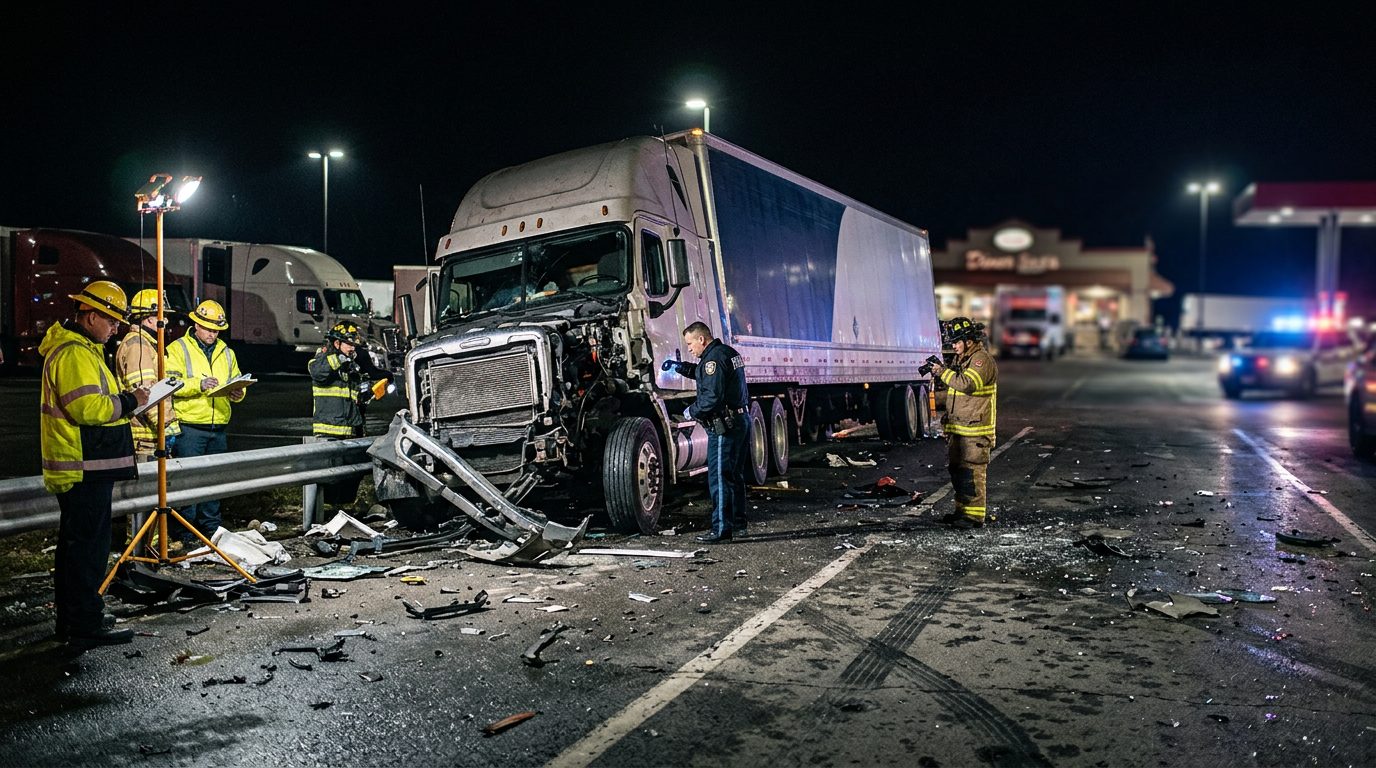
West Virginia Truck Crashes
Truck Brake Failure Crash in West Virginia: Key Questions
Brake problems can be one cause of a serious truck crash. Here is what families and injured drivers often ask, and how the firm can help you sort out your situation.
Published November 7, 2026
Brake failure can be one cause of a serious truck crash in West Virginia, but whether it played a part depends on the facts of each case. People hurt in these crashes, and families of those who died, often ask what brake trouble looks like, what causes it, who may be responsible, and which records matter. This guide answers those questions in plain language and explains why the first steps matter.
What Brake Failure Can Look Like in a Truck Crash
Brake failure often shows up as a truck that does not slow or stop the way it should. Drivers and witnesses may describe a soft or long brake pedal, a burning smell from overheated brakes, or a truck that keeps gaining speed on a downgrade. Many commercial trucks use air brakes, which press the brake parts together with compressed air. If air pressure drops or a brake fades, the truck may take longer to stop. Federal rules require commercial vehicles to stop from 20 miles per hour within a set distance, as shown in the federal brake performance rules. Some drivers report brake trouble before a crash, and that report can matter. These signs alone do not establish the cause, because similar symptoms can come from different problems.
Not sure what your next step is?
Talk it through with Big Bubba — the first case review is free, confidential, and carries no obligation.

What Can Cause Brakes to Fail on a Commercial Truck?
Brake trouble may trace back to wear, air leaks, or poor adjustment that built up over time. Brake linings and pads wear down with use, and federal rules set minimum thickness limits. For an air-braked truck, non-steering axle linings may not be operated thinner than 6.4 mm (1/4 inch) for drum brakes (or to the wear indicator if the lining is so marked), or thinner than 3.2 mm (1/8 inch) for disc brakes, under 49 C.F.R. § 393.47. The same rule requires the slack adjusters on each end of an axle to have the same effective length. Brakes that drift out of adjustment may lose stopping power. Air leaks can reduce the pressure the brakes need to work. Long downhill grades may put extra heat on brakes, and this may matter depending on the route and conditions. Missed or incomplete maintenance may be connected to brake problems, but whether it was a factor depends on the specific truck and its records.
Who May Be Responsible When Brakes Fail?
Responsibility may fall on the driver, the trucking company, a maintenance provider, or another party, depending on what the records show. West Virginia uses a modified comparative fault rule. Under W. Va. Code § 55-7-13c, a person’s own fault generally does not bar recovery. That holds unless the person’s fault is greater than the combined fault of all others responsible. If it is less, recovery is reduced in proportion to that person’s fault. Each defendant’s share of compensatory damages is generally several only, tied to its percentage of fault. In commercial truck cases, state law defines an “employer defendant” to include the truck’s owner, the operator’s employer, and any entity that leases or controls the vehicle, under W. Va. Code § 55-7-32. If another party was at fault, the injured person or a family may have claims against that party. Some insurers may dispute a claim or question whether brakes were the cause, so early review of evidence matters.
Which Records May Be Relevant to a Brake Failure Claim?
Maintenance logs, inspection reports, and driver paperwork are often the first records to review in a brake case. Motor carriers must systematically inspect, repair, and maintain their vehicles, and keep records of inspections and repairs with their dates and nature, under 49 C.F.R. § 396.3. Drivers generally must prepare a written driver vehicle inspection report at the end of each day’s work on each vehicle. That report covers service brakes and the parking brake, under 49 C.F.R. § 396.11. If a listed defect could affect safety, the carrier generally must repair it before the truck runs again. Electronic logging device data, dispatch messages, and dash camera footage may show the timing of events. Event data recorders may also keep information about how a vehicle operated before and during a crash, according to the National Highway Traffic Safety Administration. Whether any of these records matter depends on the crash itself.
Why Timing Matters When Brake Evidence Is Involved
Early steps matter because trucks may be repaired, returned to service, or replaced soon after a crash. Federal rules require motor carriers to keep maintenance records for one year where the vehicle is housed or maintained. They must keep them for six months after the vehicle leaves the carrier’s control, under 49 C.F.R. § 396.3. Those periods may run out before a claim is filed. Driver vehicle inspection reports have a shorter retention period, generally three months. Parts may also be swapped after a crash, which can change what an inspector sees later. On deadlines, West Virginia generally allows two years to bring a personal injury claim, and exceptions may apply, under W. Va. Code § 55-2-12. A wrongful death action generally must be brought within two years after the death, under W. Va. Code § 55-7-6. W. Va. Code § 55-7-6 reads: “The provisions of this section shall not apply to actions brought for the death of any person occurring prior to July 1, 1988.” Raising these questions early may help protect a claim.
Common Injuries in Serious Truck Crashes
Serious truck crashes may cause traumatic brain injuries and spinal cord injuries, and their effects can vary widely. A heavy vehicle impact can injure the head, neck, and back, and some injuries may not show symptoms right away. You can learn more about traumatic brain injury and spinal cord injury. Recovery depends on the person, the injury, and the medical care received, so no outcome can be predicted from the crash alone. Medical records and treating providers’ notes are a key way the link between the crash and the injuries gets documented. Keeping copies of bills, appointment notes, and work records may also help show how an injury changes daily life over time.
Not sure what your next step is?
Talk it through with Big Bubba — the first case review is free, confidential, and carries no obligation.

Talking With the Firm About a Truck Crash Where Brakes May Be Involved
If a truck did not stop in time and brakes may have played a part, the firm can review the crash, the records, and the medical picture together. You might be dealing with a rig that did not slow down, a driver who mentioned brake trouble, a truck still sitting at a tow yard, or paperwork you have not seen yet. The firm handles truck accident claims, including those involving commercial vehicles. You can read more on the truck accident page.
Common Questions
Can brake failure cause a semi-truck crash?
Brake failure may contribute to a semi-truck crash. Whether it did depends on the facts, including the inspection and maintenance records.
If a truck in your crash may have had brake trouble, the firm invites you to request a free case review through the contact page.