
West Virginia Truck Accident Claims
A Truck Driver's Citation After a Crash: What It May Mean for Your Claim
Learn how a citation may fit into a West Virginia truck crash claim, and how to reach the firm to talk about your case.
Published November 5, 2026
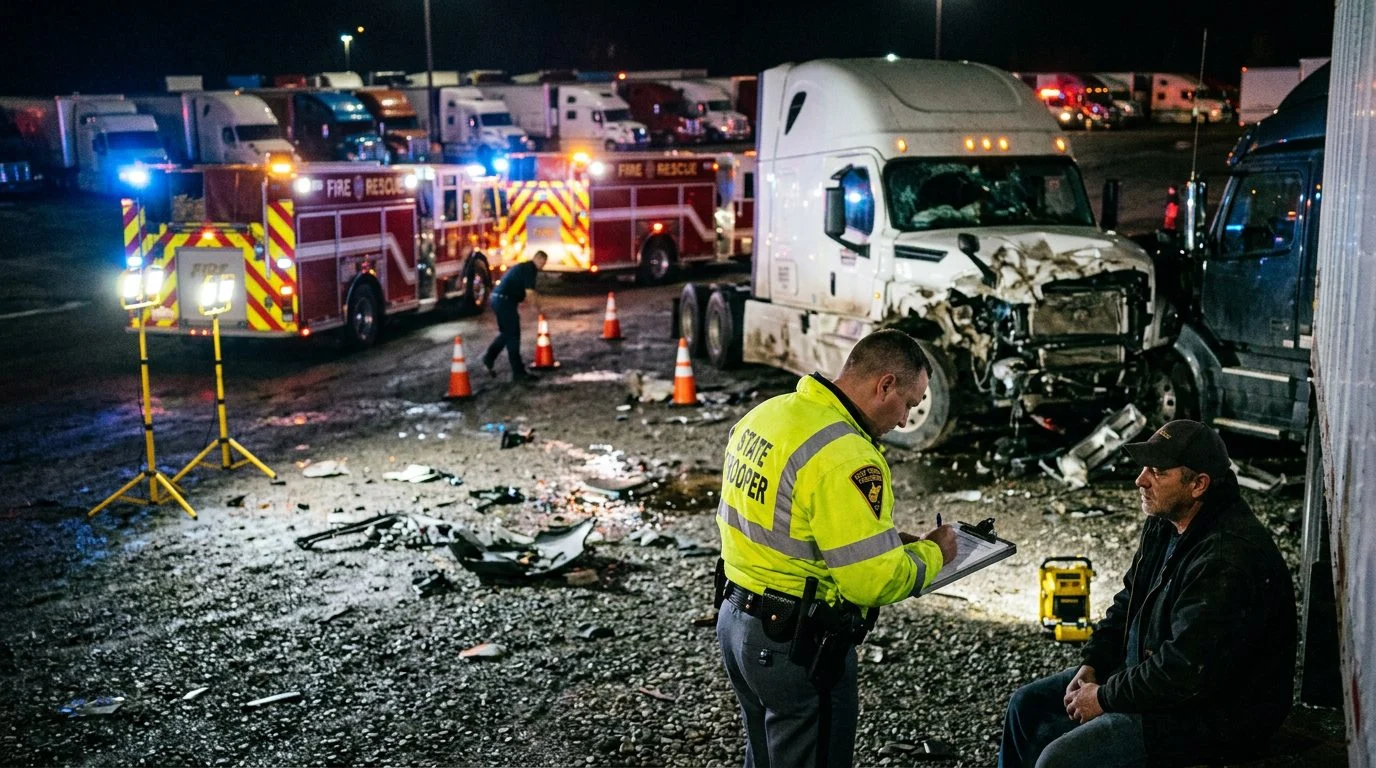
Does a truck driver ticket citation affect a claim after an accident in West Virginia? Sometimes, but not by itself. A citation is an official charge. It does not decide who caused a crash or what an injury claim is worth. It can be one piece of evidence, and how much it matters depends on the facts.
If you were hurt in a truck crash, or you lost someone in one, this question may be on your mind. Many people hear that the driver got a ticket and assume the answer is clear. It usually isn’t that simple. This page explains how a citation fits into a West Virginia claim, what it can’t prove on its own, and what else to look at.
What a Traffic Ticket on the Truck Driver Means After a Crash
A traffic citation is a formal charge an officer issues, usually at the scene or after an investigation. It says the officer believes a traffic law was broken. It is not a final finding of who caused the crash.
Three things often get mixed up. The first is the citation itself. The second is what the driver does with it, such as paying it or challenging it. The third is the result in traffic court. Each step follows its own process. None of them automatically decides an injury or wrongful death claim.
Why does this matter to you? An insurer or another party may point to the ticket when they argue about fault. Some insurers may dispute a claim, and they may question what the ticket shows. A citation may be one factor that is considered, depending on the facts.
If a truck driver was cited after your crash, you may have questions about your claim, and the firm can talk through your facts with you. Talk it through with Big Bubba — the first case review is free, confidential, and carries no obligation.

Can a Citation Be Used as Evidence in a West Virginia Claim?
Whether a citation can be used as evidence in a civil case depends on the court’s rules and the facts. The answer can change from one case to the next. Don’t assume the ticket settles the question in either direction.
In a claim, the ticket usually sits beside other proof. That can include the officer’s observations, statements from drivers and witnesses, photographs, vehicle damage, and data from the truck. Together, these items may help show how the crash happened.
An injured person generally needs to show how the crash happened and what each driver did. A ticket alone usually doesn’t answer that. The stronger question is what the physical and witness evidence shows about the crash itself.
How the Police Crash Report Connects to the Citation
The police crash report is often the document that first records the citation. It may also include the officer’s notes, a diagram, and statements from people at the scene. Reading it closely matters, because the report is only as complete as the information gathered at the scene.
Reports can contain errors or leave things out. A wrong vehicle position, a missing witness, or a line that misstates what someone said can affect how a claim is viewed. Review the whole report, not just the citation entry.
To get a copy, a person usually requests it from the investigating agency. That agency may charge its own copy fee. Keep everything you receive, and write down the date you got it.
Trucking Rule Violations That Often Sit Beside a Ticket
A ticket may point toward federal trucking rules the driver or the company had to follow. The Federal Motor Carrier Safety Administration oversees those rules, which appear in the Federal Motor Carrier Safety Regulations. The question is whether those rules were followed on the day of the crash.
Hours of service is a common example. Under 49 C.F.R. § 395.3, a driver generally may not drive after a set number of hours on duty, and must take set breaks. A driver who went past those limits may have been fatigued. That could matter to a claim, depending on the facts.
Other records may show problems apart from a ticket. Examples include logbook gaps, maintenance records for brakes or tires, and cargo that was not secured properly. These records may be relevant in a claim.
Timing also matters for drug and alcohol testing. Under 49 C.F.R. § 382.303, an employer generally must test surviving drivers for alcohol in certain cases. The same rule says alcohol test attempts stop after 8 hours.
Who Else May Share Responsibility for a Truck Crash
The driver is not always the only party whose conduct is examined. Depending on the facts, the trucking company, the company that employs the driver, the truck’s owner, and sometimes a maintenance or loading party may each be considered.
West Virginia law defines an “employer defendant” to include the vehicle owner, the driver’s employer, and anyone else who holds legal control over the truck or driver. See W. Va. Code § 55-7-32. That statute also limits some damages in certain commercial vehicle cases. The limit has exceptions, including one for drivers found to have exceeded hours-of-operation rules.
A driver’s citation does not automatically decide which of these parties may be liable. For more on this topic, see our truck accident claims page.
How Shared Fault Can Affect an Injury or Wrongful Death Claim
West Virginia generally uses a modified comparative fault rule. Under W. Va. Code § 55-7-13a, recovery is based on each person’s percentage of fault. Under § 55-7-13c, an injured person’s fault does not bar recovery unless it is greater than the combined fault of all other persons responsible for the damages. Otherwise, recovery is reduced in proportion to that person’s fault.
Shared fault can change how much an injured person recovers. Whether it does, and by how much, depends on the facts and on what a court or jury finds. Some insurers may dispute fault, and a ticket is often only one of several things they review.
The law also addresses how other people are named. Under § 55-7-13d, fault of a nonparty shall be considered if the plaintiff entered into a settlement agreement with the nonparty or if a defending party gives notice no later than one hundred eighty days after service of process upon said defendant that a nonparty was wholly or partially at fault. That notice must be filed with the court and served on all parties, must name the nonparty and give its last known address (or the best identification possible under the circumstances), and must briefly state the basis for believing the nonparty to be at fault.
Not sure what your next step is?
Talk it through with Big Bubba — the first case review is free, confidential, and carries no obligation.
Timing and Evidence to Preserve Early
West Virginia generally allows two years to file many personal injury claims. W. Va. Code § 55-2-12 sets that period for personal actions, and exceptions may apply. For a wrongful death claim, § 55-7-6 generally requires the action to begin within two years after the death, subject to other provisions of state law. W. Va. Code § 55-7-6 reads: “The provisions of this section shall not apply to actions brought for the death of any person occurring prior to July 1, 1988.” Because exceptions may apply, timing should be reviewed early.
Some evidence is time-sensitive. Useful items include the crash report, photos of the scene and vehicles, the truck’s electronic data, witness names and contact details, medical records, and the citation paperwork. Records can be lost or overwritten over time.
Early contact from others can also matter. Under § 55-7-11a, no person shall, within 20 days of the injury, negotiate or attempt to negotiate a settlement, obtain a release, or obtain a statement from an injured person who is an inpatient in any hospital or partially or totally unable to work, with limited exceptions. A citation can also move through traffic court on its own schedule, which may not match the claim timeline.

What Your Own Crash Could Mean for a Claim
If you or a family member was hurt in a truck crash, and the driver was cited, you may not yet know what that ticket means for you. That uncertainty is normal, and the answer depends on your own facts.
The firm handles car accident, commercial vehicle, and truck accident claims in West Virginia. It also handles catastrophic injury, traumatic brain injury, spinal cord injury, and wrongful death cases.
Common questions
Does a truck driver’s ticket prove the driver caused the crash?
A ticket alone does not prove fault. It is one piece of evidence, and its weight depends on the facts.
Can a claim go forward if the driver was not cited?
A claim may still be possible without a citation. Whether it is depends on the facts and the evidence.
How long do I have to file?
West Virginia generally allows two years for many injury claims, and exceptions may apply. Timing should be reviewed early.
If a truck driver was cited after your crash, that citation may be relevant to your claim, depending on the facts. You can reach out to the firm for a free case review of your own facts, and the firm will talk through what the citation, the crash report, and the other evidence may mean for you. Contact the firm when you’re ready.