
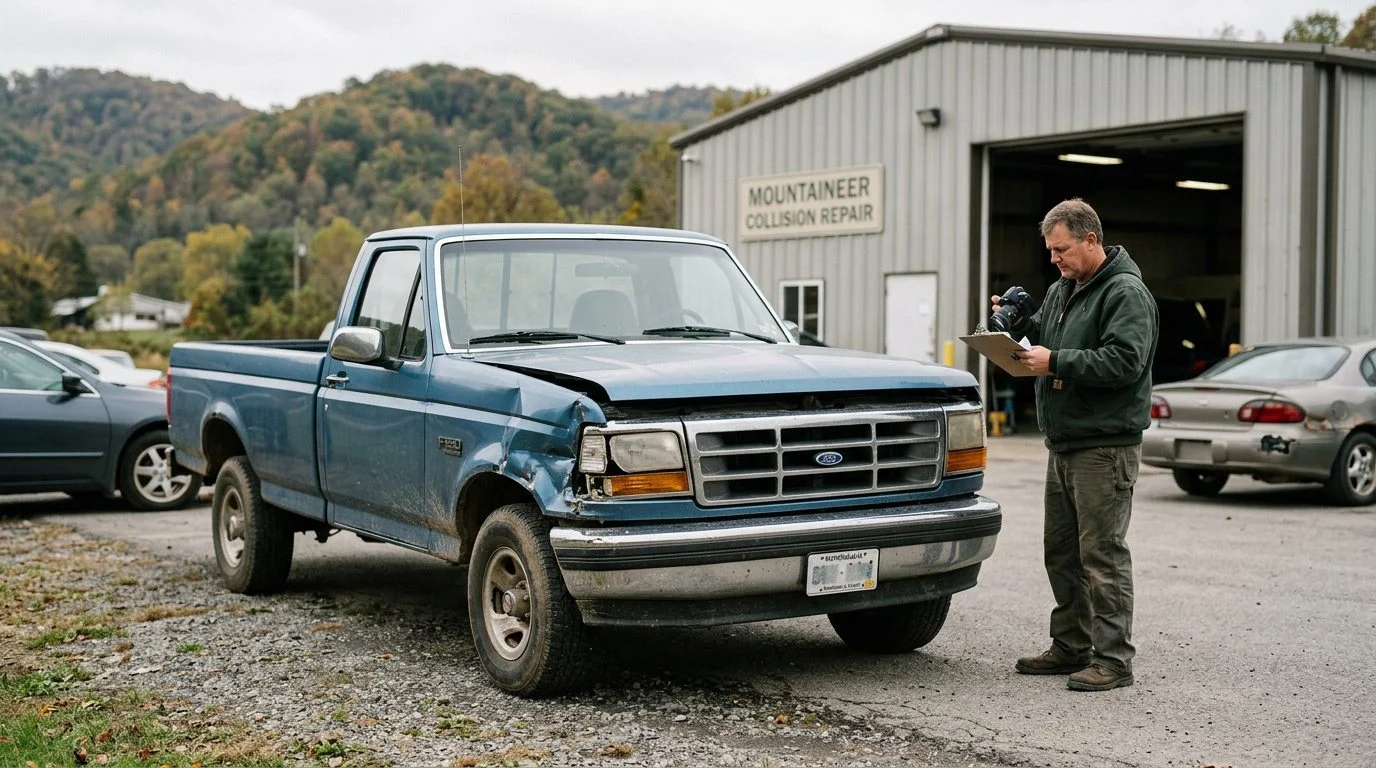
Car Accidents in West Virginia
Is Your Vehicle a Total Loss? Understand the Threshold Before You Respond
After a crash, an insurer's total loss decision can shape what comes next for you and your family. Here is how the process generally works and when to ask for help.
Published November 27, 2026
A tow yard, a rental counter, and an adjuster’s phone call can all arrive in the same week after a crash. The words “total loss” often come up fast, and they can feel like a final answer.
In plain terms, a total loss threshold is the point where repair costs, compared with what the vehicle was worth before the crash, lead an insurer to pay out the vehicle instead of repairing it. Insurers generally use this comparison. The exact point depends on the insurer’s own rules and the facts of the claim. This guide explains how that works in West Virginia and how it can affect the rest of a crash claim, including crashes with commercial trucks.
What a total loss means after a crash
A vehicle is generally called a total loss when fixing it costs a lot compared with its value just before the crash. Insurers and repair shops both use this comparison to decide whether a vehicle is worth fixing.
A total loss is a label about money and property. It is not a finding about who caused the crash. It also does not decide who pays for injuries.
Reporting the crash matters too. West Virginia requires a driver to report a crash involving injury, death, or total property damage of $1,000 or more right away. The report goes to the local police department, the county sheriff, or the nearest State Police office. W. Va. Code § 17C-4-6
Many people read about total losses while the vehicle is still at a tow yard. The first estimate you see can shape the whole claim. It helps to slow down and read it closely.
If a totaled vehicle is part of a crash you're dealing with, you don't have to sort out the claim alone. You can request a free case review with us. Talk it through with Big Bubba — the first case review is free, confidential, and carries no obligation.

How the total loss threshold is applied in West Virginia
The threshold works by setting the repair estimate beside the vehicle’s value. If repairs would cost too much for that value, the insurer generally declares a total loss.
Two numbers drive the decision. One is the repair estimate. The other is the vehicle’s value just before the crash. Because the value carries so much weight, many disputes start there.
Insurers may use their own repair estimates, and those can differ from an independent shop’s estimate. Compare both documents line by line, including parts and labor.
West Virginia law also covers how insurers treat claimants. A third-party claimant’s sole remedy for an unfair claims settlement practice is generally an administrative complaint with the Insurance Commissioner. W. Va. Code § 33-11-4a The same statute says a good-faith disagreement over the value of a claim is not an unfair claims settlement practice.
How actual cash value is determined
Actual cash value is generally the vehicle’s market value just before the crash, adjusted for age, mileage, condition, and options.
Valuation reports often rely on comparable vehicles sold or listed in the same area. The local market can matter. But a comparison is only useful if it matches your vehicle. Check that the trim level, options, and mileage fit.
Maintenance records, recent upgrades, and photos of the vehicle’s condition may be relevant, depending on the facts. A recent engine service or new tires can show a condition the report missed.
Some insurers may dispute a valuation. If that happens, you can usually send written reasons and added documents. A common mistake is accepting the first number without asking how it was built.
Total loss in truck and commercial vehicle crashes
In a commercial truck crash, the total loss question often involves more than one owner and more than one set of records.
A commercial vehicle may be owned by a carrier, leased, or financed. Each arrangement can change who receives the claim decision and the payment. Trailers, unusual equipment, and cargo may be valued and handled separately from the tractor.
West Virginia law uses the term “employer defendant” for the owner of a commercial motor vehicle, the operator’s employer, or any other person that owns, leases, rents, or otherwise holds or exercises legal control over a commercial motor vehicle or its operator. W. Va. Code § 55-7-32 The truck’s owner and the driver’s employer can be different companies.
Carrier records can matter. Federal rules require motor carriers to keep an accident register for 3 years after each accident. That register includes copies of accident reports given to state agencies or insurers. 49 C.F.R. § 390.15
Driver duty records have a shorter minimum. A motor carrier must keep records of duty status and supporting documents for at least 6 months from the date of receipt. 49 C.F.R. § 395.8 Early documentation matters because each side may hold different records.
How a total loss classification can affect the rest of a claim
A total loss can change how long you have a vehicle, what it costs to keep it, and how the rest of the claim moves.
Storage charges can build up at a tow yard while a claim is open. Rental or loss-of-use payments may be part of a claim, depending on the policy terms and the facts. Ask in writing what is covered and for how long.
Lost wages from time off work to deal with the vehicle, medical visits, or the crash itself may be part of the broader claim, depending on the facts.
Preserving evidence matters when fault or the vehicle’s condition is disputed. A written preservation request asks the other side to keep the vehicle, its electronic data, and related records. Phone records, dispatch logs, and inspection reports may be relevant when a commercial driver’s conduct is part of the investigation, depending on the facts.
A common mistake is letting the vehicle go to salvage before anyone has documented it.
Questions people ask about total loss vehicles
What is the total loss amount?
It is generally the vehicle’s actual cash value, adjusted under the policy and how the claim is handled.
What should I keep?
Keep photos, the title, repair estimates, towing and storage invoices, and maintenance records.
What if I disagree with the valuation?
You can send written reasons and added records. Some insurers may accept them and revise the figure.
Does a total loss mean the other driver is at fault?
No. A total loss is a property classification. Fault is a separate question.
Not sure what your next step is?
Talk it through with Big Bubba — the first case review is free, confidential, and carries no obligation.
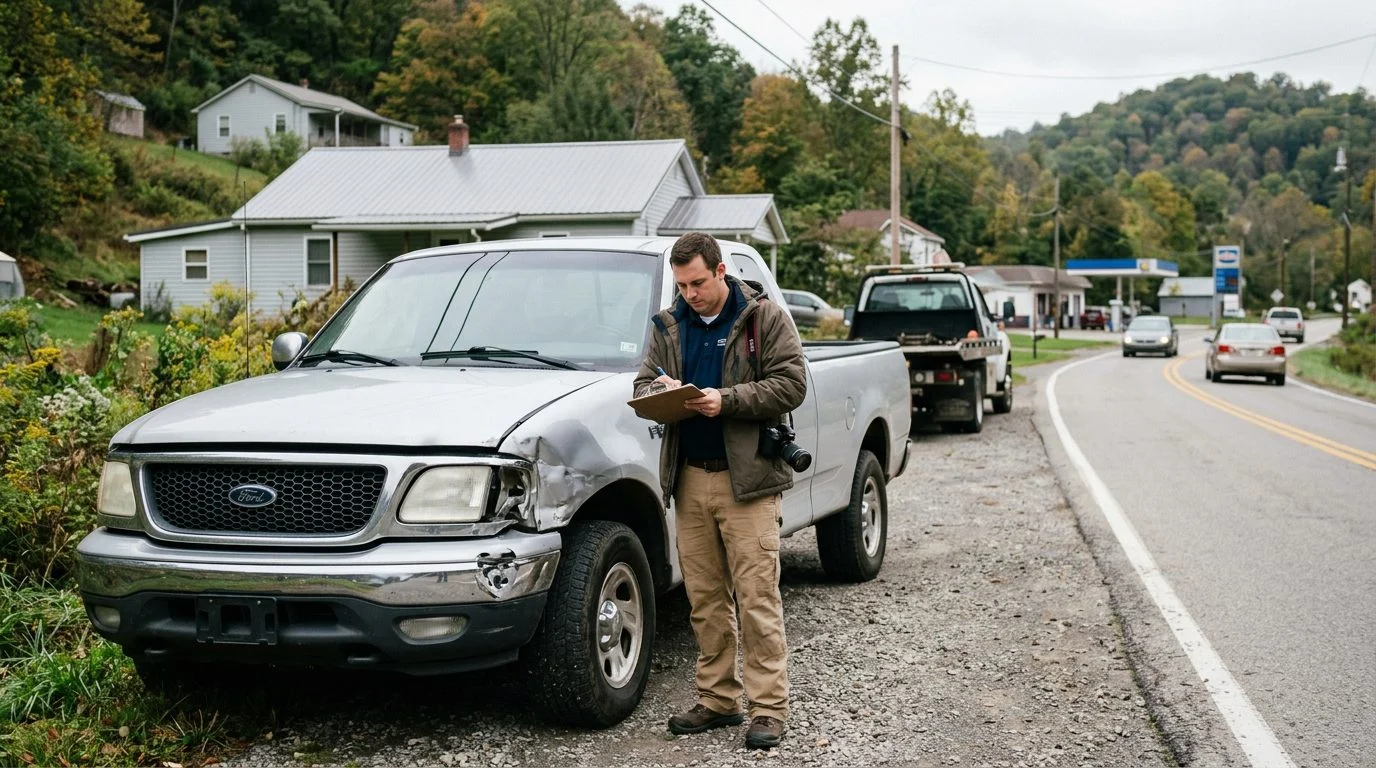
If a totaled vehicle is part of a crash you are dealing with
If a family member’s truck or car was badly damaged, and the insurer has labeled it a total loss, the decision may feel rushed. You may be handling it for someone who is still recovering.
A person in this position may want to understand how the claim is valued, which records matter, and how any injury claim fits alongside the property claim. Those answers depend on the facts, and no two crashes look the same.
We handle car accidents, truck accidents, commercial vehicle accidents, catastrophic injuries, traumatic brain injury, spinal cord injury, and wrongful death claims. We serve Charleston, Huntington, Morgantown, and communities across West Virginia.
If you want to talk through the crash, the vehicle decision, and any injuries, you can request a free case review with us.