
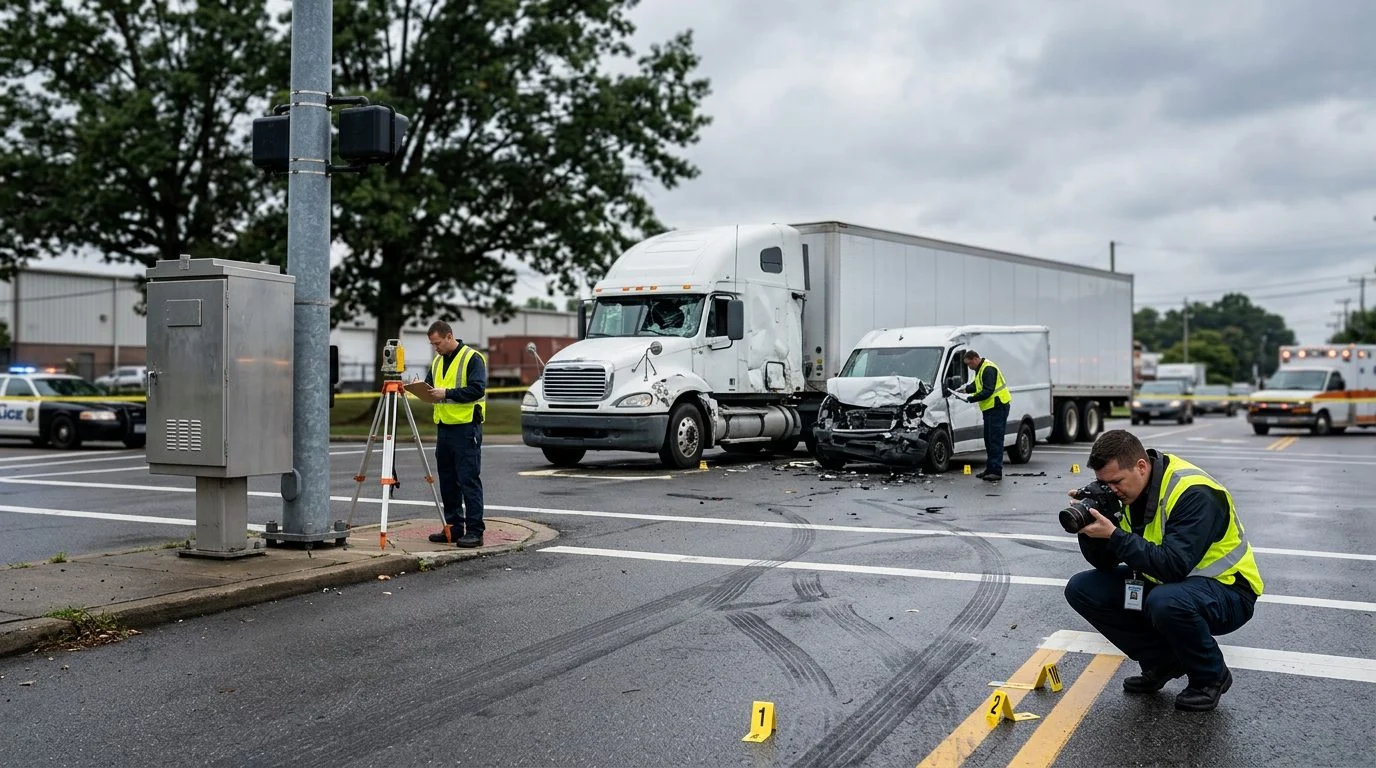
Wrongful Death · Truck Crashes · West Virginia
Lost a loved one in a truck crash? Start with this checklist.
A plain-language guide to the papers, details, and questions that can help families prepare. Bring what you have to a free case review with our firm.
Published November 6, 2026
This wrongful death truck crash checklist West Virginia families can use is built for adult children. If a parent or relative died in a crash with a commercial truck, the first weeks bring funeral tasks, paperwork, and hard questions at once. Work through each step, write down your answers, and keep every document in one place.
Is This Checklist Right for Your Family?
This checklist is for adult children whose loved one died in a crash involving a commercial truck or commercial vehicle on a West Virginia road. Answer these three questions first.
- Did the crash involve a commercial truck? Yes if it was a tractor-trailer, box truck, or delivery truck used for work.
- Did your loved one die from the crash? This includes a death later in a hospital.
- Are you a close family member or handling the estate? West Virginia law says the claim is brought by the personal representative of the estate, for certain family members. West Virginia wrongful death statute Who qualifies depends on the facts.
What to do with the result: If you answered yes to the first two, work through the full list. If not, the list still helps you organize records. The firm can also tell you whether a different type of claim may apply.
If a commercial truck crash took your parent or relative, you do not have to sort out the records and deadlines alone. The firm can review your situation in a free case review. Talk it through with Big Bubba — the first case review is free, confidential, and carries no obligation.

Checklist 1: Crash Report and Scene Records
The crash report is usually the first official record of what happened, so start here. Get a copy early and check it against what your family remembers.
- Do you have the crash report number? Write it down. If not, ask the investigating agency for the report.
- Do you have photos, videos, or texts from the scene? Save the original files with their dates. Don’t edit or crop them.
- Do you know whether officers took measurements or statements? Note which agency responded.
A report usually lists the date, location, vehicles, and drivers. More than one person may share fault in a crash. West Virginia allocates fault by percentage, so small details can matter. West Virginia comparative fault law
What to do with the result: Write down what you have and what is missing. Keep this list with your other papers.
Checklist 2: Names, Contacts, and Witnesses
The driver’s name and the company’s name are among the first facts a claim depends on. Collect them before details fade.
- Do you have the truck driver’s name? Check the crash report or the officer’s notes.
- Do you have the trucking company’s name? It may appear on the truck door, trailer, or paperwork.
- Do you have a DOT number? Many commercial trucks show a USDOT number on the door or cab.
- Do you know which insurance company has contacted your family? Write down the company name and any claim number.
- Do you have names of witnesses, first responders, or hospital staff? A phone number helps, but even a name is useful.
Some insurers may dispute a claim. Write down the date, the caller, and what was said for every call or letter. Keep every letter and envelope.
What to do with the result: Keep one folder or notebook for names and contacts.
Checklist 3: Trucking Company and Federal Records
Federal rules require trucking companies to keep certain records, but only for set periods. Ask early, because the clock on those records keeps running.
- Was the truck carrying a load? Look for a bill of lading or delivery paperwork left at the scene or sent home.
- Did your family receive a records request, statement, or offer from the trucking company? Keep the original and do not sign anything yet.
Driver duty status records must be kept for at least six months from the date they are received. federal duty status rules Except for a private motor carrier of passengers (nonbusiness), a motor carrier subject to this part must have each driver record the driver’s duty status for each 24-hour period. federal driver file rules Except as provided in paragraph (d) of this section, each driver’s qualification file shall be retained while the driver works for that motor carrier, plus three years after that. federal inspection rules Companies subject to this part shall retain records for the minimum retention periods provided in appendix A to this part. After the required retention periods, the records may be destroyed at the discretion of each company’s management. It shall be the obligation of the subject company to maintain records that adequately support financial and operational data required by the Secretary. The company may request a ruling from the Secretary on the retention of any record. The provisions of this part shall not be construed as excusing compliance with the lawful requirements of any other governmental body prescribing longer retention periods for any category of records. federal records retention rules
What to do with the result: Don’t sign releases or recorded statements before reviewing them. Keep every trucking company document in one folder.
Checklist 4: Dates That Matter
West Virginia generally allows two years after the death to bring a wrongful death claim, and exceptions may apply. West Virginia wrongful death statute Write down every date now, while you still have the records.
- Do you have the date and time of the crash and the date of death? Write both down.
- Do you have dates for first treatment, hospital transfers, and discharge or the death notice? These dates help build the medical timeline.
- Did anyone ask your loved one for a statement or settlement in the first 20 days after the injury? West Virginia law restricts this while a person is in the hospital or unable to work. Under W. Va. Code § 55-7-11a, an injured person generally may disavow a settlement, release of liability or statement obtained in violation of that section within one hundred eighty days from the date of the personal injury. To do so, the injured person signs a written statement of disavowal and forwards a copy to the person who violated the section. In that event, the settlement, release or statement may not be admissible in evidence in any court or other proceeding relating to the injury, provided any payment made for the settlement or release has been repaid or returned when the copy is forwarded.
- Have you received a written deadline from an insurer, employer, or agency? Write down the date and who sent it.
What to do with the result: Put every date in one list. Keep it with your crash report number.
Checklist 5: Your Family’s Losses and Records
West Virginia wrongful death law lists the kinds of damages a jury may consider. West Virginia wrongful death statute Which categories apply depends on your family and the facts.
The jury, or the court in a case without a jury, may also direct how damages are shared.
- Do you have funeral home invoices, burial receipts, and cemetery paperwork?
- Do you have hospital and ambulance bills from the crash and treatment?
- Do you have pay stubs, tax returns, or benefit statements showing your loved one’s income?
- Can you describe your loved one’s role at home, such as caregiving, childcare, or help with daily needs? A short written note helps.
What to do with the result: Gather these records in one place. Missing items are not a reason to wait before reaching out.
Not sure what your next step is?
Talk it through with Big Bubba — the first case review is free, confidential, and carries no obligation.
Frequently Asked Questions
Do I need every item on this list before I reach out?
No. Bring whatever papers and details you have. The firm can help identify what is still needed.
Who can bring a wrongful death claim in West Virginia?
West Virginia law says the claim is brought by the personal representative of the estate. Who qualifies depends on the facts.
What if the trucking company’s insurer calls me first?
Some insurers may dispute a claim or ask for a recorded statement. You can write down the call and review any statement before you give one.
What if the crash happened outside West Virginia?
Where the crash happened and where your family lives can affect which rules apply. The firm can review those details with you.
What is a free case review?
It is a confidential meeting to describe what happened and ask questions about next steps. You have no obligation to continue.

Using This Checklist When You Request a Free Case Review
If your parent died in a crash with a commercial truck, you don’t have to sort out the legal questions alone. Bring your checklist, your crash report number, and your list of dates to a free case review. Tell the firm what happened in your own words.
We serve families across West Virginia, including Charleston, Huntington, Morgantown, Wheeling, Martinsburg, Parkersburg, Beckley, Clarksburg, Fairmont, and Weirton. We handle wrongful death and truck accident claims.
Keep your checklist, the crash report, and your dates together so they are ready to review.