
Truck Crash Evidence | West Virginia
Accident Reconstruction in West Virginia Truck Crashes
Physical evidence, electronic data, and scene details can help show how a commercial truck collision happened. The firm helps injured people and families across West Virginia understand that evidence.
Published November 7, 2026
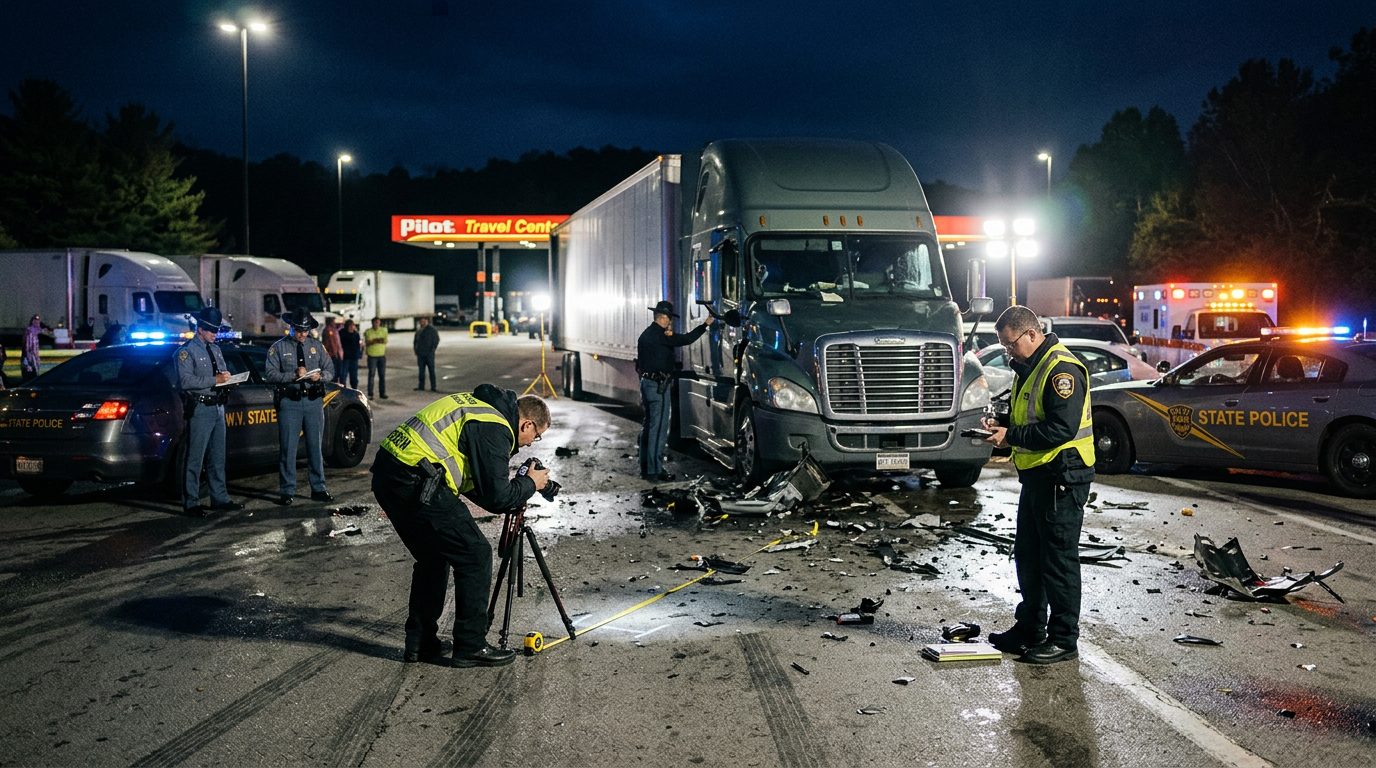
Accident reconstruction is a step-by-step analysis of how a crash happened. In a West Virginia truck crash, it uses physical marks, vehicle positions, and data from the truck to show the order of events. That analysis can bear on who may be at fault, so it often matters early.
What Accident Reconstruction Means in a Truck Crash Case
Accident reconstruction is the process of rebuilding a crash from the evidence it leaves behind. Analysts measure distances, study marks on the road, and look at where each vehicle came to rest. They also review data the vehicles stored. The goal is a timeline that fits the physical facts.
Large-truck cases use reconstruction often for a simple reason. Tractor-trailers are heavy, the forces in a collision are large, and a commercial carrier usually keeps many records about each trip. Each record may help test what different people say happened.
The analysis answers two questions: how the crash happened and why it happened. Those answers can bear on who may be at fault. A court or jury still weighs all the evidence and decides fault.
If a truck crash left you or someone you love badly hurt, reach out now to request a free case review while the scene and truck evidence are still available. Talk it through with Big Bubba — the first case review is free, confidential, and carries no obligation.
Why Truck Crashes Are Different From Ordinary Car Crashes
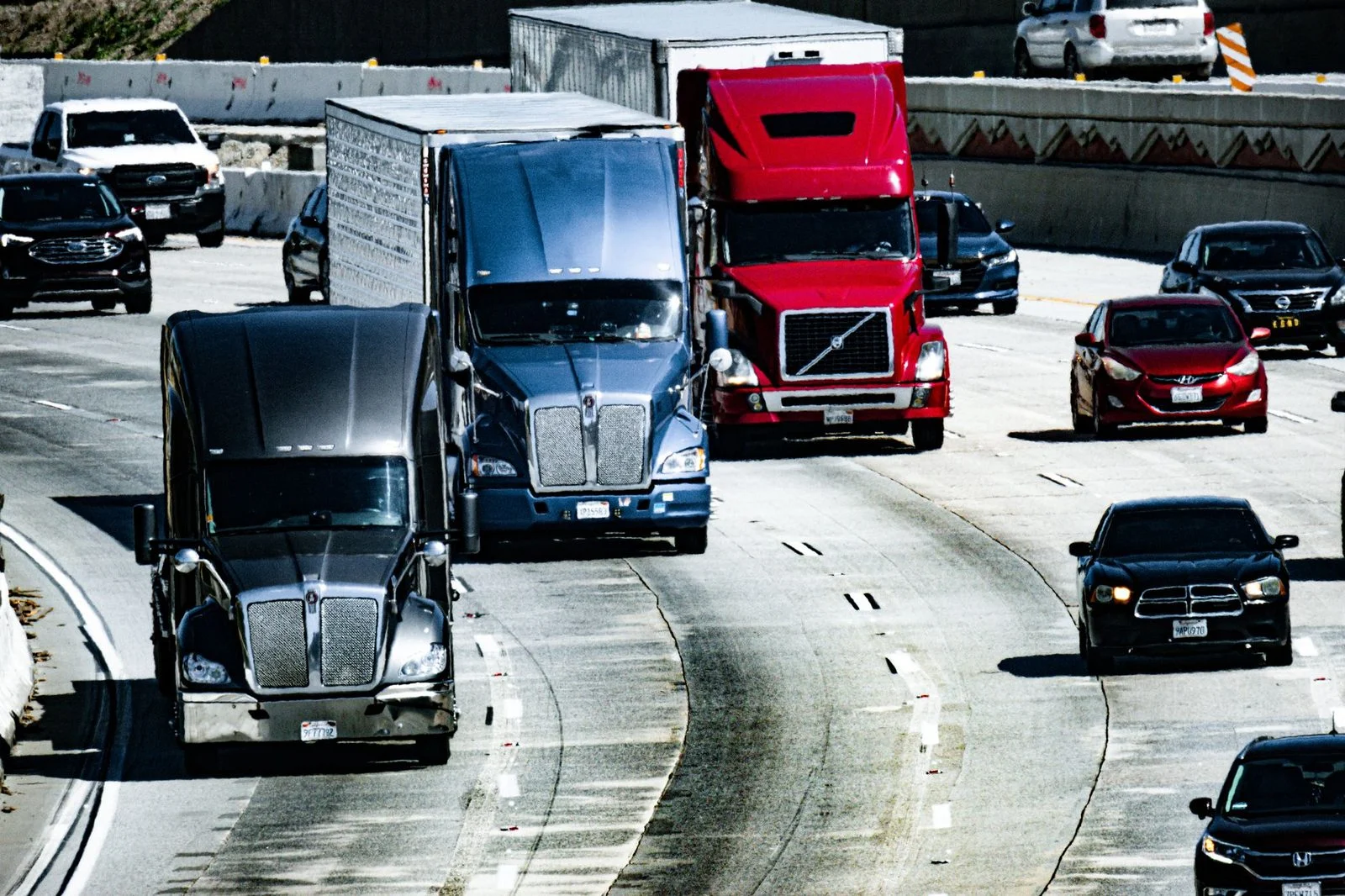
A tractor-trailer needs more room to stop and more room to turn than a passenger car. Its weight, braking system, and long trailer change how it moves in an emergency. A small error in speed or following distance can have larger effects.
Commercial trucks may also be subject to federal and state safety rules. These can cover how long a driver may work and how the truck is inspected. Those rules can be relevant to a crash.
Scenes also change quickly. A big rig may need to be moved to reopen the road, and debris and fluids are often cleared. Marks on the pavement can fade. That is one reason early investigation can matter.
The Physical Evidence Reconstruction Examines
Reconstruction starts with what the scene shows. Analysts look at scene measurements, roadway markings, skid marks, yaw marks, gouges in the road, and the debris field. Together, these can show where vehicles were and how they moved.
Damage to the vehicles adds more detail. The pattern of crushed metal, the point of impact, and each vehicle’s final rest position may help show speed, angle, and the order of the collision. A damage pattern alone rarely tells the full story, so analysts compare it with other evidence.
Conditions at the time of the crash also matter. Weather, lighting, road surface, and sight lines may be relevant, depending on the facts. A driver’s view of a merging lane at night can be very different from the view in daylight.
Electronic Data From the Truck and Its Records
Under federal rules, an electronic logging device (ELD) automatically records the date, time, CMV geographic location, engine hours, vehicle miles, driver or authenticated user identification, vehicle identification, and motor carrier identification data. 49 C.F.R. § 395.26 When a truck is moving and nothing else has been logged for an hour, the device creates an intermediate record.
Federal rules also require an ELD to provide a function for recording the driver’s certification of the driver’s records for every 24-hour period. Other evidence may be relevant when reviewing these records, depending on the facts.
Many heavy trucks also have engine control modules. Some may carry an event data recorder that stores speed, braking, and throttle data around a crash. Whether a particular truck kept that information depends on its equipment.
Carriers keep other records too, such as driver qualification files, maintenance and inspection records, and dispatch messages. 49 C.F.R. § 391.51 Except as provided in paragraph (d) of that section, driver qualification files must be retained while the driver is employed by the carrier and for three years thereafter. Asking for preservation early may matter, depending on the facts.
How Reconstruction Connects to Fault and West Virginia Comparative Negligence
Under West Virginia’s comparative fault statute, your own fault generally does not bar recovery. It bars recovery only if your fault is greater than the combined fault of everyone else responsible for the damages. W. Va. Code § 55-7-13c If your share is less, the recovery is reduced in proportion to your fault.
Fault can be split among several people. W. Va. Code § 55-7-13a
Reconstruction findings help test each side’s account. The truck driver, other motorists, and the carrier may each describe the crash differently. Other parties may argue that the injured person contributed to the crash. Some insurers may dispute a claim, and physical evidence can help test those disputes.
Who Performs Accident Reconstruction and What the Analysis Produces
Reconstruction is usually done by trained engineers and analysts. They use measurements, data downloads, and crash modeling tools. Their work starts with the physical evidence and then adds the truck’s data.
The result is a written analysis. In a lawsuit, the analyst may testify about the methods and conclusions. Those conclusions are only as strong as the data behind them, so the underlying records matter as much as the final report.
An analysis can support one account of a crash, limit it, or fail to support it. The result cannot be known until the evidence is reviewed. Timing and scope depend on what evidence is still available, and a missing record can change what an analyst can conclude.
Not sure what your next step is?
Talk it through with Big Bubba — the first case review is free, confidential, and carries no obligation.
Accident Reconstruction in Catastrophic Injury and Wrongful Death Claims
When someone has a traumatic brain injury or a spinal cord injury, the crash analysis and the medical records are often reviewed together. Injury severity and recovery depend on individual medical evaluation. No two injuries follow the same path.
Serious injury cases often involve large sets of records, from the scene to the hospital. A thorough crash review may take more time at the start for that reason.
Wrongful death claims follow their own rules. W. Va. Code § 55-7-6 The statute says the action must be commenced within two years after death, subject to other provisions of the code. W. Va. Code § 55-7-6 reads: “The provisions of this section shall not apply to actions brought for the death of any person occurring prior to July 1, 1988.” W. Va. Code § 55-7-6
Where a person dies from a wrongful act, the wrongful death action is brought by and in the name of the personal representative of the deceased person. W. Va. Code § 55-7-8
What to Do Now If You Were Hurt in a West Virginia Truck Crash
Start by keeping the basic facts while they are fresh. Save the crash report number, photos of the scene and vehicles, medical records, and the names and phone numbers of witnesses. Be careful about posting detailed accounts of the crash online, since those posts may be used later.
A police department may charge its own copy fee for a crash report. Time also matters for evidence. Truck data and roadway conditions may change or disappear. West Virginia generally sets a two-year limit for personal injury claims, and exceptions may apply. W. Va. Code § 55-2-12
Does a police crash report show how a crash happened?
A crash report can record the officer’s observations and may be a useful starting point. It does not replace the physical and electronic evidence that reconstruction examines.
What if the truck company says I caused the crash?
The company may dispute fault. Under West Virginia’s comparative fault statute, fault is weighed and divided, so a dispute about fault does not automatically end a claim. W. Va. Code § 55-7-13c

Starting With a Free Case Review After a Truck Crash
If a tractor-trailer or commercial vehicle crash left you or a family member seriously hurt, the scene, the truck, and its records may still be in question. The firm handles truck accident and commercial vehicle accident claims across West Virginia. We serve injury victims in Charleston, Huntington, Morgantown, and other communities in the state.
For the broader claim process, read the firm’s main page on West Virginia truck accidents. Evidence can change with time, so the sooner a review starts, the better.
If a truck crash has left you or someone you love badly hurt, contact the firm to request a free case review and tell Big Bubba what happened while the scene and truck evidence are still available.