
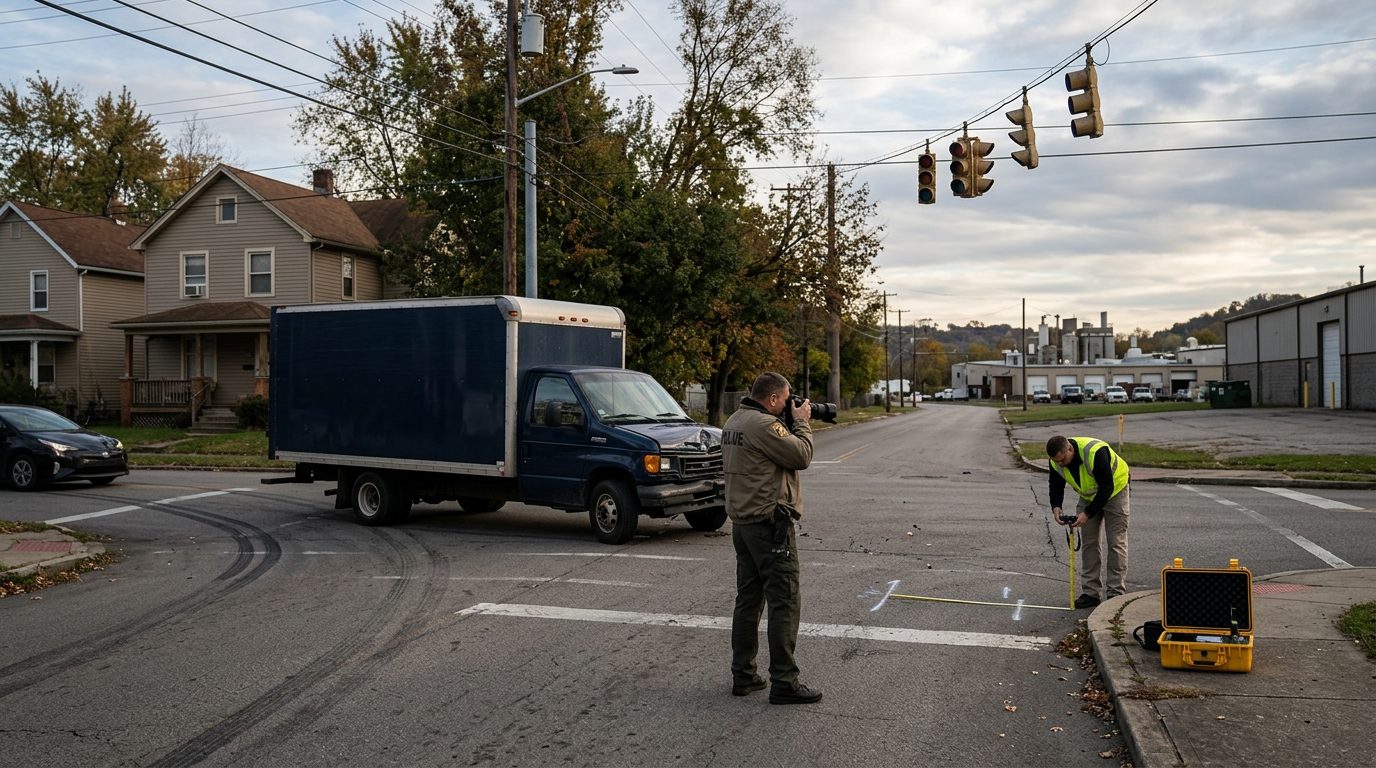
Wrongful Death | Truck Crashes | West Virginia
When a Truck Crash Takes a Child, Parents Deserve Clear Answers
Losing a child in a crash is unimaginable. We help West Virginia parents understand their options and take the next step at their own pace.
Published November 11, 2026
Losing a child in a truck crash is devastating, and many parents want to know what the law allows them to do next. Can a parent bring a claim for a child’s death in West Virginia?
Often, yes, but the rules are specific. A wrongful death claim is generally brought by a personal representative for the person who died, and parents may be among those who share in the damages. West Virginia generally gives two years from the date of death to file, and exceptions may apply (W. Va. Code § 55-7-6). This guide explains the basics of a wrongful death truck crash claim for parents in West Virginia.
Who May Bring a Wrongful Death Claim After a Truck Crash in West Virginia
Under W. Va. Code § 55-7-6, a personal representative generally files the claim for the person who died. The personal representative recovers the money, and the jury or judge directs how it is shared.
Those shares can go to the surviving spouse and children, including adopted children and stepchildren. They can also go to brothers, sisters, parents, any persons who were financially dependent on the person who died, or others who would otherwise be equitably entitled to share in the distribution (W. Va. Code § 55-7-6). Parents appear on that list, but how the damages are split depends on the facts.
Your child’s family situation often matters most. A minor child and an adult child may also be in different positions. Whether you have a claim depends on the facts, so bring the details to the firm rather than guessing alone.
Not sure what your next step is?
Talk it through with Big Bubba — the first case review is free, confidential, and carries no obligation.

What a Wrongful Death Claim Can Cover for a Family
West Virginia law lists the main categories a wrongful death verdict may include. Under W. Va. Code § 55-7-6, those categories include:
- Sorrow, mental anguish, and solace, which may include companionship, comfort, guidance, and advice from the person who died.
- Expected loss of the person’s income, and of the services, care, and help they gave the family.
- Care, treatment, and hospital expenses tied to the injury that caused the death.
- Reasonable funeral expenses.
Many parents are surprised by the first item. Loss of guidance and companionship is personal to the family, and the law describes it differently from bills. Funeral and medical expenses fall into separate categories.
W. Va. Code § 55-7-25 sets that rule for personal injury and wrongful death actions, but only for complaints filed on or after July 1, 2008. Which categories fit your family depends on the facts, your child’s circumstances, and who the claim is for. The firm can walk through which categories may apply during a free case review.
Why Truck Crash Cases Involve More Records Than Other Crashes
Truck crash cases usually involve more records than car crashes. Trucks that operate in interstate commerce are generally subject to federal safety rules, and those rules create records that can matter after a fatal crash.
Key records may include:
- Driver duty status records, kept on an electronic logging device, or on paper logs only where the carrier is permitted to have the driver record status manually instead of using an ELD, under the conditions listed in the rule (49 C.F.R. § 395.8).
- Driver qualification files, which carriers generally keep while the driver works for them and for three years after (49 C.F.R. § 391.51).
- Police crash reports, maintenance and inspection records, and cargo papers.
- Post-accident drug and alcohol testing records.
After a fatal crash, federal rules generally require the employer to test a surviving driver for alcohol if that driver was doing safety-sensitive work. If the test is not given within two hours, the employer must write down why. If it is not given within eight hours, the employer must stop trying and keep that record (49 C.F.R. § 382.303). A controlled substances test not given within 32 hours also needs a written reason.
Some of this evidence sits with the trucking company or its insurer. Electronic data may be overwritten over time, so early requests may matter, depending on the facts. Federal rules allow records to be kept with any technology that accurately reflects all of the information and remains accessible in a form that can be accurately reproduced later for reference (49 C.F.R. § 379.7).
Deadlines Parents Should Know About
West Virginia generally gives two years from the date of death to file a wrongful death action, and exceptions may apply. W. Va. Code § 55-7-6 sets this period. Under the statute, the period generally counts from the death of the person, so the date of death may be the key date.
The statute also notes that other provisions of state law may affect the period. That is one reason the exact deadline depends on the facts.
Do not assume you have time to wait. Evidence can be lost, and records held by a trucking company may need to be requested early. The firm can check the timing against your family’s facts during a free case review.
How a Wrongful Death Truck Crash Claim Typically Moves Forward
A typical claim moves from gathering facts to records requests, insurer discussions, and, if needed, a court case. Timing differs from case to case.
- Gather the basics. Write down the crash date, the location, the truck company’s name, and the police report number.
- Review who may be responsible. Depending on the facts, responsibility can involve the driver, the trucking company, or another party.
- Send preservation requests. These ask the carrier and others to keep logs, vehicle data, and records.
- Collect the records. This includes the crash report, the driver’s file, and carrier documents.
- Present the claim to insurers. Some insurers may dispute a claim, so documentation matters.
- File suit if needed. If a fair resolution is not reached, the claim may be filed in court.
Some settlements need court approval. W. Va. Code § 55-7-7 lets the personal representative compromise a claim, and the court then approves and divides the amount.
Questions Parents Often Ask After a Fatal Truck Crash
Parents usually ask about timing, insurers, and responsibility. Short answers follow.
Can we start a claim while the police investigation is still open?
Families often gather information early. When a claim is filed depends on the facts and the deadline.
Should we speak with the trucking company’s insurance adjuster?
Some insurers may ask for recorded statements or early releases. You can ask for time before answering questions about the crash.
What if the driver worked for a company?
West Virginia’s definition of an employer defendant includes the truck’s owner, the driver’s employer, and others with legal control over the truck or driver (W. Va. Code § 55-7-32). Responsibility may extend to them, depending on the facts.
Are there limits on damages in truck cases?
West Virginia limits some noneconomic damages against certain commercial vehicle employers (W. Va. Code § 55-7-32). The limit does not apply in every case. For example, it does not apply when an operator or driver is found to have committed one of the violations listed in the statute, or when the employer defendant lacks the required commercial motor vehicle insurance.
Do we need to know who was at fault before reaching out?
No. A free case review can help sort out what the records show.
Not sure what your next step is?
Talk it through with Big Bubba — the first case review is free, confidential, and carries no obligation.
How the Firm Handles Wrongful Death Truck Crash Matters
The firm handles wrongful death claims that arise from car, truck, and commercial vehicle crashes. It also handles catastrophic injury, traumatic brain injury, and spinal cord injury claims.
We serve injury victims and families across West Virginia, including Charleston, Huntington, Morgantown, Wheeling, Martinsburg, Parkersburg, Beckley, Clarksburg, Fairmont, and Weirton.
For families, the firm reviews records, communicates with insurers and carriers, and keeps families informed about each step. Support staff help with records and scheduling, so families have one clear point of contact.
West Virginia’s roads carry real risk. Fatality statistics for each state are available from the Insurance Institute for Highway Safety.

Talking With the Firm About Your Child’s Crash
A free case review is a good first step when you are not sure what to do next. Start with what you already have. Bring:
- The crash report number, the date, and the location.
- Photographs of the scene or vehicles, if you have them.
- Medical and death records.
- Any messages from the trucking company or an insurer.
You don’t need every item to begin. Tell the firm what happened in your own words. Include what you know about the truck, the driver, and the scene.
The family may not feel ready to talk yet. The firm can explain each step at a pace that fits your family. If your child died in a truck crash and you’re weighing your next step, request a free case review and tell Big Bubba what happened.