
Wrongful Death | West Virginia
What Happens After a Fatal Car Crash in West Virginia
When a loved one is killed in a car accident, you face grief, confusion, and urgent questions about your legal options. Here's what you need to know.
Published October 01, 2026
What Happens if Someone Dies in a Car Crash in West Virginia
When someone dies in a car crash, the family faces immediate practical decisions and a legal process that unfolds over time. In West Virginia, a wrongful death claim is a civil lawsuit, separate from any criminal charges, that seeks compensation for the loss. Understanding what happens next, who can file, and what the process looks like can help you protect your family’s rights during an overwhelming time.
Not sure what your next step is?
Talk it through with our team — the first case review is free, confidential, and carries no obligation.
The Immediate Aftermath of a Fatal Car Crash
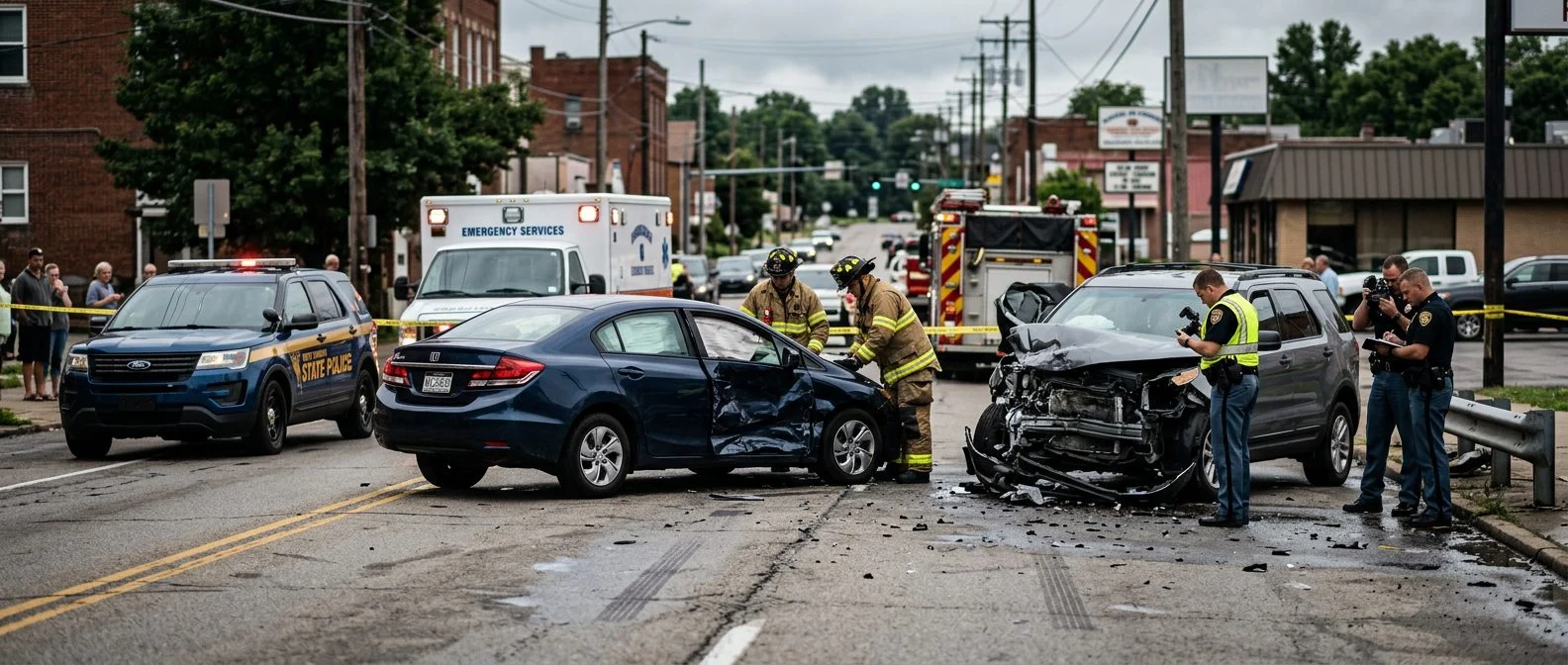
After a fatal car crash, emergency responders arrive at the scene and begin their investigation. Law enforcement officers document the accident, interview witnesses, and gather evidence about how the crash occurred. The medical examiner arrives to determine the cause of death and perform an autopsy if needed. Police will notify the next of kin—usually the closest family member—of the death, often with the help of victim advocates or support services. In the first hours and days, families should focus on notifying other relatives, seeking emotional support, and beginning to gather important documents like the deceased’s insurance policies, employment records, and medical information. Many families find it helpful to contact a funeral home and begin planning services while also documenting any initial details they remember about the crash.
Understanding the Legal Process After a Fatal Accident
The legal process after a fatal car crash involves both a police investigation and, separately, a civil wrongful death claim. Law enforcement investigates to determine whether criminal charges should be filed against the at-fault driver. This criminal investigation is separate from any civil wrongful death claim. The two processes operate on different standards: criminal cases require proof “beyond a reasonable doubt,” while civil cases require proof by “a preponderance of the evidence” (more likely than not). The police accident report becomes a key document in both the criminal investigation and the civil claim. Families should obtain a copy of this report early, as it often contains witness statements, officer observations, and initial findings about fault.
Who Can File a Wrongful Death Claim in West Virginia
Under West Virginia law, a wrongful death claim must be brought by and in the name of the deceased person’s personal representative, for the benefit of specific family members. A surviving spouse, children, and parents of the deceased are among the family members who may benefit from the claim. Parents, brothers, and sisters may also share in the damages; the jury may direct in what proportions the damages are distributed among the survivors. Other dependents who relied on the deceased for financial support may also share in a recovery, though the rules are more complex; as with every wrongful death claim, the action must be brought by the deceased person’s duly appointed personal representative. The claim must be brought by the personal representative of the deceased, usually named in the deceased’s will or appointed by the court, who acts on behalf of the estate and the family members with a legal claim. If the person died without a will, the county commission or its clerk has jurisdiction to determine who has the right to administer the estate. It’s important to act promptly, as West Virginia law imposes strict deadlines for filing.
What Compensation May Be Available
Wrongful death claims in West Virginia can include both economic and non-economic damages. Economic damages cover concrete financial losses: funeral and burial expenses, medical bills incurred before death, lost wages the deceased would have earned, and lost benefits like health insurance. Non-economic damages address the survivors’ loss: the loss of companionship, guidance, and emotional support; the pain and suffering of family members; and the loss of the deceased’s services and society. Each family’s situation is unique. The amount of compensation depends on factors such as the deceased’s age, earning capacity, health, the strength of evidence showing fault, available insurance coverage, and the specific circumstances of the crash. No two cases are identical, and no attorney can guarantee a specific outcome or settlement amount. West Virginia law provides that when a wrongful act, neglect, or default causes a death, the person who would have been liable had death not occurred may be liable for damages, even though the injured person has died, under W. Va. Code § 55-7-5.
The Role of Insurance in Fatal Car Accidents
Insurance coverage often plays a central role in compensating families after a fatal crash. The at-fault driver’s liability insurance policy typically covers damages up to the policy limits. If the at-fault driver was uninsured or underinsured, the deceased’s own policy may provide additional recovery through uninsured or underinsured motorist (UM or UIM) coverage, if that coverage is included in the policy. Families should gather all insurance documents—both the deceased’s policy and any information about the at-fault driver’s coverage—early in the process. Insurance companies will become involved in the claim, and it’s important to understand that insurers have their own interests. Communicating carefully with insurers and having experienced guidance can help protect the family’s rights and ensure that all available coverage is pursued.
Have questions about what happened?
Ask our team directly. The first conversation is free, confidential, and there is no obligation to continue.
Time Limits for Filing a Wrongful Death Claim in West Virginia
West Virginia law sets strict deadlines for filing a wrongful death claim. The personal representative must bring the claim within the time allowed by the statute of limitations, or the claim may be barred. A wrongful death action generally must be commenced within two years after the death, subject to other provisions of West Virginia law, and exceptions may apply (W. Va. Code § 55-7-6). Because these deadlines can affect the family’s ability to seek justice, it’s important to understand the timeline that applies to your situation and to take action promptly. Acting quickly also helps preserve evidence: witness memories fade, physical evidence may be lost or destroyed, and surveillance footage can be deleted. The sooner families begin gathering documents and information, the stronger their position becomes.
Do You Go to Jail if You Get in a Car Accident and Someone Dies?
Criminal liability is separate from civil wrongful death claims. Whether the at-fault driver faces criminal charges depends on the circumstances of the crash. If the driver drove in reckless disregard for the safety of others, violated traffic laws, was impaired by alcohol or drugs, or engaged in extremely dangerous behavior, criminal charges may be filed. Charges could range from misdemeanor to felony depending on the facts. However, not all fatal crashes result in criminal prosecution. A civil wrongful death claim generally does not depend on whether criminal charges are filed or on the outcome of any criminal case. Even if the driver is found not guilty in criminal court, a civil wrongful death claim may still be pursued by the personal representative. Understanding this distinction is important: the criminal system and the civil system serve different purposes, and a family should not assume that lack of criminal charges means they have no legal options.
What Happens Next: Your Family’s Options
After a fatal car crash, families face decisions about whether to pursue a wrongful death claim and how to move forward. The first step is to gather key documents: the police accident report, insurance policies, medical records, employment records, and any photos or video from the scene. Write down details you remember about the crash, the deceased’s relationship to family members, and any financial support the deceased provided. Many families benefit from speaking with professionals who understand West Virginia wrongful death law and can explain the process, the family’s rights, and what pursuing a claim involves. The goal is to ensure that the family’s legal rights are protected, evidence is preserved, and the family has the information needed to make informed decisions about next steps.

Frequently Asked Questions
Can we file a wrongful death claim if the at-fault driver wasn’t criminally charged?
Yes—civil wrongful death claims are independent of criminal prosecution. A wrongful death claim may still be pursued even if no criminal charges are filed or if the driver is acquitted in criminal court.
How long do we have to file a wrongful death claim in West Virginia?
West Virginia law generally sets a deadline (statute of limitations) for filing, and exceptions may apply. The specific timeframe depends on your case’s circumstances, so it’s important to act quickly to preserve your rights.
Who gets the money from a wrongful death settlement or verdict?
The compensation is distributed to eligible family members—typically the spouse, children, and parents—according to West Virginia law and the specific facts of the case.
What if the at-fault driver didn’t have insurance?
Your loved one’s own policy may provide compensation if the at-fault driver was uninsured, depending on the uninsured motorist coverage in that policy.
Can we pursue a claim while a criminal case is still pending?
Yes, the civil and criminal processes are separate. A civil wrongful death claim may be filed while criminal charges are being investigated or prosecuted.
If a loved one died in a car crash and you’re trying to understand what comes next, you can reach out to us. We can walk you through your options, explain what West Virginia law allows, and help you understand the steps ahead. Contact us for a case review.
The Wrongful Death Claim Process
Understand the claim
A wrongful death claim allows the family of someone killed in a fatal crash to seek compensation from the at-fault party. This is a civil action separate from any criminal case.
Know who can file
In West Virginia, the claim is brought by and in the name of the deceased person’s duly appointed personal representative, for the benefit of surviving family members, including spouses, children, and parents.
Gather evidence early
Police reports, witness statements, vehicle damage photos, and medical records are critical. The sooner these are preserved, the stronger your claim.
Pursue fair compensation
Wrongful death claims seek recovery for medical expenses, funeral costs, lost income, and the loss of companionship and support your family has suffered.
Want to know where you stand?
Tell us what happened and our team will walk you through the options available to you, at no cost.
Why You Need Legal Help After a Fatal Crash
Protect your family's rights
Insurance companies and at-fault parties have their own lawyers. You need someone fighting for your family's interests from the start.
Navigate complex rules
West Virginia wrongful death law has specific requirements about who can file, what damages apply, and strict deadlines. Missing a step can cost you.
Act before time runs out
Evidence disappears, memories fade, and legal deadlines pass. Early action preserves your claim and strengthens your case.
Focus on your family
While we handle the legal work, investigation, and negotiation, you can grieve and support each other without the added burden of a lawsuit.
Criminal charges are not required
You can file a wrongful death claim even if the at-fault driver was not criminally charged or was acquitted in criminal court. Civil and criminal cases are separate, and civil claims have a different standard of proof.
Common Questions About Fatal Crashes
Can we recover if the driver wasn't charged?
Yes. A civil wrongful death claim is independent of criminal prosecution. You can pursue compensation based on negligence even without criminal charges or conviction.
What if the other driver was partially at fault?
West Virginia allows recovery even when both parties share fault, unless your fault is greater than the combined fault of all other persons responsible (W. Va. Code § 55-7-13c). If recovery is not barred, your compensation may be reduced by your percentage of fault.
Who receives the compensation?
The personal representative of the estate receives the recovery on behalf of the surviving family members. Distribution follows West Virginia law; a will applies only if no close family survives.
How long does a wrongful death case take?
Timeline varies based on case complexity, insurance cooperation, and whether settlement is reached or trial is necessary. Your attorney can explain what to expect in your situation.