
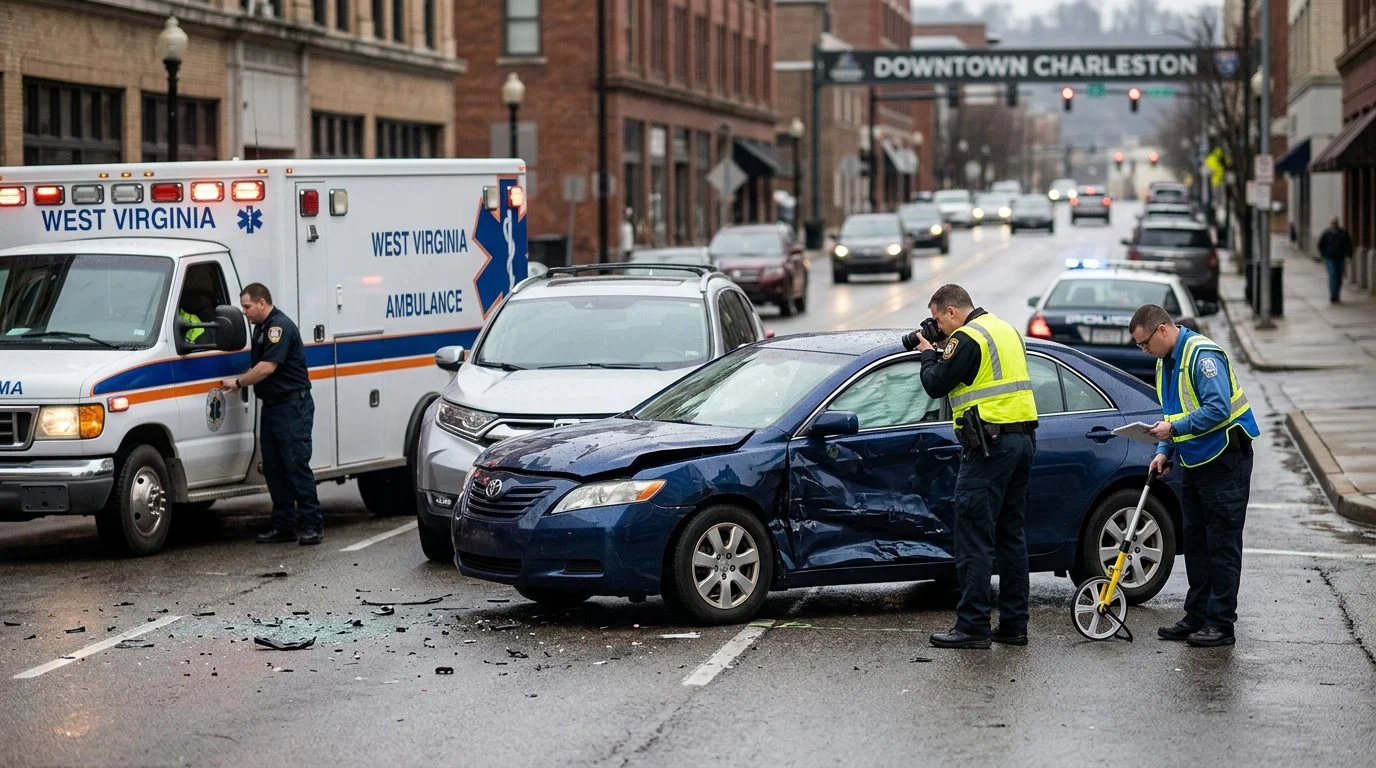
West Virginia Injury Guide
Hurt in a Crash? Get Medical Care First, Then Talk With Us
Care that is medically necessary, documented, and tied to the crash matters most. Here is how to keep your records clear after a car, truck, or commercial vehicle accident.
Published November 8, 2026
Does going to ER increase accident payout? By itself, no. A trip to the emergency room does not raise the value of a claim. What matters is whether your injuries were checked, written down, and linked to the crash. This guide explains how those pieces fit together in West Virginia, and why your health always comes first.
An ER visit is not a payout lever on its own
An emergency room visit does not, by itself, increase what a claim is worth. Some people hear they should “get checked” for insurance reasons. That advice can push care decisions in the wrong direction. Emergency care is for symptoms that need evaluation now, such as severe headache, confusion, chest pain, numbness, or weakness. If you have any of these, get care right away. Health and claims are not opposites. Good medical care protects you, and it also creates the record a claim may rely on. The value of any claim depends on the facts of the crash and the injuries, so outcomes can differ from case to case. For the wider picture of serious injury claims, read the firm’s catastrophic injuries overview.
Not sure what your next step is?
Talk it through with Big Bubba — the first case review is free, confidential, and carries no obligation.

Why people ask this question after a crash
Many people search this question within days of a crash. Pain, shock, and unfamiliar insurance terms can make every decision feel tied to money. Common worries include whether being seen at the ER “counts,” whether urgent care is enough, and whether waiting means losing ground. Some readers are not the injured person at all. A spouse, parent, or adult child may be helping someone who is hurt and cannot handle the paperwork alone. You may not have all the details yet, and that is common. The better questions are simpler. Were the injuries documented? Are they tied to the crash? Did care continue as the provider recommended? Starting with those three questions keeps the focus on health and on a clear record.
What an insurer or court may look at in a claim
An insurer or court usually starts with the medical record and the facts of the crash. Several items often get reviewed:
- The first medical evaluation, including the symptoms reported and what the provider found.
- The time between the crash and the first visit, and whether it fits the symptoms described.
- Follow-up visits, referrals, and treatment, and whether they happened as recommended.
- The crash report, photos, and witness information that connect the injuries to the collision.
Some insurers may dispute a claim when records show a gap or an unexplained delay. Under W. Va. Code § 55-7-13a, recovery in actions for personal injury, property damage, or wrongful death is based on comparative fault, and each person’s liability is allocated in direct proportion to that person’s percentage of fault. Under W. Va. Code § 55-7-13c, fault does not bar recovery unless the injured person’s fault is greater than the combined fault of all other persons responsible for the damages. If it is less, recovery is reduced in proportion to that person’s share of fault. West Virginia generally allows two years to file a personal injury claim, and exceptions may apply, under W. Va. Code § 55-2-12.
Why a delay in care can create problems for your health and your record
A delay in care can hurt your health and make the link between the crash and your injury harder to show. Some symptoms may appear hours or days after a crash. A medical provider can tell you what fits your situation. If you wait, the record may show a gap that an insurer could question. A missed follow-up or a stopped treatment plan can raise the same issue, even after a good first visit. The safest habit is to tell every provider about every symptom, even small ones. Note when each symptom started and what you told the provider. Symptoms that seem minor on the day of the crash may still be worth reporting. If a symptom is severe or getting worse, seek care now.
ER, urgent care, and follow-up: how a documented care path works
The emergency room usually handles urgent, possibly life-threatening symptoms. Urgent care and a primary care provider often handle the follow-up. The ER visit usually starts the medical record. Follow-up visits, imaging referrals, and therapy notes continue it. Keep copies of discharge papers, referrals, prescriptions, and appointment notes in one folder, paper or digital. Ask your provider to write down symptoms in your own words when you describe them. Each provider decides the level of care that fits your condition, and you should follow the treating provider’s instructions. A clear, continuous care path helps your health and gives anyone reviewing the case a complete picture.
Does more treatment increase a claim’s value?
More treatment is not automatically a higher value. What matters is whether care is medically necessary, recommended by a provider, tied to the crash, and recorded clearly. Treatment that seems chosen mainly to build a claim may be questioned by insurers, because records are reviewed for medical need. Medical judgment should drive your care, not a claim strategy. Ask your provider what they recommend and why, and keep the notes that explain each decision. If you have questions about a recommendation, ask the provider directly before you decide. How any treatment is weighed can turn on the facts of the crash, the injuries, and the records.
Not sure what your next step is?
Talk it through with Big Bubba — the first case review is free, confidential, and carries no obligation.
Head, spine, and serious injuries: why follow-up matters most
For brain and spinal cord injuries, follow-up care and symptom records often matter most. A traumatic brain injury or spinal cord injury may not show its full effects at the first visit. Imaging or testing may be needed over time. Memory can fade, and symptoms can change from week to week. Start a written symptom journal with dates, times, and what changed. Note sleep, headaches, balance, numbness, mood, and concentration. Families often take on this record-keeping for a loved one, and it is a real job. Ask the care team to document symptoms clearly and to explain the next steps. A complete timeline gives everyone a clearer view of what happened and when. For more on these claims, see the firm’s catastrophic injuries overview.
Records that help show what happened after a crash
The crash report, photos, witness contacts, and medical paperwork form the core record. Start with the crash report from the police agency that responded. Take photos of the vehicles, the scene, visible injuries, and road conditions as soon as it is safe. Write down the names and phone numbers of witnesses and every provider who saw you. For commercial truck crashes, logs, maintenance files, and dispatch information may be relevant. Federal rules may require post-accident drug and alcohol testing for commercial drivers in some crashes, according to the Federal Motor Carrier Safety Administration. Early statements also carry risk. Under W. Va. Code § 55-7-11a, for twenty days after an injury, while you are an inpatient in any hospital or partially or totally unable to engage in your usual trade, profession or occupation, no person may negotiate or attempt to negotiate a settlement of your claim, obtain or attempt to obtain a release of liability from you, or obtain or attempt to obtain any statement, either written or oral, from you for use in negotiating a settlement or obtaining a release, other than a statement a person acting for you obtains at your express request; a person may make an advance payment that is credited against any damages later found due. Write a dated list of what happened while your memory is fresh.

Practice areas for West Virginia crash injuries
If you are still deciding what comes next, talking it through can help. You may be weighing emergency care, follow-up treatment, or how to keep records, or you may be caring for someone who cannot manage it alone. The firm handles car accident, commercial truck, and catastrophic injury claims in West Virginia, including traumatic brain injury, spinal cord injury, and wrongful death.
Does going to ER increase accident payout?
Not by itself. What matters is medically necessary care that is documented and tied to the crash.
Can symptoms that start later still matter?
They may. Tell every provider about each symptom, and write down when it started.
You can reach out for a free case review. It is confidential and carries no obligation to continue. Bring your questions, your records, and your timeline, and the firm can review them with you.