
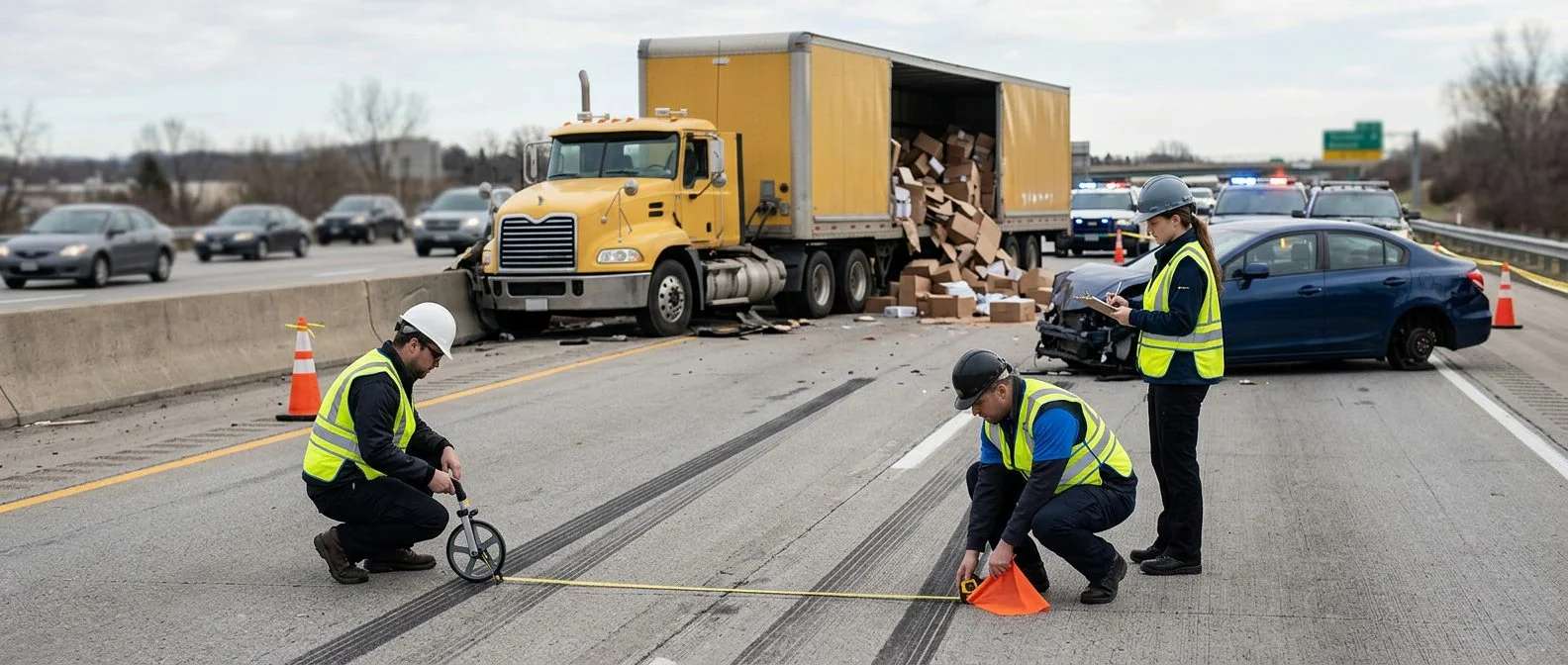
Commercial Truck Accidents | West Virginia
Broken Bones, Spinal Injuries & Catastrophic Harm from Truck Crashes
When a commercial truck collision leaves you with severe injuries, Big Bubba fights to hold responsible parties accountable. We serve people across West Virginia who've suffered life-altering trauma.
Published October 01, 2026
Commercial Truck Accident Injuries: Broken Bones, Spinal Damage & Brain Injury
Commercial truck accidents cause far more severe injuries than typical car crashes. A fully loaded commercial truck weighs 20–30 times more than a passenger vehicle, which means the collision forces concentrate on you and your vehicle with devastating power. This guide explains the most common and catastrophic injuries that result from commercial truck accidents in West Virginia, so you can recognize serious harm and understand why legal representation matters.
Not sure what your next step is?
Talk it through with our team — the first case review is free, confidential, and carries no obligation.
Why Commercial Truck Accidents Cause Severe Injuries
The sheer physics of a commercial truck collision creates injury patterns you won’t see in car-to-car accidents. A loaded semi-truck can weigh 80,000 pounds or more, while a typical sedan weighs around 3,500 pounds. When these vehicles collide, the force concentrates on the smaller vehicle and its occupants—your body absorbs the impact that a truck driver, protected by a larger cab and mass, may avoid.
Commercial trucks also require longer braking distances. At highway speeds, a fully loaded truck needs 400 feet or more to stop, compared to 200 feet for a car. This means collisions often occur at higher speeds, and the impact energy is greater. The result: broken bones, organ damage, spinal cord injury, and traumatic brain injury occur far more often in truck accidents than in passenger-vehicle crashes.
Broken Bones and Fractures
Fractures are among the most common injuries in commercial truck accidents. The force of impact can break ribs, legs, arms, the pelvis, and the spine. Some fractures are simple—the bone breaks cleanly—but others are compound fractures, where the bone breaks through the skin. Compound fractures carry a high risk of infection and often require surgery.
Multiple fractures complicate recovery. If you break both legs, your pelvis, and several ribs, you’ll face months of immobilization, surgery, and rehabilitation. Some fractures heal in weeks; others take a year or longer. During that time, you may be unable to work, care for yourself, or move without pain. Physical therapy is often necessary to regain strength and mobility, and some people never fully recover their pre-accident function.
Spinal Cord Injuries
A spinal cord injury is one of the most life-altering outcomes of a commercial truck accident. The spinal cord carries signals from your brain to your body. When it’s damaged, those signals are interrupted, and the result can be partial or complete paralysis.
The severity depends on where the injury occurs. Cervical (neck) spinal cord injuries are often the most severe because they can affect all four limbs and sometimes breathing. Thoracic (mid-back) injuries may affect the legs and lower body. Lumbar (lower-back) injuries typically affect the legs and lower body function.
The National Spinal Cord Injury Statistical Center tracks spinal cord injury data and outcomes. A complete spinal cord injury means no signals pass below the injury site; an incomplete injury means some signals still travel, leaving some function intact. Recovery varies widely, and many people with spinal cord injuries require lifelong care: mobility aids, home modifications, ongoing medical management, and assistance with bowel and bladder function, sexual function, and temperature regulation.
Traumatic Brain Injuries (TBI)
A traumatic brain injury ranges from mild to severe. A mild TBI, sometimes called a concussion, may cause headache, dizziness, and confusion that resolve in days or weeks. A severe TBI can cause loss of consciousness, coma, or death.
One type of severe brain injury is diffuse axonal injury, which occurs when the brain tissue tears from violent rotation or deceleration during the crash. This type of injury can’t always be seen on a standard CT scan, but it causes profound damage: cognitive changes, memory loss, personality changes, difficulty concentrating, and chronic headaches. Some people never return to work or their former level of function.
The National Institute of Neurological Disorders and Stroke (NINDS) notes that traumatic brain injury symptoms can appear immediately or emerge days or weeks after the crash. You might feel fine at the accident scene, only to develop severe headaches, confusion, or mood changes later. This delay is why medical evaluation is critical even if you feel okay right after the collision.
What Is the Most Common Injury for Truck Drivers?
Truck drivers themselves often suffer back and neck injuries from the occupational demands of their job—prolonged sitting, vibration, and repetitive strain. These injuries are common but typically not catastrophic.
However, when a truck driver is struck by another vehicle, they face the same severe injuries as any other crash victim. And when passengers in a car or smaller vehicle are hit by a commercial truck, they almost always sustain more catastrophic injuries than the truck driver, because the force is concentrated on the lighter vehicle.
Have questions about what happened?
Ask our team directly. The first conversation is free, confidential, and there is no obligation to continue.
What Injuries Can You Get From Being Hit by a Truck?
Being struck by a commercial truck can cause injuries that don’t occur in typical car accidents. Crush injuries happen when your body or limbs are compressed between the truck and another object—another vehicle, a building, or the ground. Traumatic amputation—the loss of a finger, hand, arm, leg, or foot—can occur from crush forces or from being run over.
Internal injuries are common and often life-threatening. Blunt force trauma to your abdomen can rupture your liver, spleen, or kidneys. Chest trauma can cause a pneumothorax (collapsed lung) or cardiac contusion (bruising of the heart muscle). These injuries may not show obvious external wounds, but they can cause internal bleeding and shock.
Lacerations and severe bleeding result from metal, glass, and road debris. Deep cuts require surgical repair and carry infection risk. Burn injuries can occur if the truck’s fuel tank ruptures or if an electrical fire starts post-collision. Burn injuries require specialized treatment at a burn center and often result in permanent scarring and loss of function.
Internal and Organ Injuries
Internal injuries are particularly dangerous because you may not realize you’re hurt. Blunt force trauma can rupture organs without breaking your skin. Abdominal injuries are especially risky: internal bleeding can be life-threatening, and symptoms may not appear for hours.
Imaging studies—CT scans and ultrasounds—are essential to diagnose internal injuries. If you’re in a commercial truck accident, insist on a full medical evaluation, including imaging, even if you feel fine. Some internal injuries worsen rapidly without treatment.
Lacerations, Amputations, and Severe Burns
Deep lacerations from a truck accident require surgical repair. Infection is a serious risk, and some lacerations cause permanent scarring or nerve damage that leads to chronic pain or loss of sensation.
Traumatic amputation demands immediate surgical intervention. After the initial surgery, you’ll face a long rehabilitation process and the need for prosthetic devices. Prosthetics are expensive, require ongoing adjustment and replacement, and many people never regain full function or comfort.
Burn injuries from fuel leaks or electrical fires require specialized burn center treatment. Severe burns often result in permanent scarring, contractures (tightening of skin and tissue), and loss of function. Recovery is painful and lengthy, and psychological effects—depression, anxiety, body image issues—are common.
Long-Term Impact of Commercial Truck Accident Injuries
Catastrophic injuries from commercial truck accidents change your life permanently. You may lose the ability to work, care for yourself, or enjoy the activities you once did. Chronic pain is common and may require ongoing medication, physical therapy, or medical interventions.
Psychological effects—post-traumatic stress disorder (PTSD), depression, anxiety—often follow a severe crash. Relationships strain under the weight of disability and caregiving needs. Medical costs accumulate: ongoing treatment, rehabilitation, adaptive equipment, home modifications, and long-term care can cost hundreds of thousands of dollars.
Recognizing a Catastrophic Injury
A catastrophic injury is one that causes permanent disability, loss of function, or a life-altering change. Examples include spinal cord injury with paralysis, severe traumatic brain injury with cognitive loss, amputation, and organ failure requiring transplant or lifelong dialysis.
If you’ve been in a commercial truck accident and you have any of these injuries—or if you’re experiencing severe pain, loss of sensation or movement, difficulty thinking or remembering, or any symptom that concerns you—seek immediate medical evaluation. Document everything: your injuries, medical records, imaging, and the accident scene. This documentation is essential for any legal claim.
Why You Need Legal Representation After a Commercial Truck Accident
Commercial truck accidents are not simple. Multiple parties may be liable: the truck driver, the trucking company, a maintenance contractor, the cargo shipper, or the truck manufacturer. Insurance companies for commercial trucking operations often have large defense teams and substantial resources to fight your claim.
Evidence preservation is time-sensitive. Truck logs, maintenance records, dashcam footage, and scene evidence must be secured quickly or it may be lost. Catastrophic injury claims require expert testimony from medical specialists, life-care planners, and economists to calculate the true cost of your lifetime care and lost earning capacity.
Settlement negotiations are complex. Without experienced legal guidance, it’s easy to underestimate the lifetime costs of spinal cord injury care, ongoing brain injury rehabilitation, or prosthetic replacement and maintenance. Insurance adjusters count on injured people accepting less than they deserve.
If you or a family member was hit by a commercial truck and suffered broken bones, spinal damage, brain injury, or other serious harm, you may have a claim, and a free case review can help you understand it. Contact us today to discuss what happened and learn how we can help.
Want to know where you stand?
Tell us what happened and our team will walk you through the options available to you, at no cost.
FAQ
What’s the difference between a complete and incomplete spinal cord injury?
A complete spinal cord injury means no signals pass below the injury site; an incomplete injury means some signals still travel, leaving some function intact. Incomplete injuries often have better recovery potential, but outcomes vary widely.
Can traumatic brain injury symptoms appear days after a truck accident?
Yes. Some TBI symptoms emerge days or weeks after the crash. Seek medical evaluation even if you feel okay immediately after the collision.
How much does lifelong care cost for a spinal cord injury?
Lifetime care costs vary based on the severity and level of injury, but the National Spinal Cord Injury Statistical Center documents that costs are substantial and include medical care, adaptive equipment, home modifications, and personal assistance.
Who is responsible in a commercial truck accident?
Multiple parties may be liable: the truck driver, the trucking company, a maintenance contractor, the cargo shipper, or the truck manufacturer. Determining liability requires investigation of Federal Motor Carrier Safety Regulations (49 CFR), truck logs, maintenance records, and the accident circumstances.
What should I do immediately after a commercial truck accident?
Seek medical attention, report the accident to police, document the scene and your injuries with photos, get contact information from witnesses, and contact an attorney who handles commercial truck accident cases. Preserve all evidence.
Related: Learn more about catastrophic injuries, spinal cord injuries, traumatic brain injury, and truck accidents.
Spinal Cord Injuries Need Immediate Attention
Damage to the spinal cord can mean the difference between partial recovery and permanent paralysis. Seek medical evaluation right away—even if you feel okay at first. Some injuries worsen without prompt diagnosis.
What You Need to Know About Truck Accident Injuries
Complete vs. Incomplete Spinal Cord Injury
A complete spinal cord injury means no signals pass below the injury site; an incomplete injury means some signals still travel, leaving some function intact. Incomplete injuries often have better recovery potential, but outcomes vary widely.
Traumatic Brain Injury Symptoms Can Appear Later
Head injuries from truck crashes don't always show symptoms immediately. Confusion, headaches, memory problems, or mood changes may emerge days or weeks after the collision. Medical evaluation is critical, even after a 'minor' impact.
Broken Bones in High-Impact Collisions
Commercial trucks weigh 20–30 times more than passenger vehicles. The force involved causes severe fractures, crush injuries, and compound breaks that require surgery and long-term rehabilitation.
Why Commercial Vehicle Cases Are Different
Truck accidents involve federal safety regulations, multiple liable parties (driver, company, maintenance contractor), insurance policies, and complex liability. These cases demand thorough investigation and skilled negotiation.
How Big Bubba Handles Your Case
Thorough Investigation
We examine accident scene evidence, truck maintenance records, driver logs, and safety violations to build a complete picture of what caused your injury.
Medical Documentation
We work with your doctors to help document your injuries and the connection between the crash and your harm.
Identifying All Liable Parties
Truck accidents often involve the driver, the trucking company, equipment manufacturers, or maintenance providers. We pursue recovery from everyone responsible.
Direct Communication
You'll speak directly with our team about your case, your injuries, and what comes next. No runaround—just straight answers from people who understand what you're going through.