
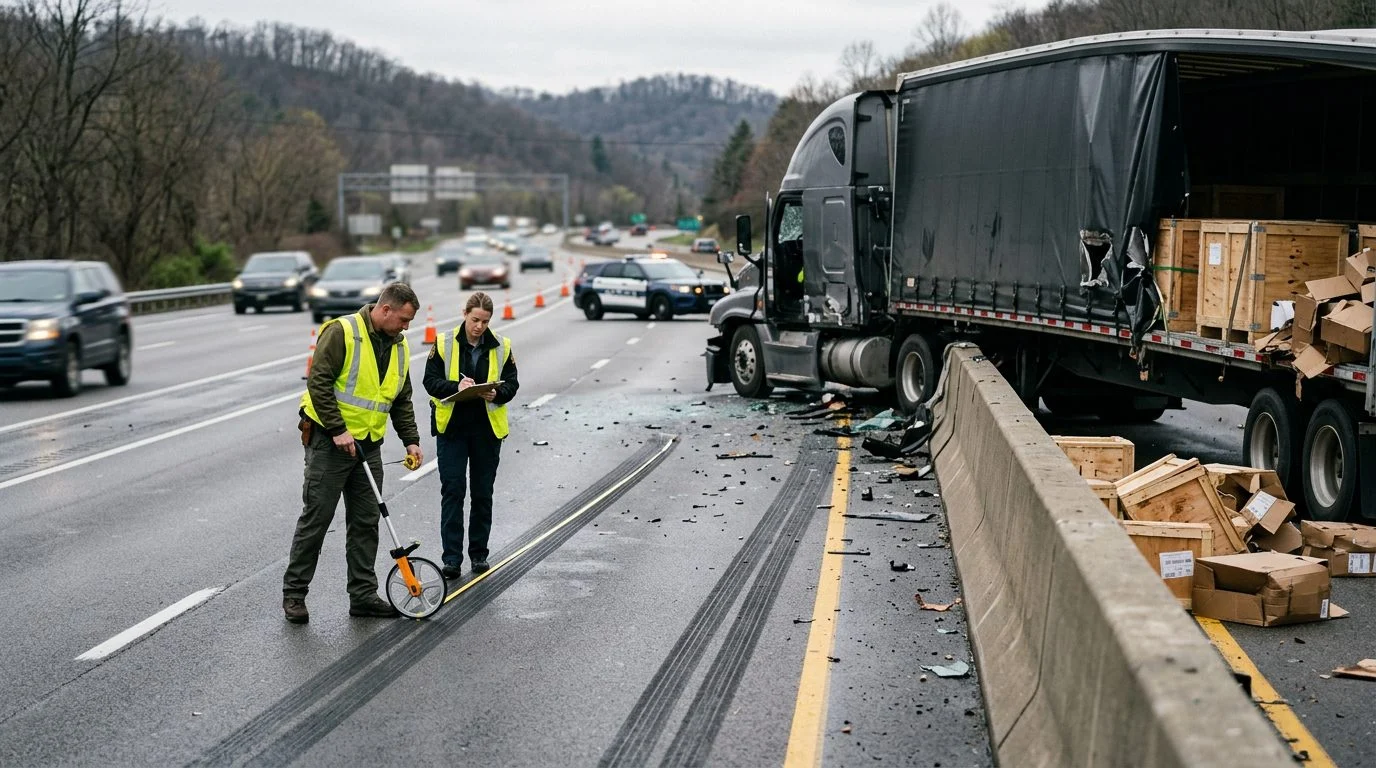
Commercial Truck Accidents
Commercial Truck Accident Lawyer in West Virginia
When a commercial vehicle crash leaves you seriously injured, Big Bubba Injury Law is here to help. We handle claims against drivers, trucking companies, and fleet operators across West Virginia.
Published October 07, 2026
Commercial Truck Accident Lawyer in West Virginia
When a commercial truck collides with your vehicle or strikes you, the aftermath is far more complex than a typical car accident. Commercial trucks—semi-trucks, tractor-trailers, dump trucks, and delivery vehicles—are far heavier than typical passenger vehicles and often travel at highway speeds. The force involved in a commercial truck collision may contribute to serious injuries, including traumatic brain injury, spinal cord damage, severe fractures, and, in some cases, death. Multiple parties may be responsible for a truck crash, depending on the facts of each case. Working with a lawyer may help you navigate this landscape and understand your options.
Big Bubba represents people seriously injured in commercial truck accidents across West Virginia. We handle catastrophic injury cases, wrongful death claims, and the complex liability investigations that truck crashes demand. Here’s what you need to know about your situation and how we can help.
If you are hurt while riding in the open bed of a pickup truck, it is worth understanding how your injuries happened and who may be responsible. Talk it through with our team — the first case review is free, confidential, and carries no obligation.
What Happens After a Commercial Truck Accident in West Virginia
Commercial truck accidents differ fundamentally from car crashes in size, force, regulation, and liability complexity. Generally, a commercial truck’s mass and speed may result in injuries that are more severe than those from passenger vehicle crashes, depending on the facts of each case. Depending on the facts of each case, parties that may bear responsibility can include the truck driver, the trucking company, maintenance contractors, cargo loaders, and parts manufacturers, each potentially liable under different legal theories.
Immediate steps after a crash:
- Seek medical care immediately, even if you feel okay. Some injuries—internal bleeding, brain injury—don’t show symptoms right away.
- Call 911 and request a police report. The report documents the scene, statements, and initial fault findings.
- Take photos of vehicle damage, road conditions, traffic signs, and the truck’s license plate and company markings.
- Get names, phone numbers, and insurance information from the truck driver and any witnesses.
- Do not admit fault, apologize, or discuss the accident with the truck driver or their insurance company without legal advice.
Why early legal guidance matters: Evidence may degrade quickly, depending on the facts of each case. Truck maintenance records, driver logbooks, and electronic data from the vehicle’s black box may be lost or destroyed if they are not preserved promptly. After a crash, an insurance adjuster may contact you and may ask for a recorded statement, so it may help to speak with a lawyer before you give one. Speaking with a lawyer early may help you understand your options, though outcomes depend on the facts of each case.
Who We Represent in Commercial Truck Accident Cases
We represent anyone injured or killed in a collision with a commercial truck in West Virginia:
- Drivers and passengers in other vehicles struck by a commercial truck
- Pedestrians and cyclists hit by commercial trucks
- People suffering catastrophic injuries: traumatic brain injury, spinal cord injury, severe burns, crush injuries, amputation, internal organ damage
- Families of people killed in commercial truck crashes
What a Commercial Truck Accident Case Covers
A commercial truck accident claim may seek damages for the following, depending on the facts of the case:
- Medical expenses: emergency care, hospitalization, surgery, rehabilitation, ongoing treatment, future medical needs, assistive devices, home modifications
- Lost wages and earning capacity: income lost during recovery and reduced earning ability if the injury prevents return to work
- Pain and suffering: compensation for physical pain, emotional distress, and reduced quality of life
- Property damage: repair or replacement of your vehicle
- Wrongful death damages: funeral and burial costs, loss of financial support to the family, loss of companionship and guidance
- Investigation and evidence: We may seek truck maintenance records, driver logbooks, electronic data from the truck’s black box, dispatch records, safety violation history, and analysis from outside consultants to evaluate whether negligence may have contributed to the crash.
Parties Who May Be Responsible in Your Commercial Truck Accident
Generally, more than one party may be responsible in a commercial truck accident, depending on the facts of each case. We investigate:
- The truck driver: depending on the facts, possible issues may include speeding, fatigue, distraction, impaired driving, failure to follow traffic laws or federal hours-of-service regulations
- The trucking company: depending on the facts, possible issues may include inadequate driver training, negligent hiring or retention, failure to maintain the vehicle, pressure to meet delivery deadlines, violations of federal safety regulations, or a poor safety culture. Liability depends on the facts of each case.
- The truck owner (if different from the operating company)
- Maintenance and repair contractors: defective repairs, failure to inspect brakes, tires, coupling systems, or other safety equipment
- Cargo loaders and shippers: improper loading, unsecured cargo, overweight loads that affect braking and handling
- Parts manufacturers: defective tires, brakes, steering components, or other equipment
Common Injuries in Commercial Truck Accidents
The force of a commercial truck collision can cause injuries that may require immediate and long-term medical care, depending on the facts of each case.
Traumatic brain injury (TBI): According to the National Institute of Neurological Disorders and Stroke, traumatic brain injury can result in concussion, diffuse axonal injury (damage to nerve fibers), intracranial bleeding, and long-term cognitive and behavioral changes. Survivors may experience memory loss, difficulty concentrating, mood changes, and chronic headaches, and some may need rehabilitation over an extended period, depending on the individual and the facts of each case.
Spinal cord injury: The NINDS notes that spinal cord injury may, depending on the severity and location of the injury and the individual, be associated with effects such as partial or complete paralysis, chronic pain, loss of bladder and bowel control, and permanent disability. Recovery outcomes vary from person to person, and some people may need ongoing care, assistive devices, or home modifications, depending on the severity of the injury and the individual.
Other catastrophic injuries: severe fractures, internal organ damage, internal bleeding, severe burns, amputation, and disfigurement.
Wrongful death: Families lose a loved one, face funeral costs, lose financial support, and suffer the lasting grief of losing a family member.
If you were injured while riding in a truck bed during a commercial truck accident, we can help you understand your legal options. Talk it through with our team — the first case review is free, confidential, and carries no obligation.
What to Expect: How We Handle Your Commercial Truck Accident Case
We follow a step-by-step process to investigate your accident, identify parties who may be responsible, and discuss your options for pursuing a claim.
Step 1 – Free case review: You tell us what happened. We listen carefully, ask questions about your injuries and losses, and explain your legal options. This free case review is confidential, with no obligation.
Step 2 – Investigation: We gather the police report, your medical records, the truck’s maintenance and inspection logs, the driver’s logbook and hours-of-service records, electronic data from the truck’s black box, witness statements, and photographs of the accident scene. We may hire accident reconstruction professionals to analyze how the crash occurred.
Step 3 – Determining liability: We review the evidence that may relate to each potential claim—driver negligence, company negligence, maintenance failure, or equipment defect—depending on the facts of each case.
Step 4 – Demand and negotiation: We prepare a detailed demand letter describing your injuries, medical treatment, and lost wages, and we may outline the legal basis for a claim, which generally depends on the facts of your case. We negotiate with insurance companies and defendants on your behalf, which may or may not result in a settlement, depending on the facts of your case.
Step 5 – Filing a lawsuit (if necessary): If settlement discussions do not resolve the claim, we may file a lawsuit in West Virginia court and prepare for trial, depending on the facts of your case.
Step 6 – Discovery and trial preparation: We exchange evidence with the other side, take depositions from witnesses and qualified professionals, and prepare your case for trial.
Step 7 – Trial or settlement: We present your case to a jury or reach a settlement agreement.
Timeline: How long a commercial truck accident case takes can vary widely and depends on injury severity, liability complexity, and whether trial is necessary. We handle each step of your case with attention to timing, though how long it takes depends on the facts of each case.
How Big Bubba Approaches Commercial Truck Accident Cases in West Virginia
What we do: We handle commercial truck accident cases across West Virginia, representing people with catastrophic injuries and families in wrongful death cases. We work to review the injuries, the parties involved, and what each case may require.
This knowledge may be relevant when evaluating whether negligence played a role in an accident, depending on the facts of each case.
Resources: We have access to accident reconstruction professionals, medical providers, investigators, and other resources that may be used to evaluate a case, depending on the facts.
Commitment to our clients: We take time to learn about your injury, your losses, and your goals. We aim to communicate clearly and keep you updated as your case progresses.
What Is the Statute of Limitations for a Commercial Truck Accident Claim in West Virginia?
Under West Virginia law, an action for damages for personal injuries generally must be brought within two years next after the right to bring the action accrued (W. Va. Code § 55-2-12), though exceptions may apply depending on the facts of your case. Generally, a wrongful death claim in West Virginia must be filed within two years of the date of death (W. Va. Code § 55-7-6), though exceptions may apply depending on the facts of your case. This deadline generally limits the time to file, so waiting longer may affect your ability to sue, though exceptions may apply depending on the facts of your case.
Why this matters: Evidence can degrade over time, and witnesses may move away or forget details. Truck maintenance records and electronic data may be lost, depending on the facts. Early legal action may help preserve critical evidence, depending on the facts of each case.
Report the accident to your insurance company as soon as possible, but do not give a recorded statement without consulting a lawyer first.
What Not to Say to an Insurance Adjuster After a Commercial Truck Accident
Insurance adjusters may work for the trucking company or its insurance carrier rather than for you. Anything you say may be used in evaluating your claim. Protect yourself:
- Do not admit fault or apologize, even if you feel responsible.
- Do not give a recorded statement without consulting a lawyer first. Adjusters may ask leading questions, so it is important to think carefully before answering.
- Do not discuss the accident on social media or with anyone other than your doctor and lawyer.
- Do not accept an early settlement offer without understanding the full extent of your injuries and losses.
- Do not sign documents or release forms without legal review. Signing releases can waive your right to sue.
- Do say: “I was injured in an accident. I am consulting with a lawyer and will have my attorney contact you.”
Is It Legal to Ride in the Back of a Pickup Truck in West Virginia?
If you are hurt while riding in the open bed of a pickup truck, it is worth understanding how your injuries happened and who may be responsible. However, if an accident occurs and a passenger is injured while riding in the truck bed, whether the truck owner or driver may be liable for negligence generally depends on the facts of each case, including whether they failed to provide a safe ride. If you were injured while riding in a truck bed during a commercial truck accident, we can help you understand your legal options.
Not sure what your next step is?
Talk it through with our team — the first case review is free, confidential, and carries no obligation.
Frequently Asked Questions About Commercial Truck Accidents in West Virginia
Q: Can I sue a trucking company directly, or only the driver?
Generally, claims may be pursued against both the driver and the trucking company, depending on the facts of each case. Companies can generally be liable for driver negligence under the legal doctrine of respondeat superior (employer liability), and they may also be directly liable for negligent hiring, training, or vehicle maintenance, depending on the facts of each case.
Q: How much is my case worth?
Every case is unique. Value depends on injury severity, medical expenses, lost wages, age, earning capacity, and the strength of liability evidence. We evaluate your case individually and discuss realistic expectations during a free case review.
Q: What if I was partially at fault?
West Virginia follows comparative negligence law (W. Va. Code § 55-7-13c). Under West Virginia law, your fault generally does not bar you from recovering unless your fault is greater than the combined fault of all other persons responsible for the total amount of damages, if any, to be awarded, though exceptions may apply depending on the facts of your case (W. Va. Code § 55-7-13c). Generally, your recovery may be reduced by your percentage of fault, though exceptions may apply depending on the facts of your case.
Q: Do I have to go to trial?
No. Most cases settle before trial. However, we are prepared to take your case to trial if the insurance company or defendant will not offer fair compensation.

Understanding the Road Ahead After a Commercial Truck Accident
If you or a family member was injured in a commercial truck accident in West Virginia, contact Big Bubba today. We offer a free, confidential case review. Tell us what happened, and we will explain your legal options and next steps.
If you were seriously hurt in a commercial truck accident in West Virginia, reach out to Big Bubba—people in your situation can contact us to discuss what happened and explore their options.
Related practice areas
- Commercial Vehicle Accidents in West Virginia: Your Rights & Next Steps