
Passenger Injuries in West Virginia
Hurt on a Commercial Bus? You Don't Have to Sort Out the Next Steps Alone
Big Bubba Injury Law represents people injured as passengers in commercial bus crashes, along with families facing wrongful death. Tell us what happened and we will explain your options in plain language.
Published October 12, 2026
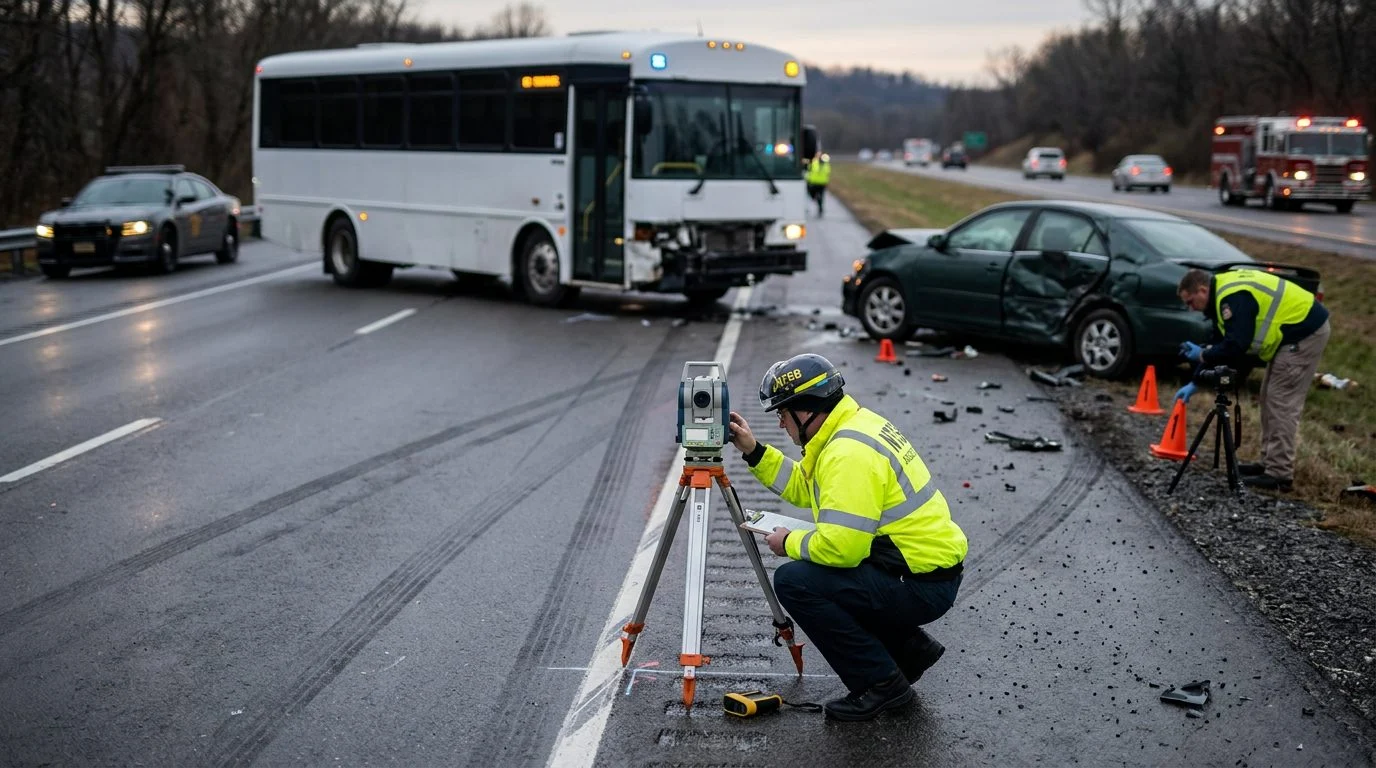
A passenger injured in a commercial bus crash in West Virginia generally should start with medical care. Then, report the crash, keep records, and slow down on insurance paperwork. This page explains each step in plain language. It’s written for passengers and for family members of someone who was hurt or killed.
What Counts as a Commercial Bus Crash for a Passenger
A commercial bus crash generally involves a bus used to carry people for pay or for a business purpose. Motorcoaches, charter buses, tour buses, and some transit or shuttle vehicles can all fall into this group. The type of bus matters because it can affect who may be involved and which rules apply.
A passenger may be hurt in several ways. The bus might hit another vehicle, leave the road, or be affected by road or weather conditions. What caused the crash depends on the facts of each case.
Several parties may be involved. These can include the driver, the bus company, the vehicle owner, or a contractor who maintained the bus. Who may be responsible is a question the facts have to answer. It isn’t something to assume at the start. If you’re not sure what kind of bus you were on, write down the company name and your ticket details. Those details help sort out the type later.
Not sure what your next step is?
Talk it through with our team — the first case review is free, confidential, and carries no obligation.
Get Medical Care First and Keep Every Record
Getting checked by a medical provider soon after a crash is generally the first step. This is true even if you feel only sore or shaken. Some symptoms can show up hours or days later, and that depends on the person and the injury.
Keep every medical paper. That includes discharge instructions, imaging results, prescriptions, and bills. Start a simple daily journal too. Write down pain, headaches, sleep problems, and any missed work or activities.
Medical records are generally central to showing what was treated and when. A gap in care may be questioned, and how much it matters depends on the facts. Following the treatment plan your provider gives you is generally a good idea. If you’re a family member, ask the hospital for copies of records for the person who was hurt or who died. Access rules can vary.
Report the Crash and Gather Scene Information
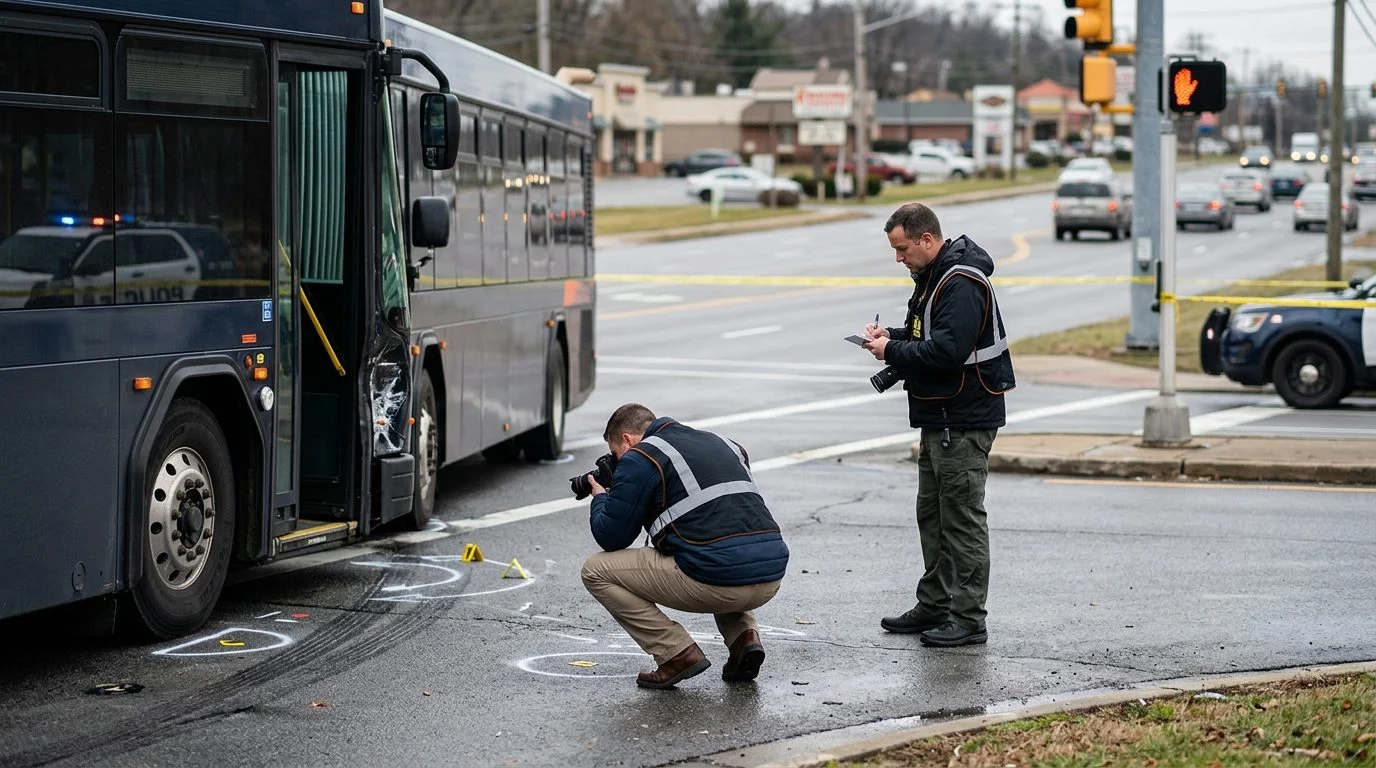
Reporting the crash to the police agency that responds is generally the first formal step. Ask the officer for the report number before you leave. Reporting procedures can vary, so ask the agency how to get a copy of the report.
Write down the details you can recall while they’re fresh. Useful facts include the bus company name, route, driver name, bus number, and the USDOT number if it’s visible on the vehicle. Note your ticket or booking records, the time, and the location.
If you can, take photos of your seat area, visible damage, the road, and the weather. Collect names and phone numbers from witnesses. Not every type of evidence will be available in every case, and some may be harder to keep over time. Keep whatever you have in one folder.
Handling Insurance Contact and Written Statements
Generally, an insurance company for the bus operator or another driver may contact a passenger soon after a crash. In many cases, you may not be required to give a recorded statement right away, but exceptions and policy terms may apply depending on the facts. It’s reasonable to ask for time to think it through.
West Virginia law also limits some early contact with injured people. W. Va. Code § 55-7-11a generally restricts certain attempts, within a set period after a personal injury and under conditions stated in the statute, to negotiate a settlement, obtain a release, or obtain a statement from the injured person. The statute also contains exceptions, and in certain cases it may allow a settlement or release obtained in violation of it to be disavowed within a set period. The exact time periods, conditions, and exceptions are stated in the statute itself, and whether it applies depends on the facts.
Keep a log of every call, letter, and claim number. Don’t sign a release until you understand what it covers. Insurance coverage, policy limits, and how claims are handled generally depend on the policy terms and the facts of each case.
Have questions about what happened?
Ask our team directly. The first conversation is free, confidential, and there is no obligation to continue.
Why More Than One Party May Be Responsible
More than one party may share responsibility in a bus crash, depending on the facts. The driver, the operator, a maintenance provider, another driver, or a government entity could each be part of the picture. Whether any of them is responsible depends on what happened.
For commercial motor vehicles, W. Va. Code § 55-7-32 defines an “employer defendant” to include the vehicle’s owner, the operator’s employer, and others with legal control over the vehicle. Whether any of them is liable depends on the facts of each case.
Fault can be shared among several people. Under W. Va. Code § 55-7-13c, an injured person who shares some of the fault may generally still pursue a claim as long as their share is not greater than the combined fault of the others, and any award is generally reduced in proportion to their share of fault, though exceptions may apply depending on the facts. Federal rules may also matter. Depending on the facts, federal motor carrier rules may be relevant after a bus crash. Whether this applies depends on the facts of each case. Under W. Va. Code § 55-7-12, a release with one party generally does not end claims against other parties, though its terms matter, a settlement with one party may affect what can be recovered from others, and exceptions may apply depending on the facts.
Deadlines and Why Timing Matters
Time limits generally apply to injury and wrongful death claims in West Virginia. Exceptions may apply depending on the facts. For a personal injury, W. Va. Code § 55-2-12 generally sets a two-year period after the right to bring the claim begins.
For a death, W. Va. Code § 55-7-6 generally requires a wrongful death action within two years after the death. That action is generally brought by the personal representative of the deceased person’s estate. Family members may work with that representative; the rules generally depend on the facts, and exceptions may apply.
A missed deadline may affect the ability to bring a claim. Exceptions may apply, so don’t assume a date has passed or hasn’t. If a government entity is involved, other rules may apply. For example, W. Va. Code § 29-12a-6 generally sets a two-year period for claims against a political subdivision. That period can be measured from when the injury was discovered or should have been discovered, depending on the facts.
Records That May Be Relevant After a Bus Crash
Which records matter depends on the facts of each case. Records that may be relevant after a bus crash can include:
- Your ticket, boarding pass, or booking records
- The police report number and a copy of the report
- Medical records, discharge instructions, imaging results, prescriptions, and bills
- Your daily journal of symptoms, missed work, and missed activities
- Photos of your seat area, visible damage, the road, and the weather
- Names and phone numbers of witnesses
- Letters, emails, and claim numbers from insurers, along with your call log
Not every record will exist or be available in every case. Keeping what you have together in one place can make it easier to find later.
Frequently Asked Questions
Do I have to give a recorded statement to the bus company’s insurer?
In many cases, you may not be required to give a recorded statement right away, and it’s reasonable to ask for time before deciding. The answer depends on the facts and the policy terms. For example, your own insurance policy may include duties to cooperate, and exceptions may apply.
How long do I have to file a claim after a West Virginia bus crash?
Generally, personal injury and wrongful death claims have a two-year period. The answer depends on the facts, and exceptions may apply. If a government entity or political subdivision is involved, other rules may apply.
Can family members pursue a claim if a passenger died?
Generally, a wrongful death action is brought by the personal representative of the estate. The details depend on the facts.
Want to know where you stand?
Tell us what happened and our team will walk you through the options available to you, at no cost.
Related practice areas
- Commercial Vehicle Accidents in West Virginia: Your Rights & Next Steps
- Commercial Vehicle Accidents in Charleston
- Commercial Vehicle Accidents in Huntington
- Commercial Vehicle Accidents in Morgantown