
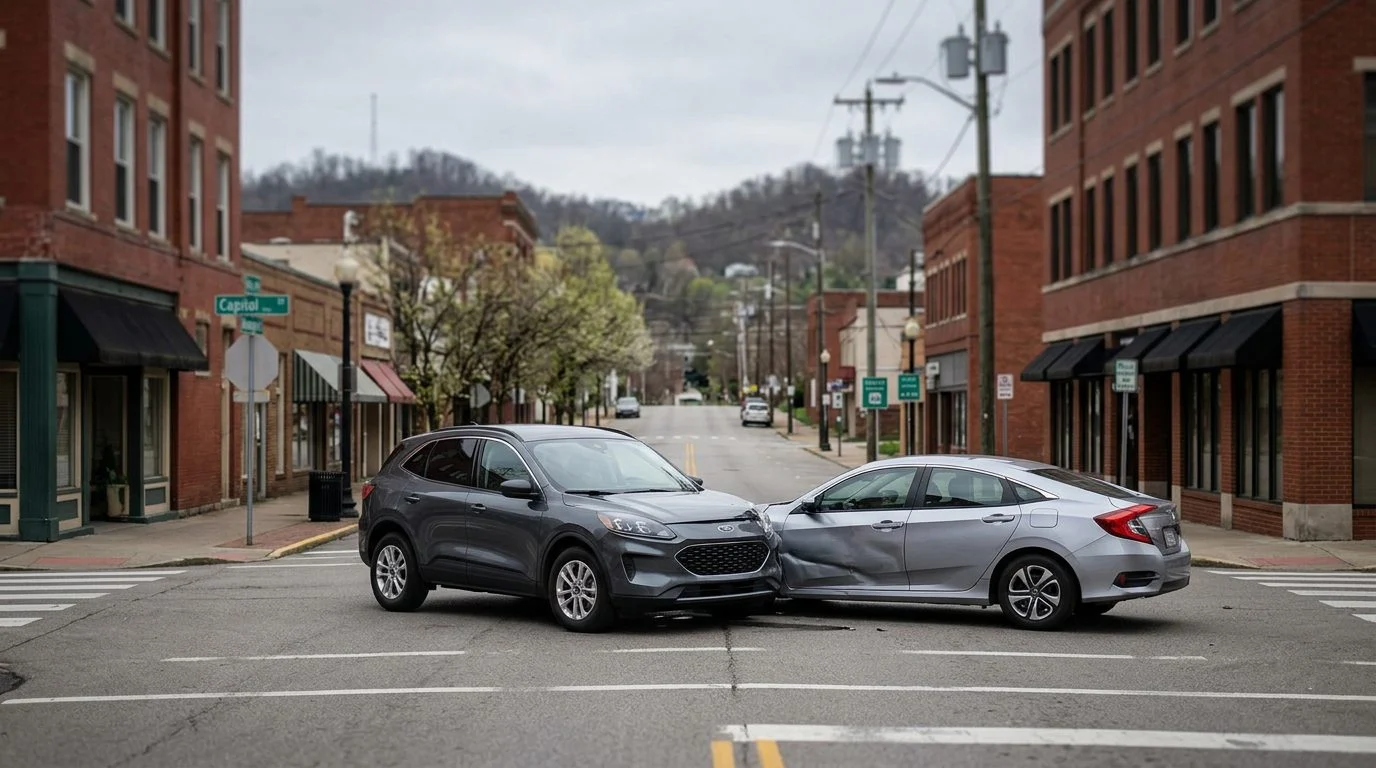
Car and Truck Crash Claims | West Virginia
Intersection Crash? Find Out Who May Be Responsible
Right-of-way, signals, and witness accounts all shape how fault is looked at. Learn what matters and how the firm can help you sort it out.
Published November 20, 2026
If you were hurt in an intersection car accident, or a family member was, fault is usually the first question. In West Virginia, fault is generally split by percentage among everyone who contributed to the crash. Your own share can reduce what you recover, and in some situations it can bar recovery.
This page explains how fault is commonly looked at in an intersection crash. It covers right of way, crash patterns, state fault rules, evidence, and insurance disputes. It is general information, not a prediction about any one claim.
Why Fault Is the Central Question After an Intersection Crash
Fault decides which driver’s insurance may respond to your losses. It also affects whether you can seek money for medical care, lost income, and pain and suffering.
Intersections are places where several drivers have duties at the same moment. Cars turn, stop, and enter traffic in the same small space. Because of that overlap, the key question is often who had the right of way and whether that driver acted with reasonable care.
The answer varies with the facts of each crash. The sections below show the questions that tend to matter. Many people are also dealing with injuries, a damaged car, and calls from insurers at the same time. Fault is one piece of that larger picture.
If a crash at an intersection left you or a family member hurt, you may have a claim worth talking through, and you can request a free case review with us. Talk it through with Big Bubba — the first case review is free, confidential, and carries no obligation.
Right-of-Way Rules That Apply at Intersections
Traffic signals, stop signs, and yield signs each set different expectations for drivers. Each one changes who has to wait and who may go.
Exceptions may apply, such as for drivers reporting to state, county, or local authorities a traffic accident, medical emergency, fire, an actual or potential criminal or delinquent act, or a road condition that causes an immediate and serious traffic or safety hazard.
A driver who runs a red light or ignores a stop sign may be found to have breached a duty of care. That does not end the analysis. Investigators and insurers may still look at how fast each car was moving and whether a driver had time to stop.
Common Intersection Crash Patterns and How Fault Is Analyzed
Most intersection crashes follow a few patterns, and each one raises different fault questions.
Left-turn crashes happen when a driver turns in front of oncoming traffic. In these cases, the turning driver’s duty to yield is often central. Investigators may ask whether the other car was close enough that the turning driver should have waited.
A T-bone crash happens when the front of one vehicle strikes the side of another, often at an intersection. Investigators may look at signal timing, speed, and sight lines. They want to know who entered the intersection first.
Rear-end crashes near intersections, and crashes where a driver ran a yellow or red light, are also common. Fault in these cases often turns on the order of events, such as when the light changed and when each driver braked.
West Virginia’s At-Fault System and Comparative Fault
Recovery in West Virginia turns on fault, and an injured person’s own share can change the result.
Under West Virginia Code § 55-7-13a, liability is allocated to each person, including the injured plaintiff, in direct proportion to that person’s percentage of fault. The percentages for one incident must total either zero or 100 percent.
Under W. Va. Code § 55-7-13a, “comparative fault” means the degree to which a person’s fault was a proximate cause of an alleged personal injury or death or damage to property, expressed as a percentage. Under West Virginia Code § 55-7-13c, your fault does not bar recovery unless it is greater than the combined fault of all other persons responsible for the damages. If your fault is less than that combined fault, your recovery is reduced in proportion to your share.
Under West Virginia Code § 55-7-13d, the party trying to prove another person’s fault generally carries the burden of proving it.
Evidence That May Show Who Was at Fault
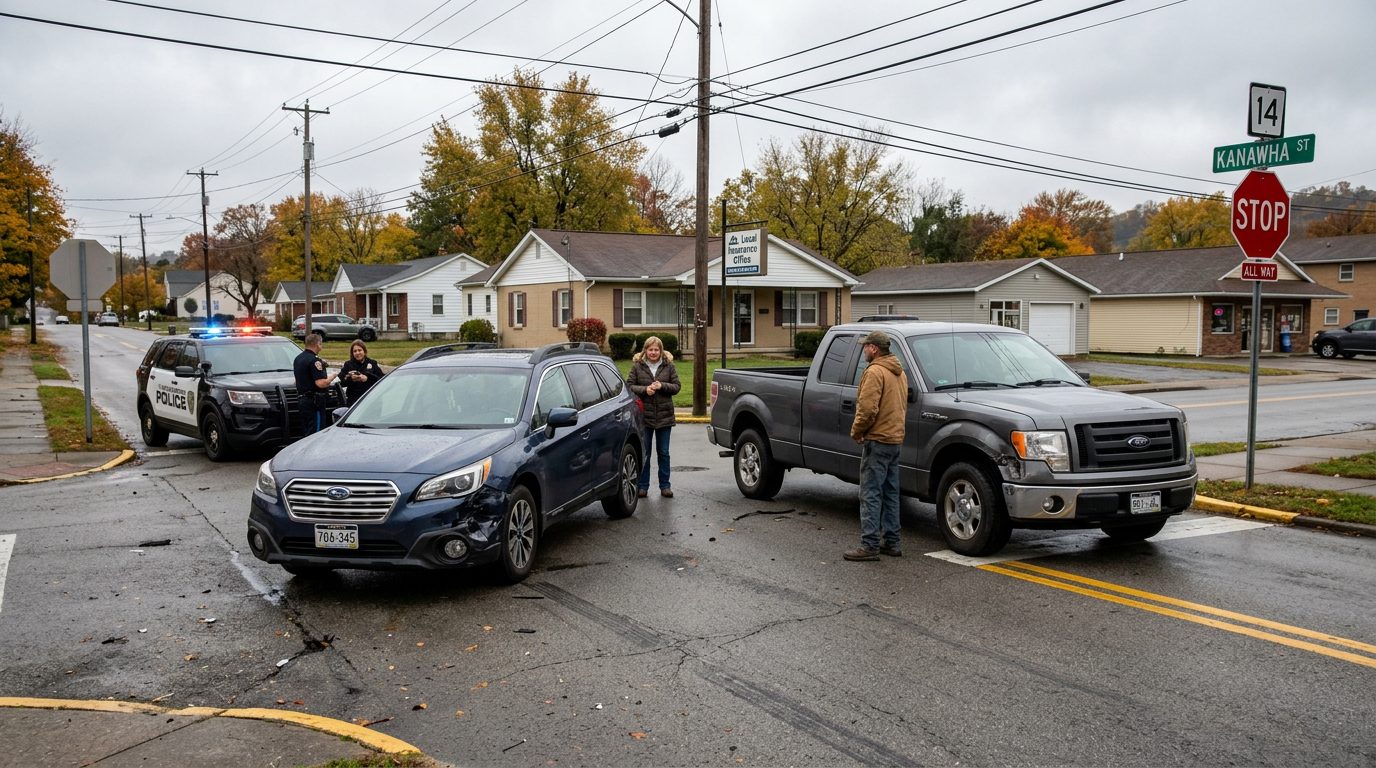
The police crash report is often the first written record of how an intersection crash happened.
Under West Virginia Code § 17C-4-6, a driver in a crash involving injury, death, or at least $1,000 in total property damage must notify police right away. An officer who investigates generally prepares a report within 24 hours after completing the investigation, under West Virginia Code § 17C-4-7.
If you’re able, you should also share your name, a phone number, and your insurance details at the scene, as West Virginia Code § 17C-4-3 describes.
Other evidence may include photos of the vehicles and the intersection, names of witnesses, traffic camera or dashcam footage, and vehicle data where available. Early preservation may matter, because footage is often kept for only a limited time. The police report may list citations and the officer’s observations. That report may be relevant to a fault analysis.
How Insurers Evaluate Fault and Where Disputes Arise
Insurers usually review the police report, each driver’s account, physical evidence, and any footage before they decide fault.
Some insurers may dispute a claim, especially when each driver tells a different story about the light, the turn, or the speed of approach.
Texting while driving is restricted in West Virginia. Under West Virginia Code § 17C-14-15, a personal lines liability policy may not contain a provision used to deny coverage for legal damages from injuries a violation caused, as long as amounts are within policy limits.
Timing matters too. Under West Virginia Code § 55-7-11a, for twenty days after a personal injury, while the injured person is a hospital inpatient or unable to work, certain settlement talks and statements are limited.
Not sure what your next step is?
Talk it through with Big Bubba — the first case review is free, confidential, and carries no obligation.
Deadlines, Serious Injuries, and Reaching Out About Your Crash
West Virginia generally allows two years to file a personal injury lawsuit, and exceptions may apply. See West Virginia Code § 55-2-12.
Serious injuries change the picture. A brain or spinal cord injury can involve long-term care needs and questions about work. You can read our traumatic brain injury overview for more on those injuries.
Can I still recover if I was partly at fault?
Possibly. Under West Virginia’s comparative fault rules, your recovery may be reduced by your share of fault, and your fault bars recovery entirely only if it is greater than the combined fault of all other persons responsible for the total amount of damages (W. Va. Code § 55-7-13c).
Can my own policy help if the other driver is uninsured?
Possibly.
If a crash at an intersection hurt you or someone you love, you don’t have to sort out fault alone. You may have a claim worth discussing. You can request a free case review with us, with no obligation to continue.