
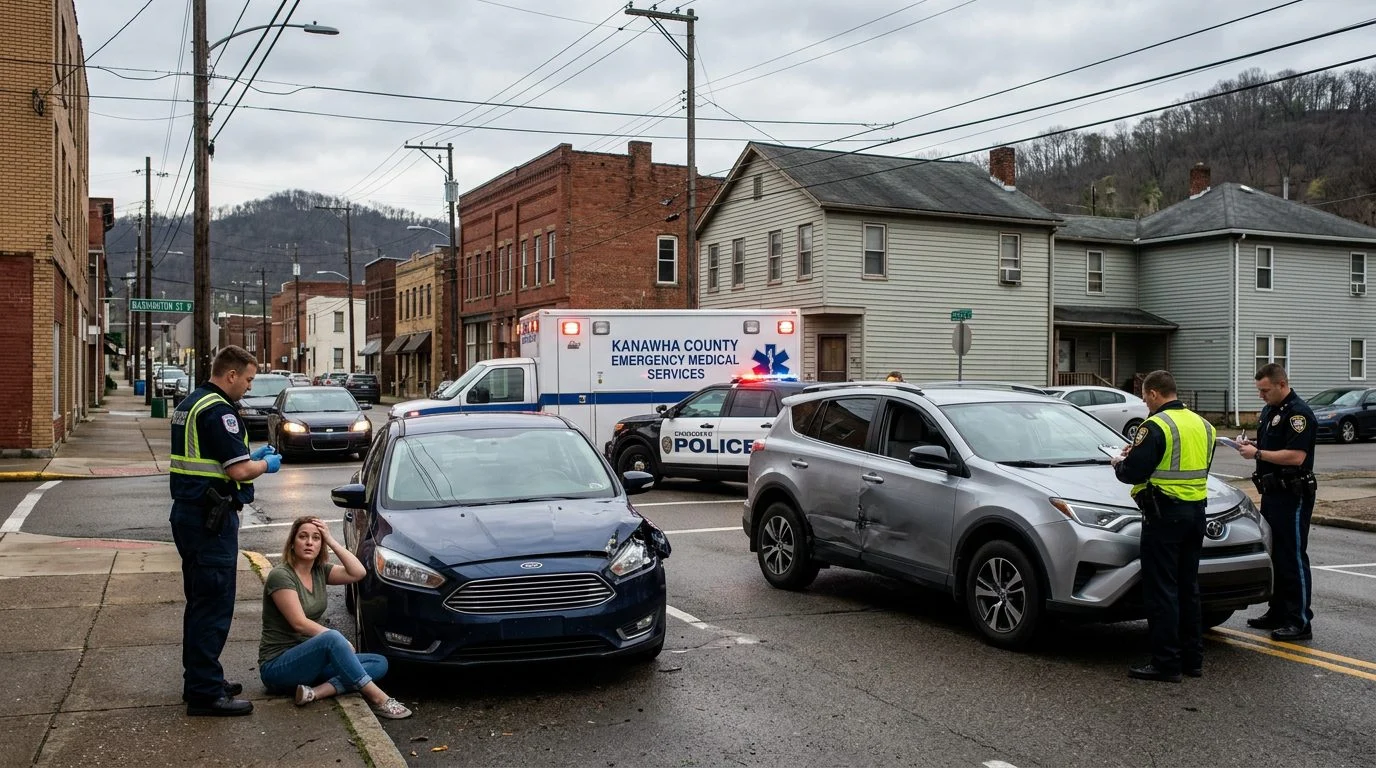
Car Accident Injuries | West Virginia
Headache After a Crash? Know What to Watch For
Some concussion signs take hours or days to appear. Learn which changes deserve a prompt medical check and when to bring in a legal team.
Published November 20, 2026
You were in a car accident, and now your head aches, bright lights bother you, or a family member says you aren’t yourself. You want to know if this is a mild concussion. The most common symptoms are headache, dizziness, nausea, sensitivity to light and noise, trouble thinking clearly, and changes in mood or sleep. Some symptoms appear hours or days after a crash, and a few signs call for emergency care right away.
What Is a Mild Concussion After a Car Accident?
A mild concussion is a brain injury caused by a bump, blow, or sudden jolt that disrupts how the brain normally works. The VA traumatic brain injury overview lists car accidents as one cause and separates mild injuries from more severe ones.
In a crash, the head can strike the steering wheel, a window, or an airbag. The brain can also move quickly inside the skull even without a direct hit. That is why a crash at a low speed can still cause a concussion.
Many people think they would know if they had a concussion because they blacked out. That isn’t reliable. A mild concussion can happen without any loss of consciousness. Symptoms can be subtle, and people often blame them on stress, soreness, or a bad night’s sleep.
Serious and mild head injuries can look alike at first. That is one reason a medical evaluation matters, which we cover later in this guide.
If a headache or foggy thinking is worrying you after your crash, you don't have to sort it out alone. We're here to talk through your accident and your options in a free case review. Talk it through with Big Bubba — the first case review is free, confidential, and carries no obligation.

Common Early Symptoms to Watch For
The early symptoms most often reported after a mild concussion are headache, nausea, dizziness, and sensitivity to light and noise. They can start within minutes or hours of the crash.
- Headache. A new headache, or one worse than your usual headaches, is a common sign.
- Nausea or vomiting. Feeling sick to your stomach soon after the crash can point to a head injury.
- Dizziness or balance problems. You may feel off-balance when standing, walking, or turning your head.
- Sensitivity to light and noise. Bright lights, TV, traffic, or a busy room may feel harder to handle than before.
- Vision changes and fatigue. Blurred or double vision, and feeling tired or mentally slowed, are also reported.
- Ringing in the ears. Some people report ringing or buzzing after a head injury.
Symptoms like these are not proof of a concussion on their own. Neck strain and stress can cause some of them too. A medical provider can help sort out the cause.
Thinking, Memory, and Mood Changes
Changes in thinking, memory, and mood are common after a mild concussion. Family members often notice them before the injured person does.
Watch for these changes:
- Confusion, feeling dazed, or trouble focusing on a conversation or task.
- Memory gaps about the crash or the hours around it.
- Irritability, anxiety, sadness, or mood swings that feel unlike the person.
- Sleep changes, such as sleeping much more or much less than usual, or trouble falling asleep.
Thinking problems can also show up at work or school. You might forget appointments or need to reread the same page several times.
If you were hurt, these changes are easy to dismiss. Ask someone you trust to tell you if you seem different. If you’re helping someone else, write down what you see, when it started, and whether it’s getting better or worse.
Symptoms That Can Appear Later
Some concussion symptoms do not show up right away. They can develop hours or days after a crash, and that delay can make them easy to miss.
Later symptoms can include headaches that return, trouble concentrating, and changes in sleep or mood. The pattern varies from person to person. Symptoms may improve, stay the same, or change over time.
A written symptom log can help. Each day, note your symptoms and how strong they were, how you slept, what activities you did, and any medicine you took. Share the log with your medical provider so they can track changes. If a symptom gets worse after an activity, write that down too.
How long symptoms last is different for everyone. Rest and activity limits should follow your provider’s advice, not a general rule. The right balance depends on your symptoms and your health.
Does a Concussion Require Loss of Consciousness?
No, a concussion does not require losing consciousness. Blacking out is one possible sign, but many people with a mild concussion never lose consciousness.
If you did black out, even for a few seconds, tell a medical provider promptly. Also mention if you felt dazed, saw stars, or can’t remember the moments before or after the crash. These details help a provider understand what happened.
A brief blackout is one piece of information. Your provider also needs the full picture, including symptoms that came later, to decide what comes next. Being evaluated is the right step even if you feel fine at the scene.
Warning Signs That Need Emergency Care
Call 911 or go to the nearest emergency department if you notice any of these signs after a head injury:
- A headache that gets worse or is severe
- Repeated vomiting
- A seizure
- Slurred speech
- Weakness or numbness in an arm or leg
- One pupil larger than the other
- Unusual drowsiness or trouble waking up
- Confusion that gets worse
The Mayo Clinic concussion guidance says that worsening headache, unequal pupils, confusion, or inability to wake after a head injury need immediate medical care.
These signs can point to bleeding inside the skull. Only a medical provider can find the cause through an exam and testing. Don’t wait to see whether the signs pass.
Not sure what your next step is?
Talk it through with Big Bubba — the first case review is free, confidential, and carries no obligation.
Why a Medical Evaluation Matters After a Crash
A medical evaluation is the way to learn whether a head injury is a concussion. A provider can examine you, decide whether imaging or other tests are needed, and recommend a plan.
Treatment, rest, and return to work or driving are decisions for your provider. Follow that advice, and ask questions when something is unclear.
Records matter too. Your first evaluation and the symptoms you reported show what was said and when. That record helps your health care team, and it can also matter later if a claim comes up. Write down what happened in the crash, including what struck your head, while the details are fresh.
If you were in a crash that caused injury, W. Va. Code § 17C-4-1 requires the driver to stop at the scene, or as close as possible, and stay until the legal requirements are met. The main exception is leaving as needed to help an injured person.
How a Head Injury Claim May Be Affected by Fault and Insurance
A head injury claim often depends on who was at fault, how the crash happened, and how quickly the claim is handled. The facts of each case matter.
West Virginia generally allows two years to file a personal injury action, and exceptions may apply. See W. Va. Code § 55-2-12 for the rule as written.
Under W. Va. Code § 55-7-13c, a plaintiff’s own fault generally does not bar recovery unless it is greater than the combined fault of others. W. Va. Code § 55-7-13c reads: “(c) Any fault chargeable to the plaintiff shall not bar recovery by the plaintiff unless the plaintiff’s fault is greater than the combined fault of all other persons responsible for the total amount of damages, if any, to be awarded.” If it is less, recovery is generally reduced by the plaintiff’s share.
W. Va. Code § 55-7-11a generally restricts settlement negotiations for 20 days after an injury while the injured person is hospitalized or unable to work.
Some insurers may dispute whether the crash caused a concussion, especially when symptoms appear later. A symptom log and an early evaluation can help document the timeline.
If a commercial truck is involved, other rules can apply. Learn more about car accident claims and truck accident claims.

Understanding Your Accident Claim
If a headache won’t quit, or you’re worried about a parent or spouse who hasn’t seemed like themselves since the crash, you may still be deciding what to do next. You might be wondering whether to get checked, what to write down, or whether to talk with someone about the crash and your injury.
You can request a free case review with the firm to talk through your accident, your symptoms, and your options. The review is confidential, and you have no obligation to go further.
We handle car accident and truck accident claims, catastrophic injuries, traumatic brain injury, spinal cord injury, and wrongful death. We serve West Virginia injury victims, including those in Charleston, Huntington, Morgantown, Wheeling, Martinsburg, Parkersburg, Beckley, Clarksburg, Fairmont, and Weirton.