

Rear-End Collisions | West Virginia
Rear-Ended in West Virginia? Know What Losses May Be Part of Your Claim
A plain-language guide for drivers and passengers hurt in a rear-end crash, from the firm that handles car, truck, and commercial vehicle injury claims across the state.
Published November 19, 2026
Being rear-ended can leave you hurt, rattled, and holding paperwork you didn’t expect.
If you’re asking what you can sue for after being rear-ended, here is the short answer. In West Virginia, an injured person may generally seek compensation for medical bills, lost income, and vehicle damage. Pain and changes to daily life can count too, if another driver’s fault played a part in the crash. Whether that applies to you depends on the facts.
This page explains each category of loss and who may be responsible. It also covers how fault and deadlines generally work, and what changes with serious injuries.
What You May Be Able to Recover After a Rear-End Crash
Most rear-end claims seek two kinds of losses. Economic losses are bills and income you can count. They include medical care, lost wages, and vehicle damage.
Non-economic losses are harder to put on a receipt. They include physical pain, emotional distress, and lost activities you once enjoyed.
Some rear-end claims settle without a lawsuit, and others go to court. Which path fits depends on your injuries and how the crash happened.
A short-term neck strain leads to a different set of losses than a head injury that affects how you work. Each category gets its own section below.
People often feel pressure to sort out bills and paperwork before they understand their injuries. That’s normal. It’s why writing things down early helps. Keep track of what you spend and miss, even if you’re not sure yet whether it matters. Think of the claim as a record of everything the crash took from you, not just the car. For the broader picture of crash injury claims, read our guide on traumatic brain injury after accidents.
If you were rear-ended and are still sorting out your options, you don't have to figure them out alone. We can talk through your situation in a free case review. Talk it through with Big Bubba — the first case review is free, confidential, and carries no obligation.

Who May Be Responsible When One Car Hits Another From Behind
Common examples include following too closely, driving distracted, or driving too fast for conditions.
Rear-end crashes are not always this simple. A driver may stop without warning, change lanes, or have a mechanical problem. More than one person can share fault. The facts of each crash shape who is responsible.
After a crash with injury, death, or at least $1,000 in total property damage, the investigating officer must prepare a report. The officer must do this within 24 hours after finishing the investigation, under W. Va. Code § 17c-4-7.
If you were in a crash, the officer must also, within 24 hours, provide the owner, operator, and insurance information for all involved parties to each of the other involved parties and to each party’s respective insurance agents, on request and at no cost. A police crash report is one record. It doesn’t settle the question of fault on its own.
Medical Bills, Future Care, and Lost Income
Medical bills are usually the first loss people notice. Emergency care, imaging, physical therapy, prescriptions, and follow-up visits can all be part of a claim. Keep every bill, visit summary, and pharmacy receipt.
Future care can matter too. If a doctor documents a continuing need for treatment, that need may be part of a claim. Your own providers are the people who can explain what you still need. A lawyer can’t diagnose your injuries or predict your recovery.
Lost income works the same way. Time away from work, reduced hours, or a job change caused by the injury may count. Pay stubs, employer letters, and leave records help show what you lost.
Neck pain and stiffness may start in the first few days after a crash. FloridaHealthFinder’s whiplash entry describes this kind of soft-tissue injury.
Gaps in treatment can be questioned. Some insurers may ask why care paused. Follow your provider’s plan, keep notes, and write down any missed appointments and the reason why.
Pain, Suffering, and Changes to Daily Life
Non-economic losses cover how the crash changed your life. Physical pain, emotional distress, sleep problems, and fear of driving are common examples. Loss of hobbies, household work, and family roles can also count.
These losses are real, even though no bill shows them. They’re usually shown through medical notes, your own account of daily limits, and statements from people who saw the change. Family members often notice changes first, like irritability, withdrawal, or trouble sleeping. Their observations can add useful detail.
A simple journal of pain levels and activities may help a lawyer understand the impact, if you choose to keep one. Write what you notice, not what you think someone wants to hear. Talk with your providers about emotional symptoms too, so they appear in your medical records. A common mistake is waiting months to mention these symptoms, which can make them harder to connect to the crash.
There’s no fixed formula for putting a value on these losses. Every case turns on its own facts, so a general rule can’t predict what your losses are worth.
Vehicle Damage and Other Out-of-Pocket Losses
Vehicle repair or replacement is often part of a rear-end claim. Rental car charges while your car is out of service can be part of a claim too. So can towing, storage charges, and personal items damaged in the crash.
Your own insurance may cover some of these losses. Coverage depends on your policy. If the other driver has no insurance, your own uninsured motorist coverage may matter.
West Virginia law requires motor vehicle policies to include certain uninsured motorist provisions.
Photos of the damage, repair estimates, and receipts are useful records. Take photos early, before anything is repaired. Small items add up, so write down each one as you think of it.
If your car is a total loss, ask the adjuster to explain how the value was figured. Keep that explanation in writing. Your claim is about the full picture of what the crash took from you.
When a Brain or Spinal Cord Injury Is Involved
A brain or spinal cord injury can happen in a rear-end crash, even at lower speeds. Symptoms may be delayed.
The Brain Injury Association of America notes that traumatic brain injury symptoms may be masked or delayed after a crash. New or worsening symptoms should be reported to health care professionals promptly.
The Brain Trauma Foundation describes concussion as a mild traumatic brain injury. Its listed symptoms include headache, dizziness, balance or attention problems, and vision problems.
Headaches, memory changes, numbness, or weakness can show up hours or days later. If you notice any of these, tell your treating doctor, even if you think it’s minor. Doctors may order imaging and tests, and the medical team is the source for any diagnosis. Keep copies of imaging reports and discharge instructions.
Catastrophic injuries generally involve longer recovery and greater medical needs. They also tend to involve a larger set of losses, so early documentation matters. Memory or mood changes can also affect your ability to describe what happened, so write notes early. The firm handles traumatic brain injury and spinal cord injury claims.
Not sure what your next step is?
Talk it through with Big Bubba — the first case review is free, confidential, and carries no obligation.
Wrongful Death Claims After a Rear-End Collision
When a rear-end crash causes a death, West Virginia law generally allows a wrongful death claim. W. Va. Code § 55-7-5 provides that the responsible person can be liable for damages even after the injured person dies.
The claim is brought by the personal representative of the person who died. W. Va. Code § 55-7-6 says it must be commenced within two years after the death, subject to the provisions of section eighteen, article two, chapter fifty-five. W. Va. Code § 55-7-6 reads: “The provisions of this section shall not apply to actions brought for the death of any person occurring prior to July 1, 1988.”
A jury may award damages that include loss of companionship and mental anguish. Other categories include expected loss of income and support, care and hospital expenses, and reasonable funeral expenses.
Families often make these decisions while grieving. A family member may be the one trying to understand the options. Because the deadline generally runs from the death, it helps to learn it early. Keep the death certificate, the funeral bill, and records of your loved one’s income and help at home.
The firm handles wrongful death matters, and family members may reach out on a loved one’s behalf.
West Virginia Time Limits, Fault Rules, and Talking to Insurers
West Virginia generally allows two years to file a personal injury claim. W. Va. Code § 55-2-12 sets this period, and exceptions may apply. Don’t wait to learn the rule for your own situation.
Fault is compared in percentages, under W. Va. Code § 55-7-13a. Under W. Va. Code § 55-7-13c, your own fault generally does not bar recovery unless it is greater than the combined fault of everyone else responsible. If it is less, your recovery is reduced in proportion to your share of fault.
Some insurers may dispute a claim, ask for a recorded statement, or request a medical release. West Virginia law limits some early contact. For twenty days after an injury, a person generally may not negotiate a settlement, obtain a release of liability, or take a statement from an injured person who is hospitalized or unable to work. The injured person may still give a statement if they ask for it.
Under W. Va. Code § 55-7-11a, the injured person may disavow a settlement, release of liability or statement obtained in violation of that section at any time within one hundred eighty days from the date of the personal injury, by executing a written statement of disavowal and forwarding a copy to the person who violated the section, and the settlement, release or statement may then be kept out of evidence if any consideration paid for it is repaid or returned.
Keep copies of every letter, the claim number, and the adjuster’s name. Stick to facts you know, and avoid guessing about your injuries or who was at fault.
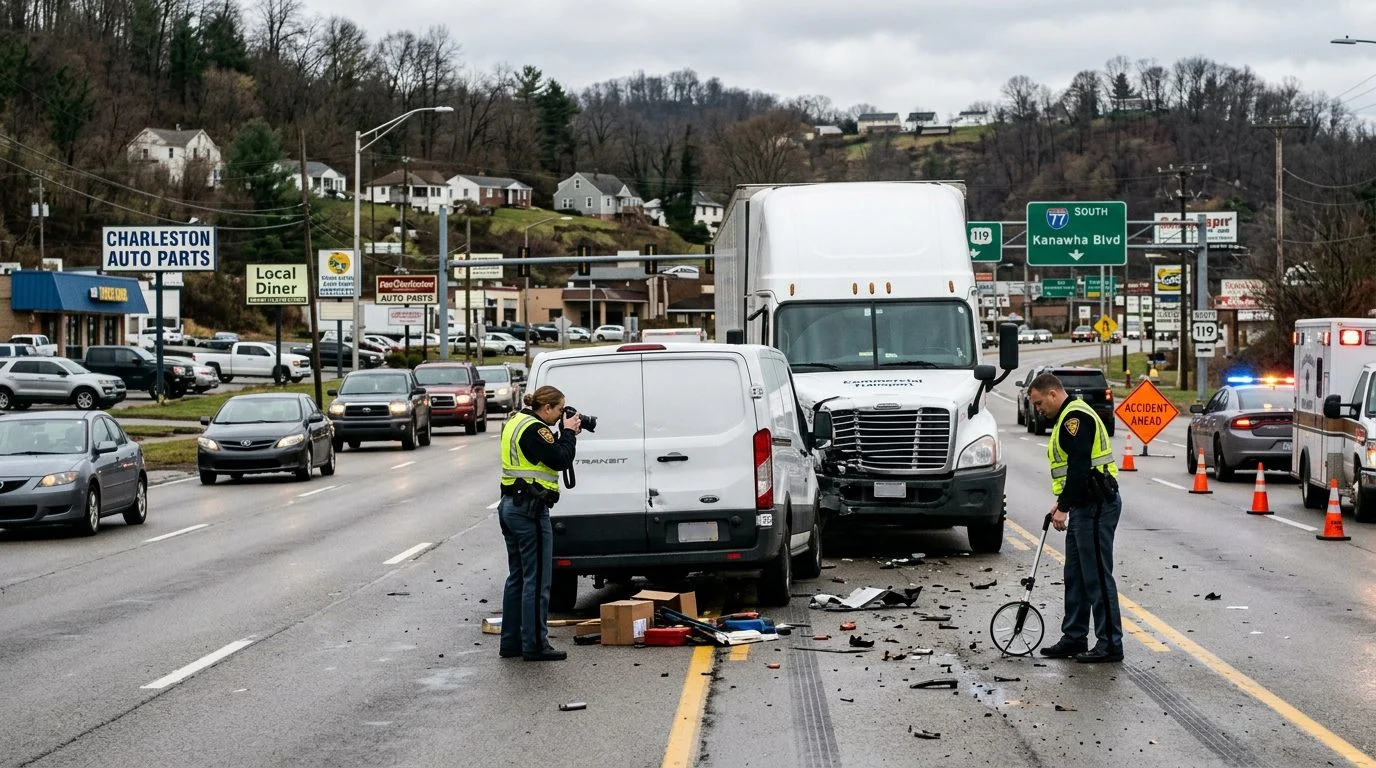
Reaching Out About Your Rear-End Crash
The next step is talking through your own crash, not a general rule. Your situation may look different from the examples on this page, and that’s expected.
You may still be recovering, waiting on test results, or deciding whether to raise a claim at all. That’s a hard place to be, and you don’t need every answer yet.
The firm handles car accident, truck accident, and commercial vehicle accident matters. It also handles catastrophic injury, traumatic brain injury, spinal cord injury, and wrongful death matters. We serve injury victims across West Virginia.
A short conversation can help you see which records to gather first, so nothing gets lost while you recover. Bring your questions, the crash report number, and any medical records you already have.
Taking the first step is a decision only you can make. When you’re ready, you can request a free case review of your rear-end crash.