
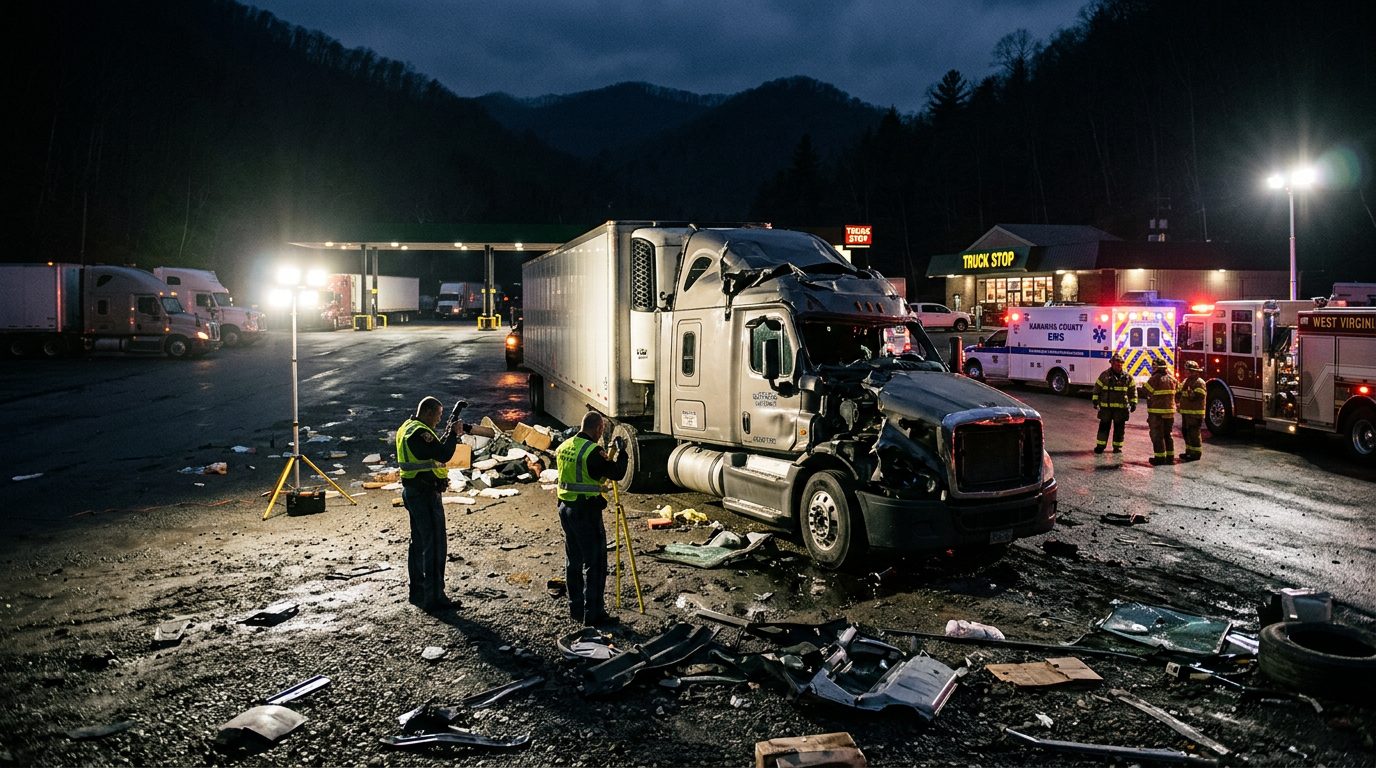
West Virginia Truck and Commercial Vehicle Crashes
Hurt in a Truck Crash on a Mountain Road? Tell Bubba What Happened
A brake problem on a long West Virginia descent can leave a family with hard questions. The firm listens to your account and helps you understand your options.
Published November 27, 2026
If someone you love was hurt when a truck lost its brakes on a mountain road, you likely have many questions. Brake failure is one possible cause of a truck crash on a West Virginia grade, but it is never assumed. Records, the crash report, and the condition of the truck usually answer the question, and some deadlines start early.
What Brake Failure on a Mountain Grade Can Look Like
Brake failure on a mountain grade often shows up as a truck that cannot slow as expected on a long downhill. Long descents with heavy loads can overheat brakes and reduce their stopping ability. This is why drivers are trained to use lower gears and steady braking.
Runaway truck ramps are built on some steep roads to slow vehicles that lose braking. Not every mountain-road truck crash involves brake failure, though. Speed, weather, driver error, and a shifted load can also cause a crash.
Some clues may point to a braking problem. These include skid marks, or the lack of them, and where the truck came to rest. Those clues alone do not prove a cause. You may be piecing this together from news reports, a phone call, or a scene you could not see. That is common, and it is a good reason to look at the official records.
If a family member was hurt when a truck may have lost its brakes on a West Virginia grade, you can reach out to request a free case review and talk through what happened. Talk it through with Big Bubba — the first case review is free, confidential, and carries no obligation.
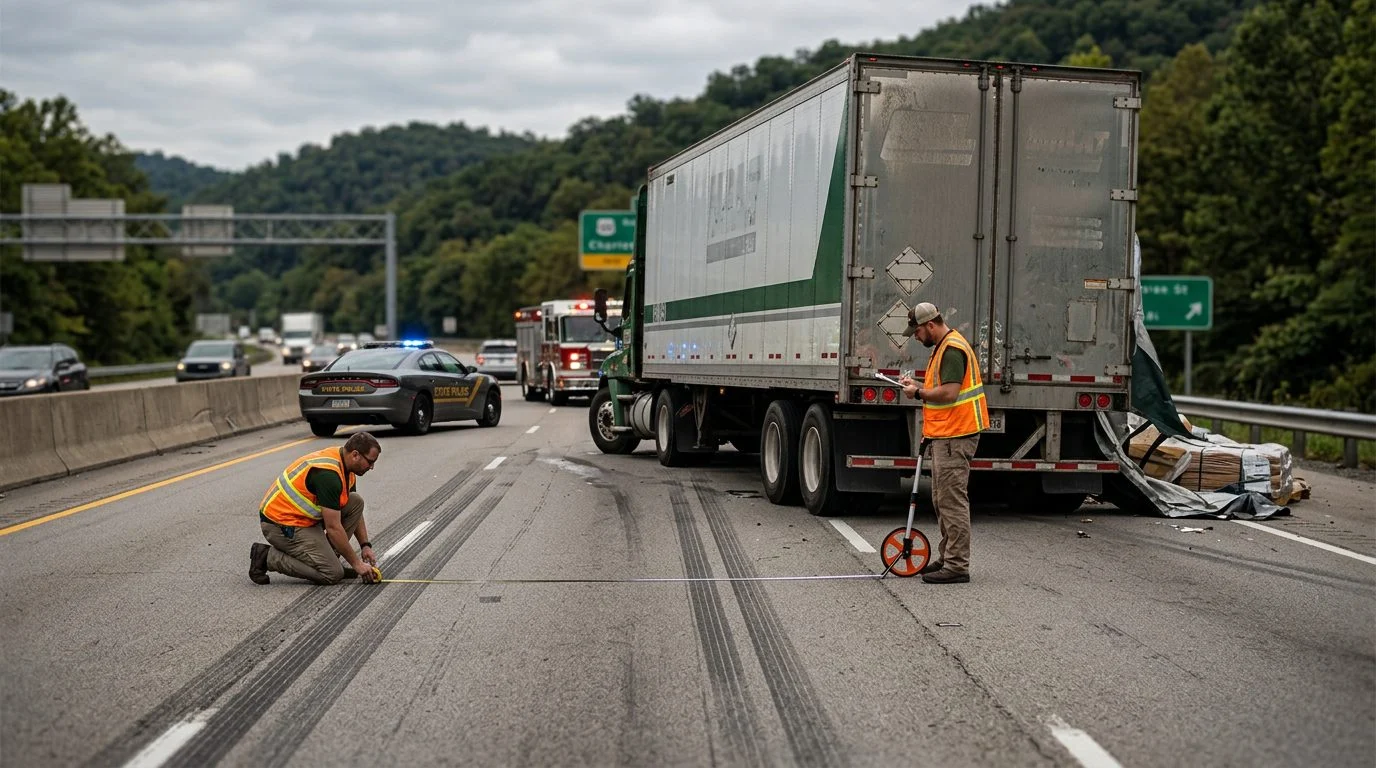
Why Brakes Become a Maintenance and Inspection Question
Federal rules require motor carriers to inspect, repair, and maintain their trucks, and brakes are part of that duty. Under 49 CFR 396.3, parts and accessories must be kept in safe and proper operating condition at all times.
Drivers also prepare written reports on the vehicle’s condition. Under 49 CFR 396.11, a carrier must repair a listed defect that is likely to affect safe operation before it lets the vehicle run again.
Responsibility can be shared. The driver, the carrier, and an outside repair shop may each have a role in brake condition, depending on the facts. Investigators may look at brake adjustment, worn linings, air system leaks, and whether the truck was already out of service. Federal rules on brake components also address fading, grabbing, and minimum lining thickness.
Records That May Show What Happened to the Brakes
The records most likely to show brake condition are the maintenance file, inspection reports, and driver reports. Federal rules set minimum keep times, and they are short. Under 49 CFR 379.3, companies may destroy records after the required retention periods end.
Maintenance records generally must be kept for one year, and for six months after the truck leaves the carrier’s control. Some trucking companies keep periodic inspection records for limited periods, so asking early may help preserve them.
Other records may also be relevant. These include driver logs, trip and dispatch records, repair invoices, and parts records. Some newer trucks store engine and braking data. Whether that data exists, and how long it is kept, depends on the truck.
If the truck was repaired or sold after the crash, evidence may change. Ask early what has happened to the vehicle.
The police crash report is another starting point. Under W. Va. Code § 17c-4-7, an investigating officer must prepare a report within 24 hours after finishing the investigation for crashes occurring on the public streets or highways of this state that involve bodily injury, death, or total property damage to an apparent extent of $1,000 or more. The same law says the investigating officer must provide owner, operator, and insurance information upon request, within 24 hours of a motor vehicle crash, at no cost, to each other involved party and each party’s insurance agents, whether or not the accident report has been completed.
Who May Be Responsible When Brakes Fail
More than one party may be responsible when a truck’s brakes fail. The driver, the motor carrier, a maintenance contractor, or a parts maker may each be part of the picture. The facts decide which of them, if any, are responsible.
West Virginia law addresses employers in commercial vehicle cases. Under W. Va. Code § 55-7-32, an “employer defendant” can include the vehicle’s owner, the operator’s employer, or a person with legal control over the truck or driver. Some limits in that law depend on insurance and on the driver’s conditions at the time of the crash.
West Virginia also uses a modified comparative fault rule. Under W. Va. Code § 55-7-13c, a plaintiff’s own fault generally does not bar recovery unless it is greater than the combined fault of others. Recovery is then reduced in proportion to the plaintiff’s share of fault when the plaintiff’s fault is less than the combined fault of all other persons.
Some insurers may dispute a claim or question how the crash happened. When a crash causes a death, a family claim works differently. A wrongful death action is brought by the personal representative of the estate.
Time-Sensitive Steps for Families After a Mountain Road Truck Crash
West Virginia generally allows two years to file a personal injury lawsuit, and exceptions may apply. The rule is found in W. Va. Code § 55-2-12. A wrongful death action generally must start within two years after the death, under W. Va. Code § 55-7-6. W. Va. Code § 55-7-6 reads: “The provisions of this section shall not apply to actions brought for the death of any person occurring prior to July 1, 1988.”
Early settlement rules also matter. For twenty days after an injury, while the injured person is hospitalized or unable to work, W. Va. Code § 55-7-11a limits when someone may negotiate a settlement or take a statement for that purpose.
Several steps can help protect the claim. Keep photos of the scene, vehicles, and injuries. Write a timeline while memories are fresh. Record names and contact details for witnesses, and keep every medical and billing record.
Think carefully before giving a recorded statement to an insurer or company representative. A written request to preserve evidence can also be sent early. Serious crashes can affect emotional health too, and the firm covers this in its guide to emotional injuries from truck accidents.
What to Know After a Mountain Road Crash
Researching a truck crash for a family member who is still recovering, or who has died, is hard work at a hard time. You do not have to sort out the records and deadlines alone.
The firm handles truck accident and commercial vehicle accident claims. It also handles catastrophic injury matters, traumatic brain and spinal cord injury cases, and wrongful death claims across West Virginia. We serve Charleston and Huntington injury victims, along with the rest of the state.
For more background, read the firm’s guide to truck accident claims in West Virginia. If a family member was hurt when a truck lost its brakes on a West Virginia grade, request a free case review to talk through what happened.