
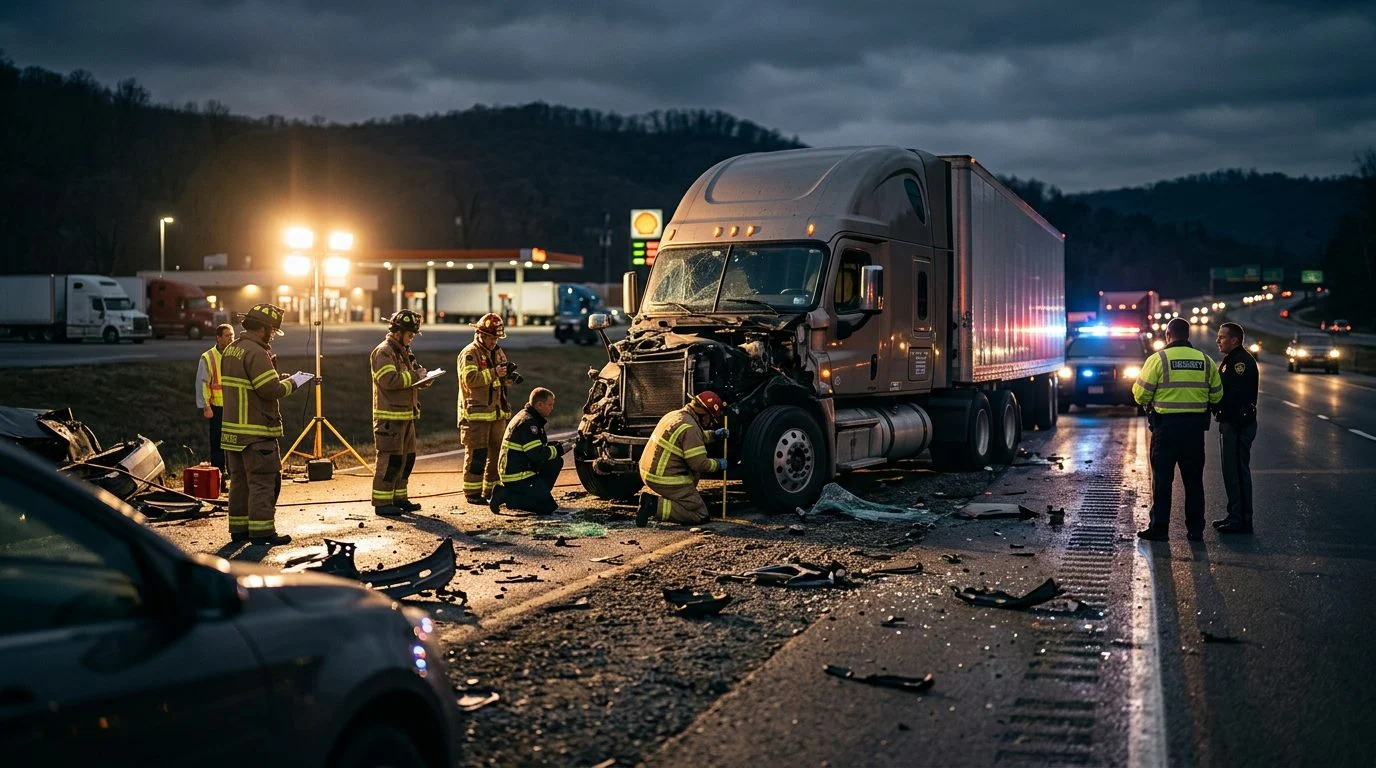
Truck Accidents in West Virginia
Can You Inspect the Truck After a Crash?
A commercial truck can be moved, stored, or repaired quickly after a wreck. Learn who may control access and why acting early matters.
Published November 25, 2026
Seeing the truck is often one of the first things people want after a crash with a semi. Families of people killed in these crashes ask the same question.
An injured person generally cannot inspect a commercial truck on their own after a crash. Access may depend on who holds the truck and on the facts of the crash.
Can You Inspect the Truck Yourself After a Crash?
Access is about control and timing, not just the truck itself. The truck may be towed, stored, or held by someone else, and that can change over the following days. A serious crash can also lead to a long wait before anyone is allowed near the vehicle, and each party may have its own rules.
The details of the crash matter here. Where the truck went afterward, and who has its records, can shape what happens next. The steps below explain the records, the timing, and the reports that may matter.
The question matters to two groups. Injured drivers and passengers want to know what happened. Families of someone killed need to know who may act for the estate. W. Va. Code § 55-7-6 W. Va. Code § 55-7-6
That is why the chain of control is worth understanding before asking to see anything.
If a semi was part of your crash, or the crash that took a loved one, and you aren't sure who holds the truck, reach out to us for a free case review. Talk it through with Big Bubba — the first case review is free, confidential, and carries no obligation.

Who Usually Controls the Truck and Its Records
It may be the trucking company, its insurer, a tow yard, or a storage lot. Law enforcement may also hold a vehicle for a time after a serious crash.
Owning a truck and controlling it are not always the same. The company name on the door may not be the one that keeps the truck’s records, so the holder is not always obvious from the scene. A truck may also be leased, so the company that operates it may differ from the company that owns it.
The driver, the motor carrier, and the insurers are separate parties. Each may hold different records, such as driver logs, maintenance files, dispatch records, and load paperwork. Those records can be the first thing that shows where a driver was and when.
Federal rules require motor carriers to keep certain records. A carrier generally must keep records of duty status for each driver. federal driver log rules
Supporting documents are covered too. A carrier generally must retain records of duty status and supporting documents for each of its drivers. federal supporting document rules
Why Early Written Requests Matter
A written request sent early creates a dated record that the truck and its records may be relevant to a claim.
Timing matters because records are kept for set periods. Some records may be routine to discard once a minimum period ends, so waiting may put evidence at risk.
Federal rules also bar changing records. No motor carrier or driver may obscure, deface, destroy, mutilate, or alter existing information in a supporting document. federal supporting document rules
Some insurers may dispute a claim. A written request gives you a clear record of what was asked for and when.
Families should move quickly as well. For personal injury claims, see W. Va. Code § 55-2-12. W. Va. Code § 55-2-12 Written requests are one step, and the right order of steps can vary.
Evidence That May Be Relevant to a Truck Crash Inspection
Driver logs, electronic device data, maintenance files, and the truck itself may all be relevant. Each item may help answer a different question about the trip, the driver’s hours, or the truck’s condition. Which of these matter most may vary with the crash.
- Electronic device data. Trucks that use an electronic logging device, or ELD, automatically record items such as date, time, location, engine hours, and vehicle miles. electronic logging device rules
- Trip paperwork. Bills of lading, dispatch records, expense receipts, and payroll records may show where a driver was and when.
- Maintenance files. Inspection and repair records for brakes, tires, lights, and steering may show how the truck was kept up.
- Physical parts. Brake components, tires, and the trailer may matter if they still exist and have not been repaired or sold. Physical parts may disappear over time, so the early request matters for them too.
- Load records. Cargo and weight paperwork may matter when load weight or securement is an issue.
What an Inspection Process May Involve
An inspection may be arranged with the parties who hold the truck, and scheduling and conditions can vary. Inspections can take time to arrange, so an early written request can help start the process.
A qualified mechanical inspector may document the truck’s condition, photograph components, and compare what they find with the maintenance and trip records. Photos of the scene and the vehicles, taken safely and early, can help show how things looked before any repairs.
The police crash report is another starting point. West Virginia law generally requires an investigating officer to prepare a crash report within 24 hours after completing the investigation, for crashes involving injury, death, or property damage of $1,000 or more. W. Va. Code § 17C-4-7 Within 24 hours, the officer must also provide owner, operator, and insurance information on request, at no cost, to the other involved parties. A report shows what the officer recorded at the time.

Steps to Take After a Serious Crash
Start by keeping what you already have: the crash report number, photos, medical records, and names of witnesses. Also keep the name of the company listed on the truck, if you know it.
Use care with recorded statements. West Virginia law generally limits when someone may negotiate with an injured person during the first 20 days after an injury, if that person is in the hospital or unable to work. W. Va. Code § 55-7-11a
Who may be answerable for a driver’s negligence can depend on the facts.
We handle truck accident claims and wrongful death cases, and we serve injury victims across West Virginia, including Charleston and Huntington. Tell us what happened, and we can talk through which of these steps may apply to your crash. Request a free case review.