
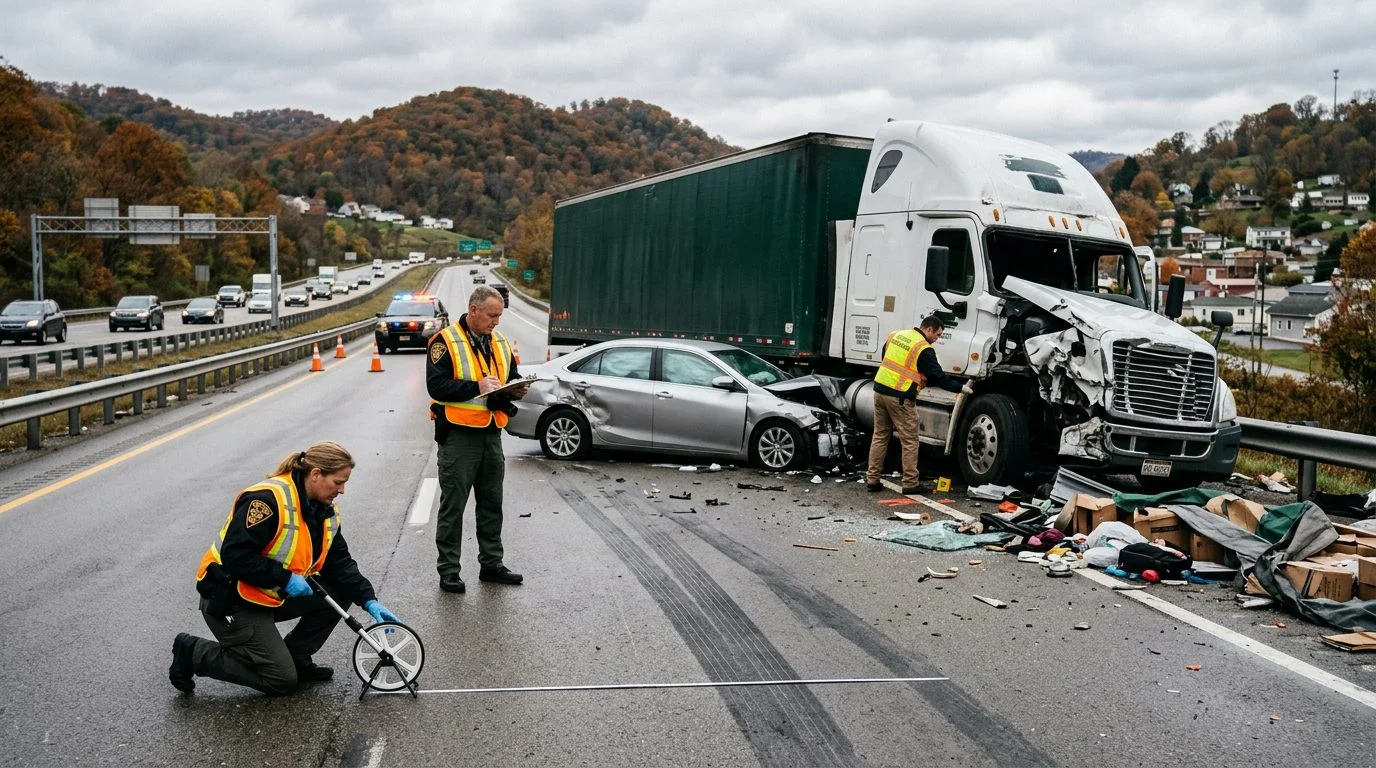
Truck Accidents | West Virginia
Hurt as a Passenger? Learn Where You Stand
Passengers in car and commercial truck crashes often have questions about their options. The firm can listen to your story and help you understand what may apply to your situation.
Published November 27, 2026
If you were hurt as a passenger in a car or truck, the firm can review what happened and explain the options that may be available to you. Can a passenger sue after a truck accident in West Virginia? In many cases, yes. Whether a claim exists depends on the facts and on who was at fault.
Short Answer: Can a Passenger Sue After a Truck Accident?
A passenger hurt in a truck crash may be able to bring a claim. Many people ask this question while they are still recovering, and that is normal. What matters most is who caused the crash and how the harm happened. This page covers who may be responsible, how West Virginia fault and time-limit rules may apply, what evidence may matter, and what to watch for with insurers. Each claim turns on its own details, so your own crash story will shape the answer.
If you were a passenger in a truck or car crash and are still dealing with injuries, the firm can talk through whether another driver or a trucking company may be responsible, in a free case review. Talk it through with Big Bubba — the first case review is free, confidential, and carries no obligation.

Who Can Be Held Responsible When a Passenger Is Hurt in a Truck Crash
Several parties may share responsibility for a passenger’s injuries. The truck driver may be a party when the driver’s negligence contributed to the crash.
The trucking company may also be a party. West Virginia law defines an “employer defendant” to include the owner of a commercial motor vehicle, the operator’s employer, and anyone else who holds legal control over the truck or its driver. W. Va. Code § 55-7-32 sets out that definition. Whether a company can be held liable may depend on how the driver was working at the time.
Other drivers may be liable if their actions caused or contributed to the crash. A third party, such as a company that loaded or secured the cargo, may also be involved when its work played a role. Early records often help show which parties were involved and what each one did.
When the Passenger Was Riding With an At-Fault Driver
If another driver was at fault, a passenger may have a claim against that driver. This can be true even when the passenger knew the driver well. Many people feel uneasy suing someone they know. A claim asks who caused the harm. It is not a judgment of anyone’s character.
Being a friend, relative, or coworker of the driver does not by itself end a claim. That relationship, and the insurance coverage behind the driver, may affect how the claim moves forward. Passengers should not assume the relationship settles the question.
A passenger may also have a claim when the passenger’s own driver made a mistake that led to the crash. Fault for each driver is a separate question. Records such as the police report and any vehicle data can help show what each driver did.
How West Virginia Fault Rules May Affect a Passenger’s Claim
West Virginia generally uses comparative fault, which compares each person’s share of the blame. Under W. Va. Code § 55-7-13c, a plaintiff’s fault does not bar recovery unless it is greater than the combined fault of all other people responsible for the damages. If it is less, the recovery is reduced in proportion to the plaintiff’s share.
Passengers are often not the ones at fault for the crash itself. Other facts may still be raised, such as whether a passenger knew the driver was impaired. Those facts can change the analysis, so they deserve a careful look.
When more than one person may be responsible, the court looks at all of them.
How Far Back Can a Passenger Claim Personal Injury?
West Virginia generally allows two years from the date of injury to file a personal injury lawsuit, and exceptions may apply. W. Va. Code § 55-2-12 states this general rule for personal injury actions. The clock generally starts when the right to sue accrues, which is usually tied to the injury.
For a family member of a passenger who died, the wrongful death deadline is generally two years after the death. W. Va. Code § 55-7-6 sets this period. The same section says the action is brought by the deceased person’s personal representative.
Waiting can make the case harder. Witness memories fade, and vehicle data and maintenance records may be overwritten or discarded over time. Raising timing questions early gives you more options to protect the evidence.
Evidence That May Matter for a Passenger’s Claim
The police crash report is often the first written record of a crash. Under W. Va. Code § 17c-4-7, an investigating officer must prepare a report within 24 hours after completing the investigation when a crash occurring on the public streets or highways of this state causes bodily injury, death, or total property damage to an apparent extent of $1,000 or more. The same section requires the officer to provide owner, operator, and insurance information upon request to each of the other involved parties and their insurance agents, within 24 hours of a motor vehicle crash, at no cost, whether or not the accident report has been completed.
Truck crashes can leave more records. Many commercial trucks carry event data recorders. The National Highway Traffic Safety Administration explains that these devices may preserve pre-crash, crash, and driver-input information. Under federal regulations, alcohol and controlled-substance testing after a truck crash that involves injury treatment away from the scene depends on additional conditions, such as whether the driver receives a citation within a set time window. 49 C.F.R. § 382.303 sets out those testing rules.
Driver duty-status logs may also be relevant. Photos, dash camera footage, and witness names may matter as well. Medical records from the first days after the crash tie your injuries and treatment to the collision.
Not sure what your next step is?
Talk it through with Big Bubba — the first case review is free, confidential, and carries no obligation.
What to Keep in Mind When Speaking With Insurance Companies
Some insurers may dispute a claim. A passenger may hear from more than one insurance company, because the driver, the trucking company, and other motorists may each have their own coverage.
Stick to what you know. Describe what you saw and felt, and avoid guessing about speed, distance, or how serious your injuries will be. Those details are often better left to medical and crash records.
Keep copies of medical bills, treatment notes, and any letters from insurers. Read any written release or settlement offer carefully before you sign, and ask what it covers.
Catastrophic Injuries and Wrongful Death Claims for Passengers
Passengers can suffer traumatic brain injury or spinal cord injury in truck crashes. These injuries may affect work, daily activities, and future medical needs. Their effects can take time to understand, which is why early medical records matter.
When a passenger dies, certain family members may be able to bring a wrongful death claim under West Virginia law. The verdict may include damages for sorrow, mental anguish, and solace, for lost income and services, for care and treatment before death, and for reasonable funeral expenses. W. Va. Code § 55-7-6 lists these categories.
Family members often carry the paperwork and the phone calls alone. It helps to learn which questions to ask early. For an overview of how the firm handles truck accident claims, see the truck accidents in West Virginia page on this site.
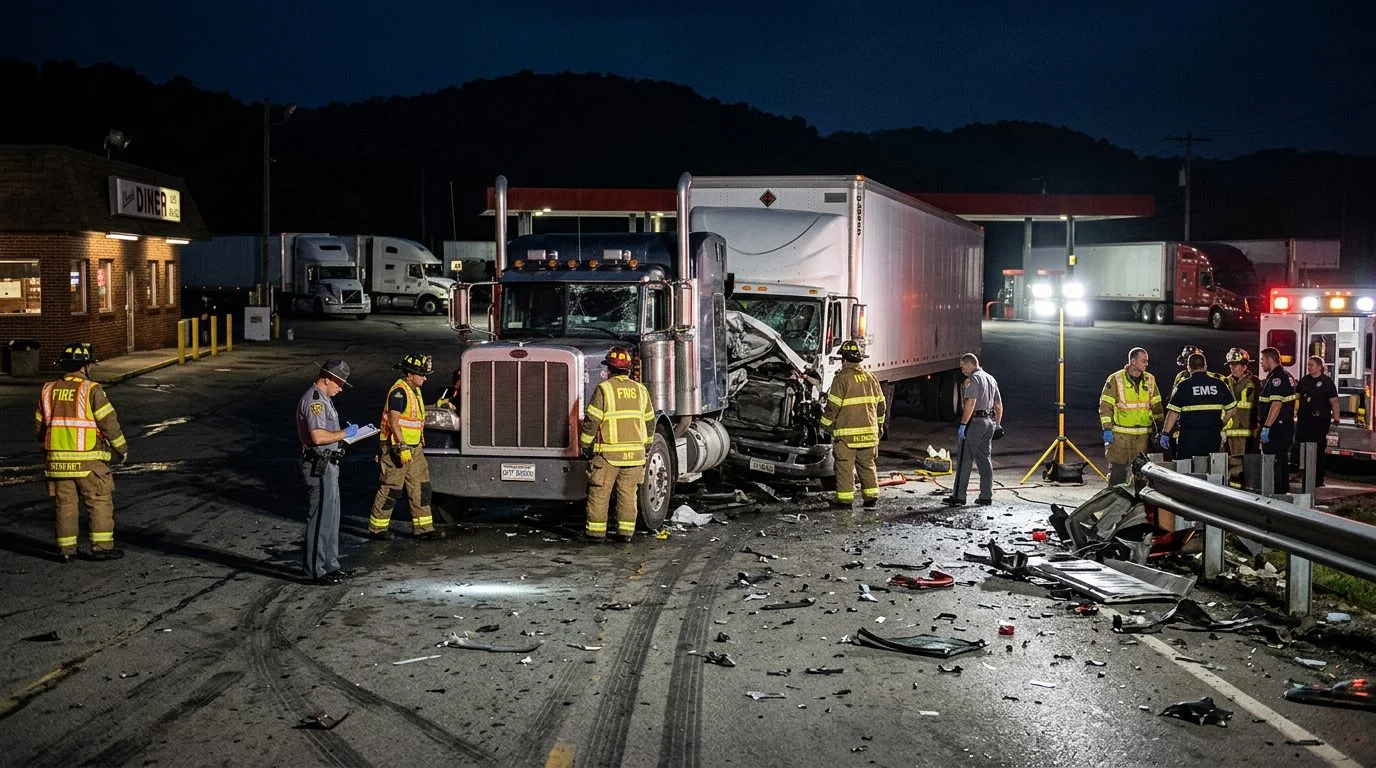
Passenger Injury Cases in West Virginia
If you were riding in a truck or car that crashed, you may still be dealing with pain, bills, and hard questions. You may have a claim against the driver, the trucking company, or another motorist. Lasting effects, lost work, or decisions after a death can make the path forward feel heavy. You do not have to sort those questions out alone.
Reach out for a free case review, which is confidential and carries no obligation to continue. In it, you can talk through how the crash happened, who may be responsible, and what time limits may apply to your situation. Contact the firm to get started. We serve injury victims across West Virginia.