
West Virginia Truck Crash Injuries
Hurt in a Crash Caused by Cargo That Shifted or Spilled? You Don't Have to Sort It Out Alone.
Big Bubba represents people hurt in car and commercial truck crashes across West Virginia, including cases where a load shift or cargo spill played a role.
Published November 2, 2026
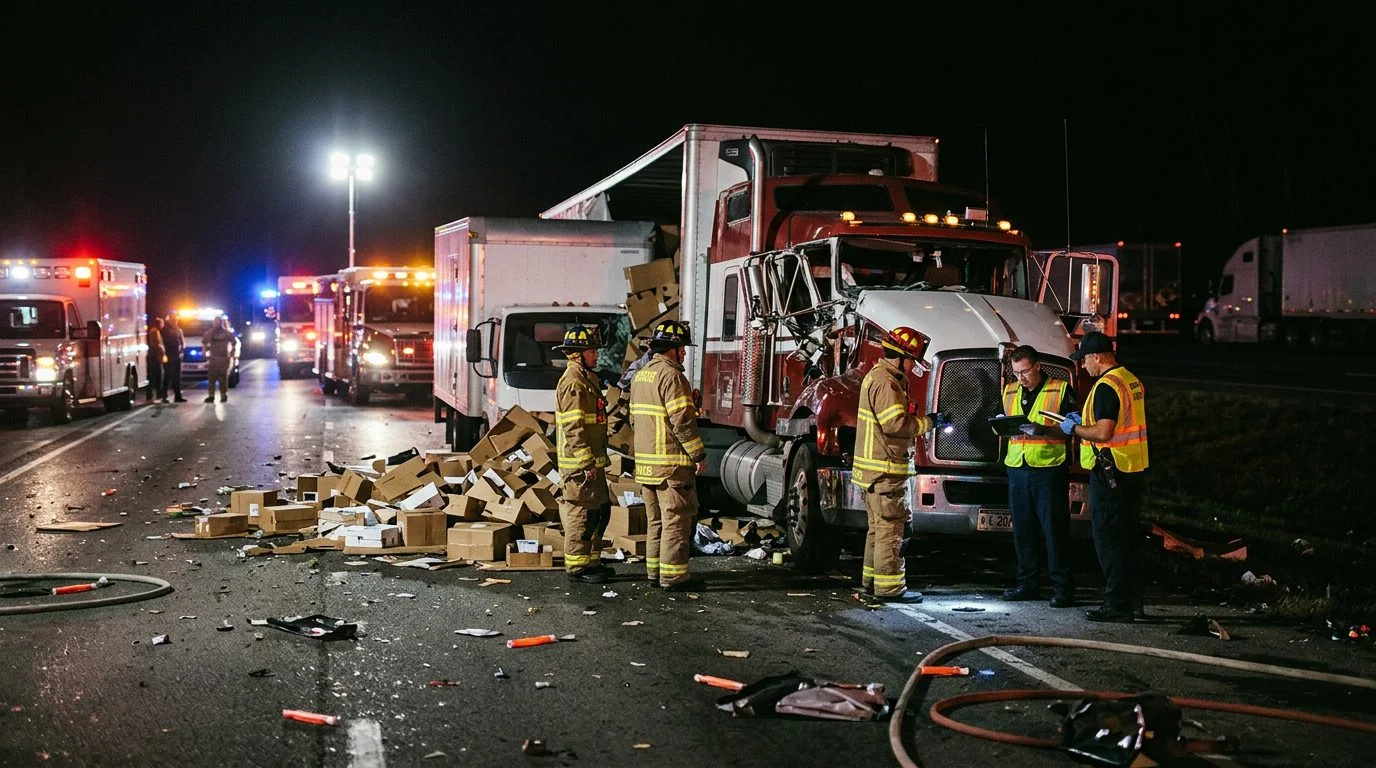
A cargo spill or load shift can cause a truck crash when freight moves, falls, or leaves the trailer. Shifting freight can throw off a truck’s balance, and fallen material can strike other vehicles. In West Virginia, these crashes can cause crush injuries, head and spinal cord injuries, fractures, and chemical exposure. This guide explains how it happens, who may share responsibility, what evidence matters, and which time limits apply.
What a Load Shift or Cargo Spill Looks Like in a Truck Crash
A load shift happens when cargo moves on or inside the trailer during a trip. A cargo spill happens when material leaves the truck and lands on the road.
A shifted pallet, a rolling coil, or a surging liquid tank can change the truck’s balance. That change matters most on curves, on exit ramps, and during hard braking. The driver may lose control, and the truck may tip onto its side.
Spills add a second danger. Freight can fall into lanes that other drivers are using. A car may hit debris, a fallen load, or spilled fluid. The West Virginia Division of Motor Vehicles warns that unsecured cargo can cause serious or catastrophic crashes and injuries.
Freight on a busy highway can also endanger people who try to help at the scene. Every crash is different. The driver’s account, the crash report, and scene photos are the starting point for understanding what happened.
Not sure what your next step is?
Talk it through with Big Bubba — the first case review is free, confidential, and carries no obligation.

How Improper Loading and Securement Cause Crashes
Federal rules require commercial trucks to secure cargo so it does not leak, spill, blow, or fall from the vehicle. The same rules require cargo to be held so it does not shift enough to affect the truck’s stability or maneuverability. The federal cargo securement rules set out both requirements.
Cargo must also be firmly held by structures of adequate strength, such as tiedowns, blocking, or dunnage. The cargo tiedown standards describe those requirements.
Common problems include too few tiedowns, weak straps, uneven weight, unblocked freight, and doors or tarps that fail. A securement problem may contribute to a crash.
Drivers have duties too. Under driver inspection rules, the driver of a truck or truck tractor must inspect the cargo and its securement devices within the first 50 miles after beginning a trip, unless the driver has been ordered not to open a sealed vehicle or the cargo was loaded so inspection is impracticable. The driver must check again whenever duty status changes, after 3 hours of driving, or after 150 miles, whichever comes first.
Who loaded the truck can matter. The shipper, a loading company, or the driver may have done the loading. That question often shapes who may share responsibility.
Injuries Commonly Associated With Cargo Spills and Load Shifts
Crush and impact injuries are common when freight falls onto a vehicle or into a cab. Heavy items can break bones, crush limbs, and cause internal injuries.
Rollovers and sudden braking can throw people against seat belts, windows, and interior parts. These forces may cause head injuries or spinal cord injuries. The firm’s spinal cord injury claims page covers that injury type in more detail.
Some spills involve fuel, chemicals, or powders. Exposure may cause burns, breathing problems, or eye and skin injuries. Get medical evaluation promptly, and follow instructions from emergency responders.
Drivers who were not in the truck can also be hurt. They may hit debris, spilled material, or a vehicle that has halted in the lane. Their injuries may be part of the same case.
Who May Be Responsible When Cargo Causes a Crash
More than one party may share responsibility when cargo causes a crash. The list may include the truck driver, the motor carrier that employs the driver, the shipper, a loading company, a freight broker, or a maintenance provider.
Responsibility often turns on who controlled the loading, the straps and blocking, the inspections, and the driving. Under federal law, a carrier or broker providing transportation or service subject to federal jurisdiction under chapter 135 may be liable for damages a person sustains because of its act or omission in violation of that part of the law; see federal carrier and broker liability. See federal carrier and broker liability.
If a government entity owned the road or created the hazard, different rules may apply. Claims against political subdivisions have their own deadlines, which you can read in West Virginia’s rule for these claims.
When the driver was working for a company at the time, that company may be part of the claim.
Evidence That May Matter After a Cargo Spill Crash
The most useful evidence is often the cargo paperwork and the trucking company’s own records. Evidence can disappear quickly, so early preservation matters.
Useful items may include:
- Bills of lading and shipping manifests that show what was carried.
- Photos and video of the trailer, straps, blocking, and spilled material, taken when it is safe.
- The crash report, which may list affected lanes and any citations.
- Driver logs, electronic logging device data, and inspection and maintenance records.
- Names and contact details for witnesses, responders, and tow or cleanup crews.
Carrier records do not last forever. Under federal record retention rules, after the required retention period ends a company may destroy records at its management’s discretion, but this does not excuse compliance with any other governmental body’s longer retention periods.
Keep your own file too. Save medical visit notes, appointment dates, and records of missed work.
Time Limits and Filing Steps in West Virginia
West Virginia generally allows two years to file a personal injury lawsuit, and exceptions may apply. The West Virginia personal injury deadline sets the two-year period from when the right to sue arose.
Wrongful death claims follow a separate timeline. Under W. Va. Code § 55-7-6, a wrongful death action is generally commenced within two years after the death, and other provisions may affect timing. W. Va. Code § 55-7-6 reads: “The provisions of this section shall not apply to actions brought for the death of any person occurring prior to July 1, 1988.”
The statute provides that in a personal injury, property damage, or wrongful death action, W. Va. Code § 55-7-13a bases recovery on principles of comparative fault, and each person’s liability is allocated in direct proportion to that person’s percentage of fault. Each person’s share of fault is set as a percentage, and that share can reduce what a person recovers.
Early steps help. Gather the records listed above, identify the parties involved, and check the deadline early. The firm’s West Virginia truck accident claims guide explains the broader process. The firm serves injury victims in Charleston and Huntington, among other West Virginia communities.
Not sure what your next step is?
Talk it through with Big Bubba — the first case review is free, confidential, and carries no obligation.
When a Cargo Spill Leads to a Wrongful Death Claim
A fatal crash involving a load shift or spill can lead to a wrongful death claim. Under W. Va. Code § 55-7-6, the claim is brought by the personal representative appointed for the deceased person’s estate.
The statute lists categories of damages a verdict shall include, and says the verdict is not limited to them. These cover sorrow, mental anguish, and solace; reasonably expected loss of income and services; expenses for care and treatment tied to the injury; and reasonable funeral expenses.
In the early weeks, families often need the crash report, the death certificate, medical records, witness names, and any cargo paperwork. Many families are making hard decisions at the same time they grieve. The wrongful death claims in West Virginia page explains the basics of these cases.

Information That Helps Describe What Happened
Many people reading this are caring for someone in the hospital. Others are still trying to understand a crash they never chose. The firm handles truck accident, commercial vehicle, catastrophic injury, traumatic brain injury, spinal cord injury, and wrongful death matters across West Virginia.
If a shifted load or spilled cargo changed your life or a loved one’s, you can contact the firm and ask about a free case review. Describe the crash in your own words, and the firm can talk through the cargo, the crash, and the next steps with you.
Related practice areas
- Truck Accident Claims in West Virginia | Big Bubba Legal
- Truck Accidents in Charleston
- Truck Accidents in Huntington