
Truck Accidents | West Virginia
Seriously Hurt in a Truck Crash? Start With This Checklist
We handle commercial truck and catastrophic injury claims for people across West Virginia, and for families in wrongful death cases. Use this guide to organize what you know, then reach out to us.
Published November 3, 2026
This catastrophic truck accident injuries checklist West Virginia families can follow helps you sort your situation one question at a time. Each section asks yes-or-no questions, explains why each one matters, and shows what to do next.
Who This Checklist Is For and What Makes an Injury Catastrophic
This checklist is for people hurt in a truck or commercial vehicle crash in West Virginia, and for family members acting on their behalf. We handle truck accident, car accident, and wrongful death claims across the state.
A catastrophic injury is a serious harm that may change how you work, care for yourself, or live day to day. Two examples are traumatic brain injury and spinal cord injury. The Administration for Community Living describes traumatic brain injury as severe brain damage caused by an external force, and notes that auto accidents can cause one. Spinal cord injuries can affect movement and feeling.
Tractor-trailers, box trucks, and tankers are larger than most passenger cars. They often involve more companies and more records. The Insurance Institute for Highway Safety reported 256 motor-vehicle crash deaths in West Virginia in 2024.
Work through the checklist in order. Answer each question yes or no, then follow the result line.
If several answers above were yes, you don't have to work through the next steps alone. You can request a free case review with the firm. Talk it through with Big Bubba — the first case review is free, confidential, and carries no obligation.

Checklist 1: Medical Needs Come First
Your health comes first, because some head and spine injuries may not show symptoms right away.
Is anyone hurt, trapped, or unable to move safely? If yes, call 911 and tell the dispatcher that a truck or commercial vehicle was involved.
Did your head, neck, or back hit anything, or did you lose consciousness? If yes, get a medical check even if you feel mostly fine. Head and spine injuries may show symptoms later.
Do you have new numbness, weakness, confusion, memory gaps, severe headache, vision changes, or trouble walking? If yes, seek emergency care now. Don’t wait to see whether the symptoms pass.
Is every injury written into your medical records, starting with the first visit? If not, ask the provider to note your symptoms and how the crash happened.
Result: If any answer is yes, focus on care first. Keep every visit summary and discharge paper.
Checklist 2: Record the Truck and Crash Facts
Write down the truck and crash details while they are still fresh, because memory fades.
Was the vehicle a tractor-trailer, box truck, tanker, or other commercial vehicle? If yes, note the company name, the DOT number, and the unit number if you can see them on the cab or trailer.
Was a police or crash report made? If yes, write down the report number and the agency. Ask how to request a copy.
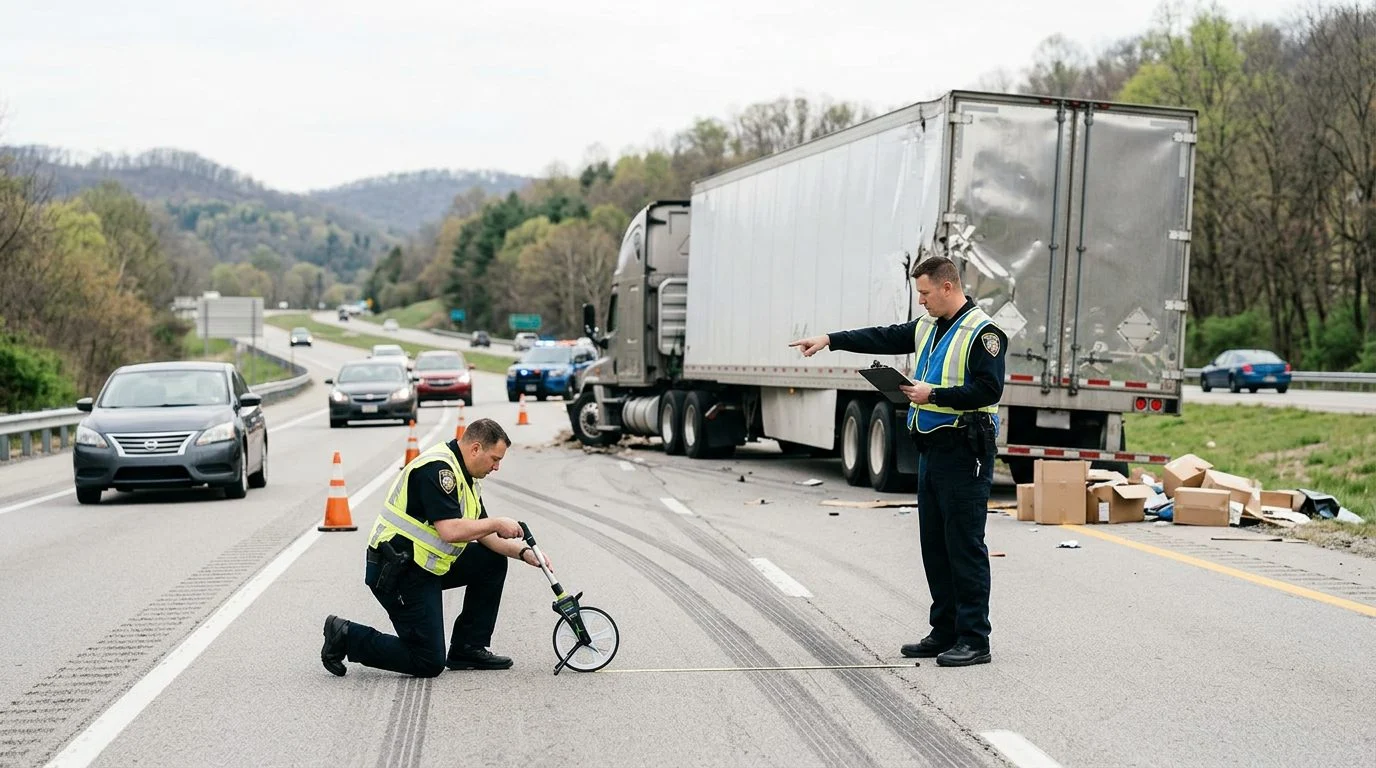
Did cargo shift, spill, fall, or look overloaded or poorly secured? If yes, describe what you saw. Federal cargo securement rules require cargo on public roads to be secured against leaking, spilling, blowing, and falling, and against shifting to such an extent that the vehicle’s stability or maneuverability is adversely affected.
Were there witnesses, dashcam video, or nearby business cameras? If yes, write down names and phone numbers now. Video may be overwritten over time, so ask about it early.
Did anyone take photos of the vehicles, the road, skid marks, or where the truck stopped? If yes, save the original files. If not, ask anyone who was there to save any images they have.
Result: Keep these notes with your medical records.
Checklist 3: Keep the Evidence
Keep originals of anything that shows what happened and how you were hurt.
Do you have the police report, medical bills, and records of missed work? If yes, keep originals and make a backup copy.
Do you have a list of every provider you saw, with dates? If yes, keep it updated. It helps show how your treatment unfolded.
Have you saved texts, emails, or messages from the trucking company or an insurer? If yes, keep them as they are, without editing or deleting.
Are damaged items, such as a phone, helmet, or clothing, still intact? If yes, don’t repair or throw them away without asking first.
Has an insurer asked for a recorded statement, a signed form, or a settlement? If yes, pause before you respond. West Virginia law limits settlement talks and statements within twenty days of an injury, for people in the hospital or unable to work. A settlement reached in that window may be disavowed by the injured person within one hundred eighty days from the date of the injury, by written statement forwarded to the person who violated the rule, and any payment made must be repaid or returned for the settlement to be inadmissible in evidence.
Result: Federal rules require carriers to keep some driver records for set periods. These records may matter, depending on the facts.
Checklist 4: Who May Share Responsibility
More than one party may share responsibility in a commercial vehicle crash, depending on the facts.
Do the facts suggest another driver caused the crash? If another driver was at fault, that driver and their insurer may be involved.
Did the employer, carrier, or vehicle owner set the driver’s schedule, route, or equipment? If yes, write down who they are. West Virginia law defines an employer defendant to include vehicle owners, employers, and others with legal control over the truck or driver.
Could cargo loading or securement have contributed? If yes, note who loaded or arranged the cargo. Those parties may be relevant, depending on the facts.
Did the crash involve a death, an injury needing immediate treatment away from the scene, or a truck towed from the scene? If yes, ask whether the driver was tested for alcohol or drugs.
Was there a mechanical failure or a missed maintenance check? If yes, note what failed. Maintenance and equipment issues may be relevant, depending on the facts.
Result: Federal rules require carriers to record each driver’s duty status for each 24-hour period. Those records may show when a driver was working.
Checklist 5: Deadlines and Your Injury Record
West Virginia generally allows two years to file a personal injury claim, and exceptions may apply (W. Va. Code § 55-2-12).
Do you know the exact date of the crash? If yes, write it on the first page of your notes. The personal injury time limit generally runs from when the right to sue arises, depending on the facts.
Has a family member died as a result of the crash? If yes, note the date of death. A wrongful death action must be commenced within two years after the death under W. Va. Code § 55-7-6, subject to the provisions of section eighteen, article two, chapter fifty-five, and exceptions may apply. W. Va. Code § 55-7-6 reads: “The provisions of this section shall not apply to actions brought for the death of any person occurring prior to July 1, 1988.” Wrongful death law says the action is brought by the deceased person’s personal representative.
Are you keeping a daily journal of pain, symptoms, missed work, and tasks you can’t do? If yes, keep it going. It can help show how the injury affects everyday life.
Have you kept every follow-up appointment and therapy visit? If not, schedule the next one now. Gaps in treatment may be questioned later.
Result: An early review helps identify which dates may apply to your situation.
Not sure what your next step is?
Talk it through with Big Bubba — the first case review is free, confidential, and carries no obligation.
Frequently Asked Questions About Truck Crash Injuries
Below are short answers to common questions about truck crash injuries in West Virginia.
What if I did not call the police at the scene?
A later report or other records may still help, depending on the facts.
Is a truck crash claim different from a car crash claim?
Commercial vehicle cases often involve more parties, federal trucking rules, and more records. The process depends on the facts of each case.
Who can bring a wrongful death claim in West Virginia?
The claim is brought by the personal representative of the person who died. West Virginia law lets the court or jury direct how damages are shared with certain family members.
What happens during a free case review?
The firm listens to what happened and reviews the records you have. The free case review is confidential and carries no obligation to continue.

Key Points to Remember
Many people reading this are still in treatment, juggling work and family, and making choices for someone they love. You don’t have to sort out the legal side alone. When you’re ready, you can request a free case review, or tell Big Bubba what happened in your own words.