
Truck Accident Claims | West Virginia
How to Get a Truck Accident Crash Report in West Virginia
A plain-language guide to requesting the official record of your crash and understanding what it may include.
Published November 22, 2026
After a truck crash, you may need the official record of what happened. To get a truck accident crash report in West Virginia, first find the agency that investigated, gather the crash details, submit your request, and then review what comes back.
Each step below shows who handles it, what it needs, and what comes next.
What a West Virginia Truck Accident Crash Report Is
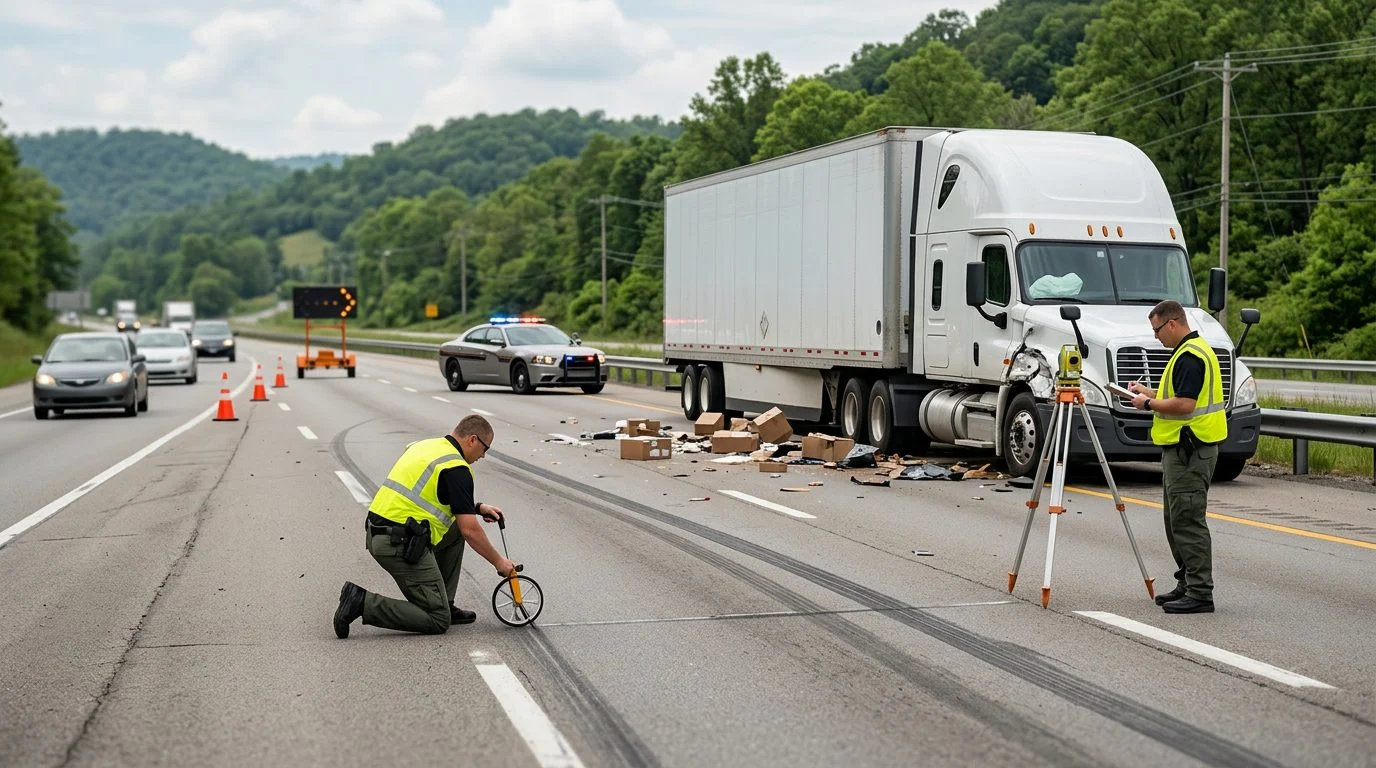
A crash report is the written record a law enforcement officer prepares after investigating a crash resulting in bodily injury to, or death of, any person or total property damage to an apparent extent of $1,000 or more on the public streets or highways of West Virginia. It is generally the document people mean when they say “police report.”
West Virginia law may set timing rules for crash reports, depending on the circumstances.
The report is not the same as an insurance claim file. An insurer keeps its own file. The police report is the officer’s record, so it’s worth checking for accuracy. A truck crash report is also one record among several. Other documents, like driver logs and inspection files, come from the trucking company.
If your truck crash is still open and you're unsure what to do with the report, the firm invites you to reach out for a free case review. Talk it through with Big Bubba — the first case review is free, confidential, and carries no obligation.

Step 1: Identify Which Agency Investigated the Crash
The agency you need depends on where the crash happened. The notice rule generally points to local police for crashes inside a city. W. Va. Code § 17c-4-6 For a crash resulting in injury to or death of any person or total property damage to an apparent extent of $1,000 or more, the driver must immediately give notice to the local police department if the crash occurs within a municipality; otherwise, to the office of the county sheriff or the nearest office of the West Virginia State Police.
Who does this: the person requesting the report, which may be you or a family member. What it needs: the crash location and any paperwork from the scene. Check the exchange form, business card, or ticket for the agency name and a case or report number. Those details help the agency find the right file.
If you’re unsure whether the crash was inside a city limit, call the sheriff’s office or the State Police. They can point you to the right agency. Once you know it, you can gather your request details.
Step 2: Gather the Details You Need Before Requesting
Start with the basics: the crash date, approximate time, exact location, and the names of everyone involved. Add the nearest intersection or mile marker if you know it. Include any report or case number too.
Vehicle details help the agency match the right file. Write down plate numbers, the year, make, and model of each vehicle, and the truck’s company name. If you can see a DOT number on the truck or in photos, record it too.
If the driver gave you insurance information at the scene, keep it with your notes. W. Va. Code § 17c-4-3
Write these details down the same day, while your memory is fresh. Keep everything in one folder with photos, receipts, and notes. Then you’re ready to make the request.
Step 3: Submit the Request and Understand the Timing
Send your request to the agency that responded, using the method it lists. Agencies commonly accept requests by mail, in person, or through an online portal. Confirm the current method with that agency before you send anything.
Public records requests go to a record custodian and should describe the records clearly. West Virginia public records guidance Expect to give your name, your connection to the crash, and the case number.
Timing matters. If the investigation runs past 10 days, a preliminary report goes in on day 10. W. Va. Code § 17c-4-7
A request made soon after a crash may come back empty, because the report may not be final yet. In that case, follow up and ask when the final report will be ready. Once the report arrives, read it line by line.
What a Truck Crash Report Usually Contains
A crash report usually includes the date, time, and location, the drivers and vehicles, injury information, and the officer’s narrative. It often adds a diagram, witness details, and any citations issued.
Separate facts from opinions as you read. Vehicle positions and road conditions are recorded details. The officer’s conclusions about the crash may be noted as observations, not final findings.
Read the narrative slowly. Look for mismatched times, wrong road names, or a vehicle position that doesn’t match the photos. Those are the kinds of errors worth checking.
Compare the report with your own memory, photos, and medical records. If something is wrong, write it down and ask the agency how to raise it. Then find out whether the crash involved a commercial vehicle, since that changes which records matter.
Why Commercial Truck Crashes May Involve More Than One Record
A standard crash report may not capture everything about a commercial truck. Other records may exist, and different people keep them.
Federal rules require motor carriers to log each driver’s duty status. For each change of status, the location must be recorded. If the change happens outside a city, town, or village, the log shows a highway location, such as the highway number and nearest milepost, with the nearest city, town, or village and State. 49 C.F.R. § 395.8 These logs can help show what the driver was doing in the hours before a crash.
49 C.F.R. § 396.21 The motor carrier, intermodal equipment provider, or other entity that is responsible for the inspection must keep that report for fourteen months from the date of the inspection report. Legible copies that accurately reflect the record may be kept in place of originals. 49 C.F.R. § 390.31
Ask the investigating agency which records it created for the crash, and keep your notes on what you asked for and when.
Not sure what your next step is?
Talk it through with Big Bubba — the first case review is free, confidential, and carries no obligation.
Next Steps After You Have the Report
Make copies of the report and store the original safely. Note any questions about accuracy. Keep the report with your photos, medical records, and any insurance letters.
If another driver was at fault, the report may be one of several sources relevant to proving that, depending on the facts. Write down the dates of any calls or letters you receive about the crash.
Keep the trucking company’s records request in your file, too. Note when you sent it and when you got a reply.
Frequently asked questions
Is a crash report the same as a police report?
Generally, yes. The crash report is usually the official police or agency record of the crash.
How fast must a crash be reported in West Virginia?
A driver must notify the proper agency immediately when a crash involves injury, death, or $1,000 or more in property damage. W. Va. Code § 17c-4-6
Where do trucking logs come from?
Motor carriers keep them under federal rules, not the police. They usually need a separate request.
If your crash is still open and you’re deciding what to do with the report, you don’t have to sort it out alone. We handle truck accident claims and serve injury victims across West Virginia. Contact the firm to ask about a free case review.