
Truck Accidents | West Virginia
Hurt on a Winter Mountain Highway? Start With the Right Questions
Large truck crashes on icy mountain roads often involve more than one factor. Here is how to begin sorting out what may have happened and how to reach the firm.
Published November 10, 2026
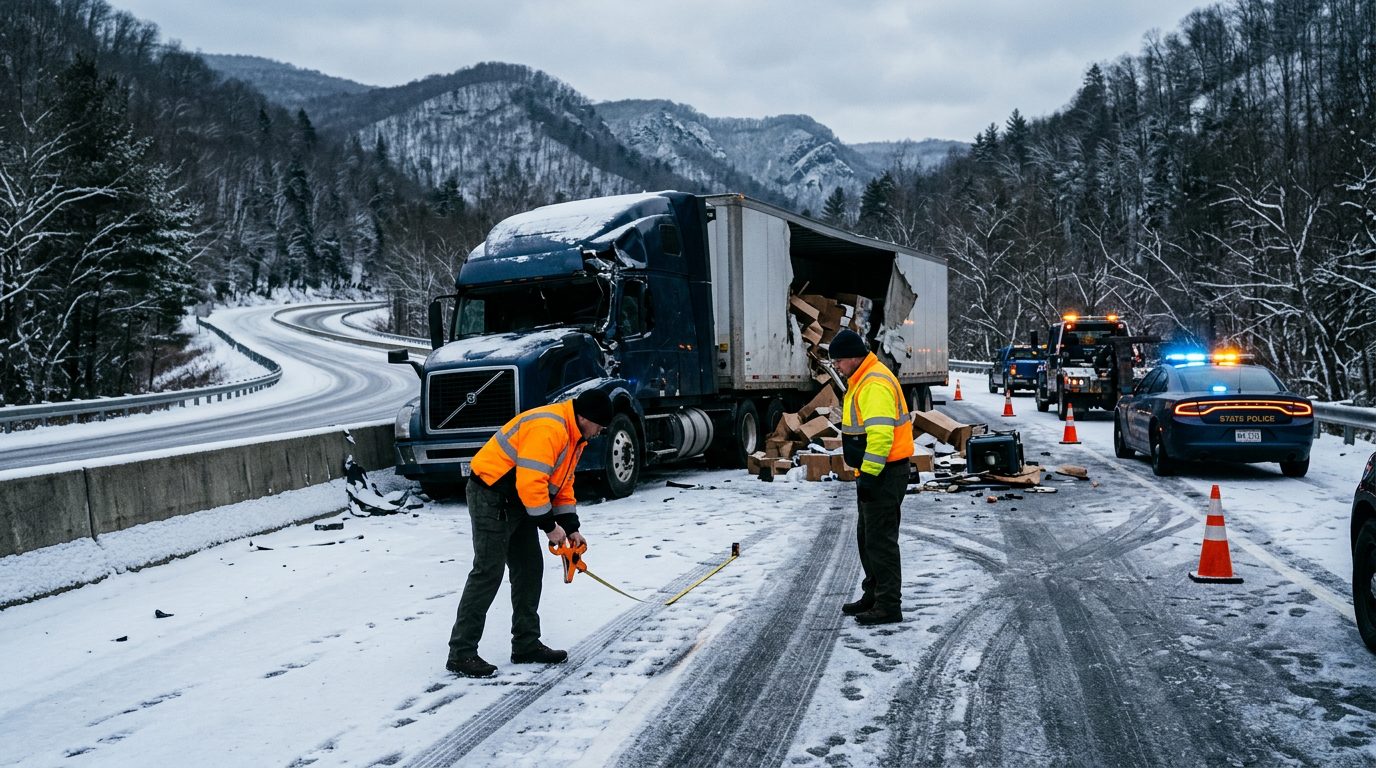
If you were hurt in a winter truck accident on a mountain highway in West Virginia, you may be asking what made the crash happen. Road work zones, snow, ice, and steep grades may each play a part in a truck crash, but whether they did depends on the facts.
This page explains how those conditions may bear on a crash, which records may help show them, and what to look at in your own crash.
Why Work Zones and Winter Roads Raise Risk for Large Trucks
Large trucks often have a harder time than cars when traffic slows suddenly or the road turns slick. A tractor-trailer weighs far more than a passenger car, so it needs more distance to stop. Its size also creates large blind spots around the cab and trailer.
Those differences matter most when conditions change quickly. A work zone can squeeze several lanes into one within a short stretch of road. A snow-covered grade can reduce the traction a truck relies on within a few curves. Drivers who don’t adjust early may have less room to react.
The firm handles truck accident claims across West Virginia, including crashes on busy interstates and on two-lane mountain routes. Crashes like these often involve more than one factor, so the details of the road matter.
Talk it through with Big Bubba — the first case review is free, confidential, and carries no obligation.
How Work Zone Lane Closures and Speed Limits May Matter
Work zone lane closures and reduced speed limits are set up to guide traffic. A truck that doesn’t respond to them may be relevant to a crash. Lane shifts, merging tapers, concrete barriers, and temporary signs all tell drivers where to go. At highway speed, a driver may have only seconds to see those signs and act.
Speed is the key link. A federal rule says a motor carrier may not schedule a run that forces a commercial vehicle to exceed the speed limits of the places it drives through. 49 C.F.R. § 392.6 states this rule in plain terms.
A posted number is a ceiling, not a safe target. A truck under the posted limit can still be going too fast for a narrowed lane or a backed-up queue. The traffic control plan for a zone may also show how lanes were meant to be set up.
Snow, Ice, and Mountain Grades as Possible Crash Factors
Federal rules require extra caution and lower speeds when snow, ice, or fog cut visibility or traction. 49 C.F.R. § 392.14 says speed “shall be reduced” when those conditions exist. If conditions become dangerous enough, the rule says the truck must stop until it can be operated safely.
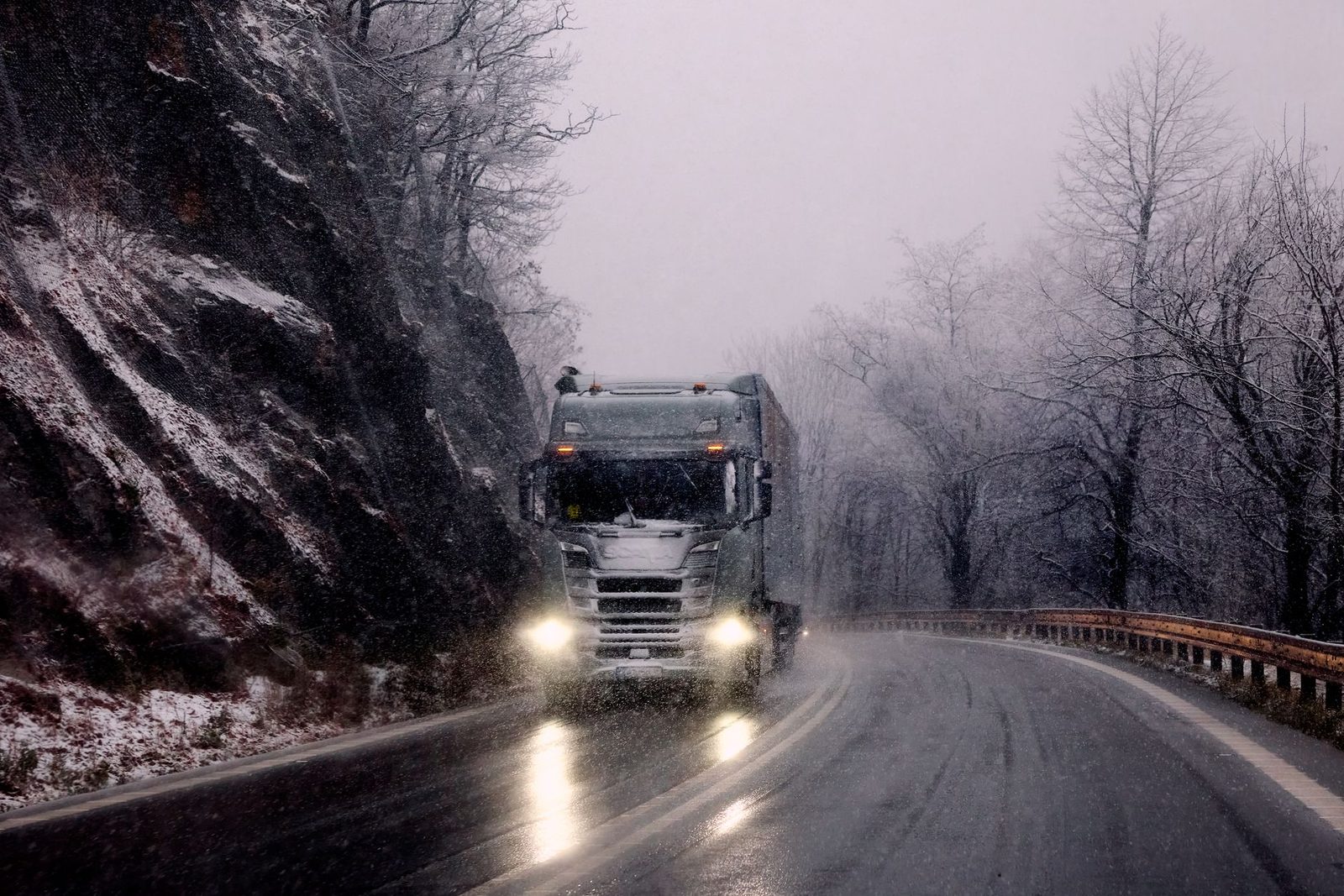
Black ice and packed snow can cut the grip a heavy truck needs to slow and steer. On a long downgrade, that loss of grip can combine with brake heat and speed. A driver who starts a grade at a normal speed may have little room to recover once the truck begins to slide.
Weather alone does not decide fault. A storm may explain why a crash happened without showing who was responsible. The more useful question is often whether the driver and the trucking company adjusted to the conditions that existed that day. Posted advisories and road closures can be relevant to that question.
Driver Decisions and Company Practices That May Be Relevant
Driver choices can contribute to a crash in winter or work zone conditions. Common examples include driving too fast for the conditions, following too closely, and not downshifting on a long grade. Fatigue can add to these problems. 49 C.F.R. § 392.3 bars a driver from operating a commercial motor vehicle, and bars a motor carrier from requiring or permitting it, when the driver’s ability or alertness is so impaired, or so likely to become impaired, through fatigue, illness, or any other cause, as to make it unsafe. In a grave emergency where complying would increase the hazard, the driver may continue to the nearest place where that hazard is removed.
Hours-of-service limits cap driving time. In that period, the driver may drive no more than 11 hours. A tired driver may be more likely to misjudge a grade.
Carriers have duties too. Under 49 C.F.R. § 390.11, the motor carrier must require drivers to follow these rules. Dispatch demands, driver training, and maintenance practices may be relevant when winter or work zone conditions are involved. These are possible factors, not findings.
Fault is also shared under West Virginia law. Under W. Va. Code § 55-7-13c, a plaintiff’s fault does not bar recovery unless it is greater than the combined fault of all other persons responsible for the damages; if it is less, the recovery is reduced in proportion to the plaintiff’s degree of fault. That is why fault is often still contested even when weather played a role.
Records That May Help Show What Happened
The crash report, photos of the work zone and road surface, and weather and road condition records are often the first evidence to gather. Traffic control plans for a work zone may also show how lanes were supposed to be set up.
Trucking records can show more. A driver vehicle inspection report lists defects the driver found or that were reported to the driver, and most carriers must keep those reports for three months under 49 C.F.R. § 396.11, though the rule does not apply to some carriers, such as one operating only one commercial motor vehicle. Duty-status records under 49 C.F.R. § 395.8 may show hours driven and when a driver was on duty. Because retention periods are short, these records can be time-sensitive.
Federal rules may also require drug and alcohol testing after some truck crashes, according to the Federal Motor Carrier Safety Administration.
Filing deadlines matter too. West Virginia generally allows two years to file a personal injury action, and exceptions may apply, under W. Va. Code § 55-2-12. For a death, W. Va. Code § 55-7-6 generally requires a wrongful death action to begin within two years of the death.
If you were hurt, keep your medical records, photos, and written notes about the scene and conditions while your memory is fresh.

Reach Out to the Firm About Your Crash
If a tractor-trailer slid on a snow-covered grade, or your crash happened in a lane closure on an interstate, you may have questions about what caused it. The same is true for a family that lost someone on a mountain highway in bad weather. Those questions often come before the facts are clear.
The firm can look at the road conditions, the work zone setup, and the truck driver’s actions in your crash. Bring what you have, such as the crash report, witness names, and any photos. Having them ready helps the review start. You can request a free case review by phone or through the firm’s website. We serve Charleston, Huntington, and Morgantown injury victims, along with readers across West Virginia.