
Wrongful Death | West Virginia
Gathering Records After a Truck Crash Wrongful Death
A plain-language guide for families sorting through paperwork while grieving.
Published November 10, 2026
If a parent died in a truck or commercial vehicle crash in West Virginia, you may now be the one gathering the papers. The short answer: start with the crash report, the death certificate, and the medical examiner’s findings. Then ask the trucking company in writing to keep its records. This truck crash death records checklist walks you through each step. Every section ends with a yes or no check and a next move.
Who This Checklist Is For and What It Covers
This checklist is for adult children who are handling a parent’s paperwork after a fatal truck or commercial vehicle crash. It sorts the work into four groups: official records, truck and carrier records, records about your parent and the family’s losses, and the order to request them.
Many of these records sit with different agencies and companies. They also arrive at different times. Some may not be ready yet, and that is normal.
Keep a simple log. Write down the date you asked for each item, who you asked, and what they said.
Yes/no check: Are you the person gathering these records for a parent who died? If yes, start with Step 1 and keep your log going. If other relatives are helping, add their names to the log too.
If you are sorting through your parent's crash report and the truck company's paperwork, you do not have to do it alone. Request a free case review with us. Talk it through with Big Bubba — the first case review is free, confidential, and carries no obligation.

Step 1: Who May Have Standing to Bring a Wrongful Death Claim
West Virginia’s wrongful death law generally says a claim is brought by the deceased person’s personal representative. It is brought for the benefit of certain family members. The statute, W. Va. Code § 55-7-6, names surviving spouses, children (including adopted children and stepchildren), brothers, sisters, parents, and any persons who were financially dependent on the person at the time of death or would otherwise be equitably entitled to share in the distribution. Adult children often fall in that group, but the details turn on the family’s circumstances.
The same law generally allows two years from the date of death to start a wrongful death action (W. Va. Code § 55-7-6). Exceptions may apply, so treat that date as urgent.
Yes/no check: Did your parent leave a spouse, children, or parents? If yes, write each person’s name, date of birth, and relationship on your family list. If no, note any other relatives you know of and ask about them during your free case review.
Yes/no check: Has an estate been opened, or has anyone been named personal representative? If yes, put a copy of the appointment papers in your folder. If no, ask whether one is needed before anyone files.
Step 2: Official Records to Request First
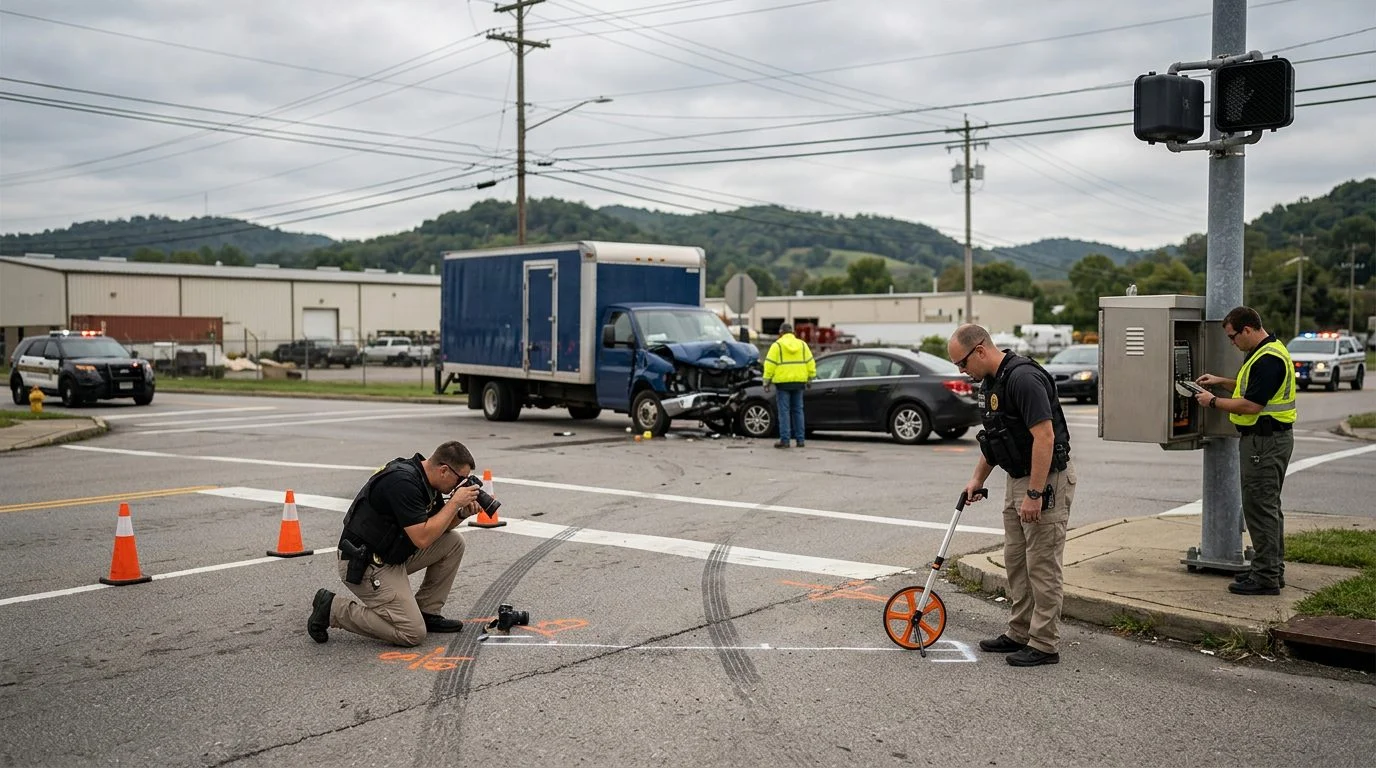
Start with the crash report, the death certificate, and the medical examiner or coroner file. Outside agencies hold these records, and each one can take time.
- Crash report: Ask the investigating agency, such as the West Virginia State Police or a local police department, for the full report. Request attachments, diagrams, and supplemental reports.
- Death certificate: Order certified copies from the county or state vital records office. Banks, insurers, and courts often ask for them.
- Medical examiner or coroner file: Ask for the autopsy and investigative findings. Ask for toxicology results when they are ready.
- Hospital and EMS records: Request run reports and emergency department notes for the scene and the transport.
Yes/no check: Do you have the crash report number? If yes, write it on your log. If no, ask the agency’s records section to look it up using the date, location, and names involved.
Agencies may finalize reports on their own schedule. Log each request date and check back regularly.
Step 3: Truck and Carrier Records to Ask About
Ask the trucking company and any leasing company to keep its driver, hours, and maintenance records in writing. Federal rules set minimum keeping periods, and they differ by record type.
- Supporting documents: Carriers must keep certain records, such as dispatch and trip records and expense receipts. See 49 C.F.R. § 395.11.
- Electronic log data: Electronic logging devices may record a commercial driver’s hours of service, and that data may be relevant to a truck accident claim, depending on the facts. Ask early. See FMCSA guidance on ELD records.
- Driver file and inspections: A carrier keeps a driver qualification file while the driver works there and for three years after. See 49 C.F.R. § 391.51. A driver qualification file is kept for as long as the driver works for the carrier and for three years thereafter. Vehicle inspection reports are kept for three months. See 49 C.F.R. § 396.11. See 49 C.F.R. § 396.11.
- Post-crash testing: After certain crashes, the employer must test surviving drivers for alcohol and controlled substances as soon as practicable following the occurrence. See 49 C.F.R. § 382.303. That rule applies to a crash involving a human fatality for each surviving driver who was performing safety-sensitive functions with respect to the vehicle, and to a crash with medical treatment away from the scene or a tow-away only when the driver receives a citation within 8 hours of the occurrence for alcohol testing; for controlled-substance testing, the citation window is thirty-two hours.
Yes/no check: Was the truck company-owned, or was it leased? If it was leased, list both the carrier and the leasing company. Each may hold different records. If it was owned, list the company named on the truck.
Next step: Send a written preservation request to each company. Keep a copy and proof of delivery.
Step 4: Records About Your Parent and the Family’s Losses
Gather your parent’s work, household, and medical records now. West Virginia’s law lists losses a jury may consider, so these papers help show what the family lost. Under W. Va. Code § 55-7-6, a verdict may include sorrow and loss of companionship, lost income and services, care and hospital expenses, and reasonable funeral expenses.
Gather these items:
- Pay stubs, W-2 forms, and recent tax returns
- Bills and receipts for medical care and funeral or burial expenses
- A list of tasks your parent handled, such as childcare, meals, repairs, or rides
- Photos, letters, calendars, and voicemails that show daily life
- Life insurance and other policies kept in the household
Yes/no check: Can you reach your parent’s last few tax returns? If yes, put copies in the folder. If no, note who in the family keeps them and where.
Next step: Start a dated journal of changes at home. Note who now drives to appointments or handles the bills.
How the Process Works and What to Expect
Work through the steps in order, but expect records to arrive in stages. Update your log each time something comes in.
- Gather the death certificate, the crash report number, and the names of surviving family members.
- Request the official records and the medical examiner file. Log each request date.
- Send written preservation requests to the carrier and any leasing company. Keep copies.
- Organize financial and household records into one folder with a one-page summary.
- Bring the folder to a free case review, a confidential conversation about your case.
Federal rules let carriers keep legible copies in place of originals, as long as the copies accurately show the required information. See 49 C.F.R. § 390.31. Your own copies can serve as a working set, but keep the originals safe.
No one can promise how long a claim takes or how it ends. These steps describe what families commonly prepare.
Not sure what your next step is?
Talk it through with Big Bubba — the first case review is free, confidential, and carries no obligation.

Common Questions Adult Children Ask
Most adult children ask about originals, siblings, and missing devices. Here are short answers.
Do I need original documents?
Certified copies are what agencies and courts usually accept. Keep originals safe and work from copies.
Can my brother or sister act for the family?
Who can act depends on the facts, including whether an estate is open. Bring that question to your free case review.
My parent’s phone is missing. What now?
Note the carrier and the account holder on your log. A request to preserve phone records may be relevant.
The firm handles truck accident and wrongful death claims. We serve families across West Virginia, including Charleston, Huntington, Morgantown, Wheeling, Martinsburg, Parkersburg, Beckley, Clarksburg, Fairmont, and Weirton.
If you are sorting through your parent’s crash report, the truck company’s paperwork, and a list of relatives, you do not have to do it alone. Request a free case review and bring your checklist with you.
Related practice areas
- Truck Accident Claims in West Virginia
- Truck Accident Brain Injury Caregiver Checklist for Spouses