
Wrongful Death | West Virginia
Wrongful Death Lawsuit Odds in West Virginia: Why Every Case Depends on Its Facts
General information for families weighing a claim after a fatal car or truck crash. Talk with our team about your family's situation in a free case review.
Published October 13, 2026
No reliable odds of winning can be stated for any one wrongful death lawsuit. Many families ask, “What are the odds of winning a wrongful death lawsuit?” The honest answer is that each claim turns on its own facts, its evidence, and the legal questions that come up. This page explains why, and describes what generally shapes how a West Virginia claim is evaluated. It is general information, not advice about your family’s situation.
If you are reading this after a family member died in a car or truck crash, you may have many questions at once. That is common. It is okay to take them one at a time.
Why No Reliable Odds Can Be Stated for Any One Case
No one can generally give a dependable percentage chance of winning a specific wrongful death lawsuit. The outcome depends on the facts, the evidence, and how the law applies to those facts.
A percentage you may see online is only meaningful when its named source publishes that exact figure and explains what it measures. Even then, a figure about many cases does not decide what happens in yours. Some people look for a single number to help them decide. That is understandable, but no honest number can settle the question for your family.
How hard is it to win a wrongful death suit?
It generally depends on the facts. These cases usually require showing that someone’s fault may have contributed to the death, that the fault caused it, and what losses the family may have suffered. How difficult each step is depends on what the evidence shows.

Not sure what your next step is?
Talk it through with our team — the first case review is free, confidential, and carries no obligation.
What a Wrongful Death Claim Generally Involves
A wrongful death claim is generally brought by the personal representative of the person who died. West Virginia’s wrongful death statute, W. Va. Code § 55-7-6, says the amount recovered is distributed as the jury or court directs. Survivors may include a surviving spouse, children, parents, brothers and sisters, and certain people who were financially dependent on the person who died.
The same statute lists the kinds of damages a jury may consider. These include sorrow, mental anguish, and solace. They also include reasonably expected loss of income and of services, care, and assistance, along with reasonable funeral expenses. Which of these apply depends on the family and the facts.
Under W. Va. Code § 55-7-5, a person whose wrongful act causes a death may generally be liable in an action for damages. Whether that applies to a specific crash depends on what happened.
Commercial truck crashes can raise added questions. Generally, an employer may be responsible for an employee’s conduct within the scope of employment, depending on the facts and on any exceptions that may apply. This is the respondeat superior principle as applied in West Virginia. The statute cited here, W. Va. Code § 55-7-32, addresses employer liability in certain commercial motor vehicle cases, and how it applies generally depends on the facts of each case. It includes conditions and exceptions tied to the facts of each incident.
Facts That Can Affect How a Claim Is Evaluated
Evidence and fault are generally the central questions in how a claim is evaluated. Their effect depends on what they show.
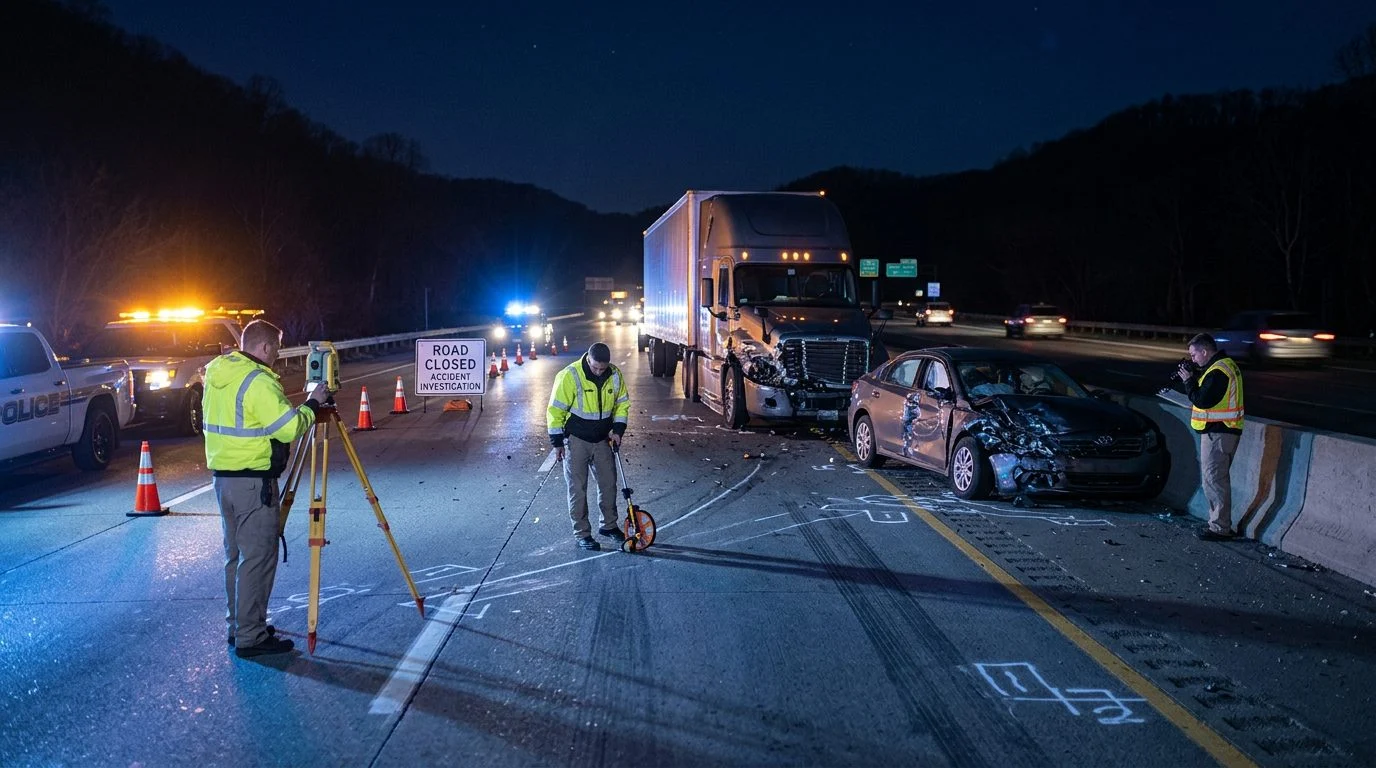
Records that may be relevant include the crash report, witness statements, photos, medical and medical examiner or coroner records, and vehicle and maintenance records for commercial trucks. None of these decides a case on its own. Each one matters only to the extent it shows what happened.
Under W. Va. Code § 55-7-13a, “comparative fault” means the degree to which a person’s fault was a proximate cause of an alleged personal injury, death, or damage to property, expressed as a percentage, and fault is determined under section thirteen-c of that article. Under W. Va. Code § 55-7-13c, fault charged to a plaintiff generally does not bar recovery unless that fault is greater than the combined fault of all other persons. When it does not bar recovery, it generally reduces recovery in proportion to the plaintiff’s fault. Exceptions may apply, and the result depends on the facts of each case.
Insurance policy terms and available coverage can also matter. These vary by policy and by the parties involved, so they are generally reviewed case by case.
Is It Better to Sue or Settle?
Some claims may be resolved through negotiation, while others may require a lawsuit. The better path generally depends on the facts, the evidence, and what the family hopes to accomplish.
Under W. Va. Code § 55-7-7, the personal representative may compromise a wrongful death claim before or after a lawsuit is filed. The court generally must approve the compromise and distribute the amount. This is a legal step, so families should understand what they are agreeing to before anything is signed.
No single approach generally leads to a particular result. Settling and filing suit each carry tradeoffs in time, risk, and control. Those tradeoffs look different for each family.
A settlement amount cannot be predicted from general information. Each claim depends on its own facts, so this page does not offer figures or ranges.
Have questions about what happened?
Ask our team directly. The first conversation is free, confidential, and there is no obligation to continue.
Timing, Deadlines, and Questions to Settle Early
Legal deadlines generally apply to wrongful death claims, and missing one may affect the ability to sue. Exceptions may apply depending on the facts.
Under W. Va. Code § 55-7-6, a wrongful death action generally must be commenced within two years after the death, subject to other provisions of the statute. Because exceptions may apply, families should not assume a particular date without reviewing their facts.
How long a claim takes is variable. It depends on the facts, the parties, and the court’s schedule. No timeline can be predicted from general information.
Questions about cost often come up early. For general information about the costs a family may face, read who pays for a wrongful death lawsuit. Details depend on the case. Caution about what you say to others also matters while a family is still deciding. The page on statements made after a crash covers those points.

Steps to Consider While You Are Still Deciding
Keeping records is generally a useful first step while a family decides what to do. Gather the crash report, medical bills, funeral receipts, photos, and any messages or notes about the crash. These may be relevant depending on the facts.
Write down dates, times, and details while memory is fresh. Note who was at the scene and what was said. Notes made close to the event may help later, though their use depends on the case.
Be careful about statements on fault. Comments made to other drivers, insurers, or companies can have effects you may not expect. Think before you give a recorded statement or sign any document.
For an overview of how these claims generally move, read West Virginia wrongful death claims.
We serve Charleston and other West Virginia families.
Want to know where you stand?
Tell us what happened and our team will walk you through the options available to you, at no cost.