
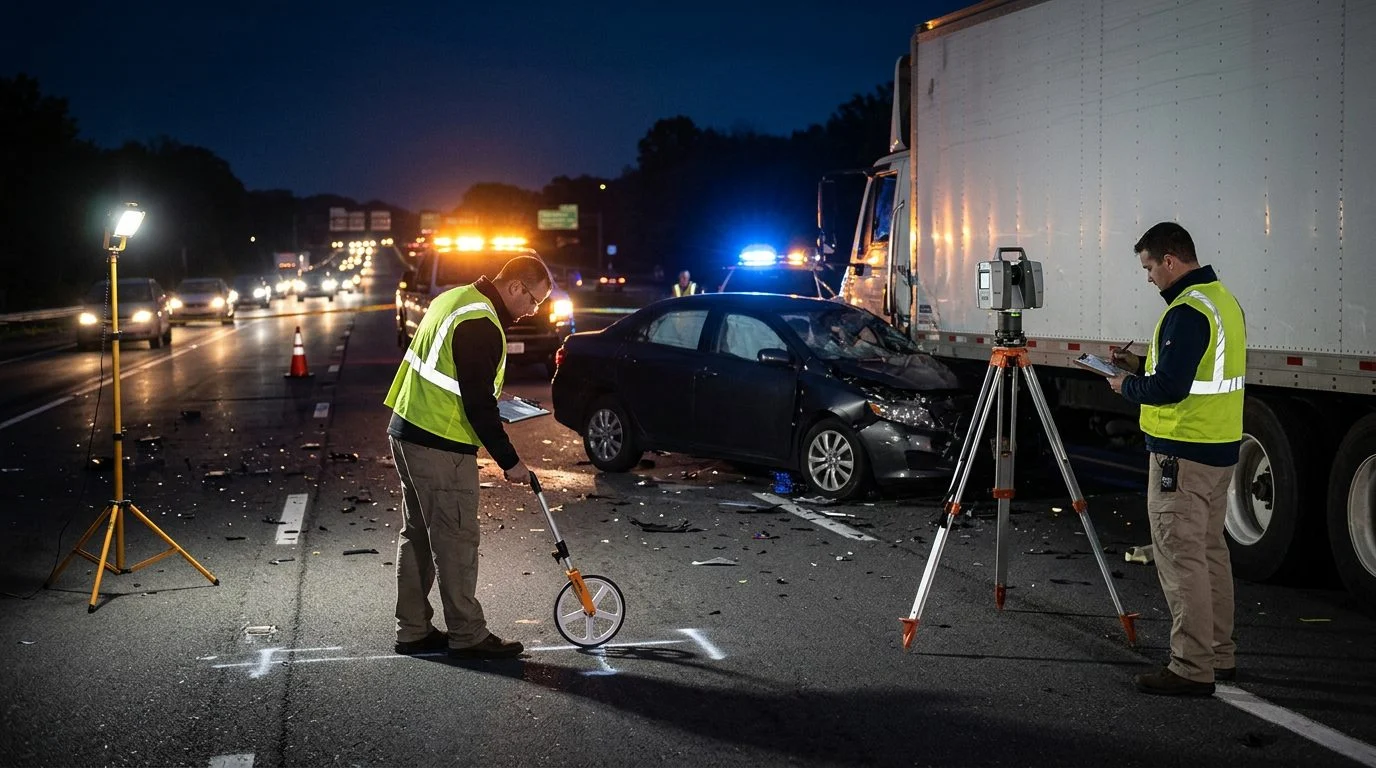
Wrongful Death
What You Need to File a Wrongful Death Lawsuit in West Virginia
Understanding the requirements, deadlines, and steps to pursue a claim when a loved one dies due to someone else's negligence.
Published October 06, 2026
What You Need to File a Wrongful Death Lawsuit in West Virginia
When a loved one dies in a car or truck crash caused by someone else’s negligence, West Virginia law generally makes the person whose wrongful act caused the death liable in an action for damages. Filing that claim requires meeting specific legal requirements, gathering the right evidence, and acting within the deadline set by law, which generally allows two years after the death, though exceptions may apply (W. Va. Code § 55-7-6). Understanding what you need—and what comes next—can help you move forward during an impossible time.
If you've lost someone in a crash and want to understand whether you may have a wrongful death claim, reach out to tell us what happened. Talk it through with our team — the first case review is free, confidential, and carries no obligation.
Who can file a wrongful death lawsuit in West Virginia
West Virginia law requires that a wrongful death action be brought by and in the name of the personal representative of the deceased person who has been duly appointed. The personal representative is usually the executor or administrator of the deceased’s estate, appointed through probate court.
This doesn’t mean only one person can benefit from the claim. Under W. Va. Code § 55-7-6, damages may be distributed to the surviving spouse, children (including adopted and stepchildren), brothers, sisters, parents, any persons who were financially dependent on the deceased at the time of death, and other persons who would otherwise be equitably entitled to share in the distribution. If there’s no surviving family, damages go to whoever the deceased named in a will or, if there’s no will, according to West Virginia’s laws of descent and distribution.
The key requirement: someone must be formally appointed as the personal representative before the claim can be filed. This is a legal step that happens in probate court and is necessary even if the family members agree on who should represent them.
What are the typical grounds for a wrongful death lawsuit
In car and truck crashes, grounds for a wrongful death claim typically include:
- Reckless or negligent driving: speeding, running red lights, failing to yield, or driving without attention
- Impaired driving: West Virginia law generally makes each defendant liable only for its share of fault, but a separate provision applies to defendants whose impaired driving caused the damages, and joint liability may apply to two or more defendants who consciously conspire and deliberately pursue a common plan to commit a tortious act, which can affect how the family pursues recovery
- Commercial vehicle violations: failure to maintain a truck, violation of federal trucking regulations, or negligent hiring or supervision by a trucking company
- Intentional or criminal conduct: deliberately dangerous behavior or criminal acts that cause death
The defendant’s conduct must have directly caused the fatal injury. If the crash happened because of road conditions, weather, or the deceased’s own actions, the claim becomes more complex—but West Virginia’s comparative fault rules may still allow recovery in some cases.
Documentation and evidence you’ll need
To file a wrongful death claim and prove your case, you’ll need to gather and preserve several types of evidence:
Official records: – Death certificate issued by the state – Medical records and autopsy report showing the cause of death – Police accident report and any crash investigation findings
Evidence of the crash and negligence: – Witness statements from people present at the scene – Photographs or video of the accident scene, vehicle damage, and road conditions – Traffic citations or violations issued to the defendant – Evidence of the defendant’s impairment (if applicable)
Financial and relationship documentation: – Employment records and income documentation to establish economic loss – Proof of the relationship between the deceased and the person filing the claim – Funeral and burial expense receipts – Medical bills incurred before death
Expert evidence: – Medical expert reports linking the defendant’s conduct to the fatal injury – Accident reconstruction reports showing how the crash occurred and who was at fault
The sooner you gather and preserve this evidence, the better. Witness memories fade, physical evidence can be lost or destroyed, and video footage may be recorded over.
How do you prove wrongful death
Proving a wrongful death claim requires establishing four key elements:
1. Duty of care. The defendant owed a legal duty to the deceased. In a car crash, every driver owes a duty to follow traffic laws and drive safely.
2. Breach of duty. The defendant violated that duty through negligent or wrongful conduct. This might be speeding, running a red light, or driving impaired.
3. Causation. The breach directly caused the fatal injury. Medical evidence and accident reconstruction often establish this link.
4. Damages. The death and resulting harm to the family are proven with credible evidence—medical records, financial documents, and testimony.
The burden of proof in a civil wrongful death case is lower than in a criminal case. You must prove your claim by a “preponderance of the evidence,” meaning it’s more likely than not that the defendant caused the death. Expert witnesses—medical doctors, accident reconstructionists, and economists—often testify to establish these elements.
Not sure what your next step is?
Talk it through with our team — the first case review is free, confidential, and carries no obligation.
Statute of limitations for wrongful death in West Virginia
A wrongful death action in West Virginia must be brought within two years after the death of the deceased person. This deadline is generally strict, and exceptions may apply. If you miss it, you lose the right to pursue the claim entirely, with very limited exceptions.
The two-year clock starts running on the date of death, not the date of the crash. If someone dies three months after a crash, the deadline runs from the death date.
Acting quickly is critical. Early action preserves evidence, keeps witness memories fresh, and gives you time to investigate the crash thoroughly before filing suit.
Is it hard to prove a wrongful death lawsuit
The difficulty of proving a wrongful death claim depends on the facts of the crash. Some cases are straightforward: a driver running a red light and hitting a vehicle in the intersection, or a drunk driver causing a fatal collision. In these situations, establishing liability may be more straightforward, depending on the facts.
Other cases are more complex. If multiple vehicles were involved, if the deceased was partially at fault, or if the cause of death is disputed, the case requires more investigation and expert testimony.
West Virginia follows a modified comparative fault rule. You can recover damages even if the deceased was partially at fault—but only if the deceased’s fault was not greater than the combined fault of all other parties. If the deceased was more at fault than everyone else combined, recovery is barred entirely.
Insurance companies and defendants often contest wrongful death claims vigorously. They may argue the defendant wasn’t negligent, that someone else caused the crash, or that the deceased’s own actions contributed to the death. Having an attorney review the facts early can help you understand the strength of your case and what evidence you need to gather.
What damages can be recovered in a wrongful death lawsuit
These damages fall into two categories:
Economic damages include medical bills before death, funeral and burial costs, and the deceased’s lost wages and earning potential over their lifetime.
Non-economic damages include the family’s emotional pain, loss of companionship, loss of parental guidance, and the loss of the comfort and advice the deceased would have provided.
The amount of damages varies widely. A young person with high earning potential generates larger economic damages than someone retired. A parent’s death affects children differently than a spouse’s death. The jury (or judge, if there’s no jury) decides what is “fair and just” based on the specific circumstances.
Next steps if you’ve lost a loved one in a crash
If someone you love died in a car or truck crash in West Virginia, take these steps:
Preserve evidence. Gather all documents related to the death and the accident. Don’t discard anything—medical records, insurance papers, photos, messages.
Avoid public discussion. Don’t post about the crash on social media or discuss details with anyone other than your attorney. Anything you say can be used against your claim.
Don’t sign anything. Never sign a settlement offer, release, or any agreement without legal advice. Insurance companies may contact you quickly with lowball offers.
Get legal advice early. An attorney who handles wrongful death claims can review the facts, explain your options, and advise you on whether you have a viable claim and what to expect.
The loss of a family member is devastating. You don’t have to navigate the legal process alone or make decisions under pressure. Understanding what you need to file a wrongful death claim is the first step toward holding the responsible party accountable and securing compensation for your family.
Have questions about what happened?
Ask our team directly. The first conversation is free, confidential, and there is no obligation to continue.
FAQ
Who is considered the personal representative in a wrongful death case?
The personal representative is the executor or administrator of the deceased’s estate, appointed by probate court. If there’s no will, the court appoints someone—usually a close family member.
Can I file a wrongful death lawsuit if I’m not a spouse or child?
Yes, if you were financially dependent on the deceased or equitably entitled to share in the wrongful-death damages under W. Va. Code § 55-7-6. An attorney can advise whether you qualify.
What if the defendant was driving under the influence?
How long does it take to resolve a wrongful death case?
It depends on the complexity of the case, whether it settles or goes to trial, and court schedules. Simple cases may resolve in months; complex litigation can take years.
Can I recover if the deceased was partially at fault?
Yes, under West Virginia’s modified comparative fault rule—as long as the deceased’s fault was not greater than the combined fault of all other parties ([W (W. Va. Code § 55-7-13c). Va.
What if the at-fault driver doesn’t have insurance?
You may be able to pursue an uninsured motorist claim under your own auto policy or pursue a judgment against the driver personally, though collecting may be difficult.
If you’ve lost someone in a crash and want to understand whether you may have a wrongful death claim, reach out to tell us what happened. We can review your situation and explain your options during a free case review.