
Truck Crash Evidence | West Virginia
Your Truck May Have Recorded Answers After a Crash
A plain-language guide for West Virginia families and crash victims weighing what a heavy truck's onboard systems may hold.
Published November 27, 2026
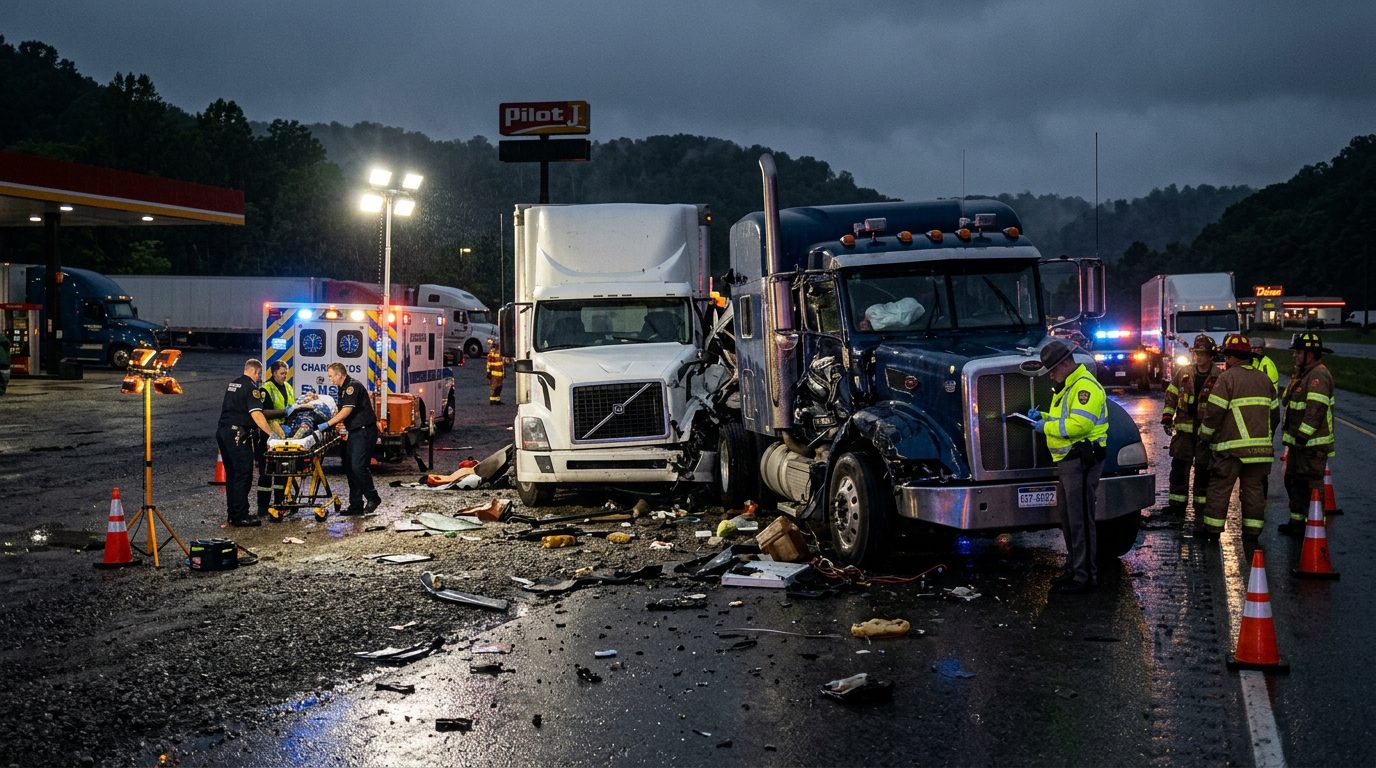
If a heavy truck was part of your crash in West Virginia, you may be wondering what the truck itself recorded. Truck engine control module data, along with brake data, may show how the truck was operating before and during the crash. That information can be overwritten or lost, so timing matters.
What Engine and Brake Data Means in a Heavy Truck
Engine and brake data is the operating information a truck’s onboard computers may store. The engine control module, or ECM, runs the engine. Brake control modules manage parts of the braking system. Together, these computers can record how the truck was being driven.
According to NHTSA’s event data recorder information, event data recorders may preserve pre-crash, crash, driver-input, and post-crash information as evidence. Commonly discussed fields in truck cases include vehicle speed, throttle position, and brake application.
Not every truck stores the same data. The fields available depend on the make, model, and configuration of the truck. Whether a particular record exists is a question to answer for that specific vehicle, not a general rule that applies to every rig.
Reading this information usually requires access to the truck and the right download tools. That is one reason early action matters, which the next sections explain.
If a truck crash left your family with hard questions and the truck may already be out of service, you do not have to face the records alone. Talk it through with Big Bubba — the first case review is free, confidential, and carries no obligation.

Why This Data May Matter After a West Virginia Truck Crash
Engine and brake data may show how the truck was moving in the seconds before a crash, depending on the facts. It can help answer questions a crash scene often leaves open, such as how fast the truck was going and when the brakes were applied.
Data rarely works alone. Investigators read it alongside the police report, photographs, witness accounts, skid marks, and the layout of the road. Under the West Virginia crash report statute, the investigating officer must prepare a crash report within 24 hours after completing the investigation of a crash involving injury, death, or total property damage of $1,000 or more.
Records can support an account, or they can conflict with it. A driver’s memory, a witness’s view, and the module data may not line up. A qualified review is needed to know which pieces fit together and which do not.
West Virginia law addresses the employer of a commercial truck driver in personal injury and wrongful death suits. Records about the company’s operations, not just the truck, can matter for that reason. The FMCSA large truck crash facts publish national figures, but those national numbers do not show what one truck recorded.
Why Timing Matters: How Onboard Data Can Be Lost
Onboard truck data can be overwritten, stop recording, or disappear when a truck is repaired, moved, or has a module replaced. Those steps can happen soon after a serious crash, when the truck is towed, stored, repaired, or sold.
A module may keep recording only while it has power. Cutting power, replacing a module, or clearing its memory can change what remains. Each of these steps can change what is still available to review.
Federal rules show that records may be kept in more than one form. Under the federal records preservation rule, records may be preserved by any technology that accurately reflects the information and stays accessible for later reference. Copies can work, but only if they are accurate.
The federal driver record rule says a motor carrier must not alter or erase the original hours-of-service information an ELD collects.
A written request sent early is generally the clearest way to ask a trucking company to keep its records. It also creates a record of what was asked and when.
Other Trucking Records That May Sit Alongside Engine and Brake Data
Electronic logging devices and driver hours records may show driving time and rest periods. The exact records depend on the carrier’s systems and the trip.
Under the federal ELD data rule, an electronic logging device (ELD) automatically records date, time, commercial motor vehicle geographic location information, engine hours, vehicle miles, driver or authenticated user identification data, vehicle identification data, and motor carrier identification data, though during a period of authorized personal use the engine hours and vehicle miles are left blank and location is recorded with a single decimal point resolution (approximately within a 10-mile radius). When a truck is moving and there has been no duty status change or other recording in the past hour, the device records an intermediate entry.
Retention periods differ. Carriers must keep records of duty status and supporting documents for at least 6 months from receipt, under the federal hours record rule. Under the federal inspection report rule, motor carriers must keep driver vehicle inspection reports for three months from the date the written report was prepared, but the rule does not apply to a private motor carrier of passengers (nonbusiness), a driveaway-towaway operation, or a motor carrier operating only one commercial motor vehicle.
These periods are set by each rule; the federal inspection report rule requires motor carriers to maintain driver vehicle inspection reports for three months from the date the written report was prepared. Under the federal records retention rule, companies may destroy records at the discretion of each company’s management after the required retention periods end, but this does not excuse compliance with the lawful requirements of any other governmental body that prescribes longer retention periods. Waiting can put older records at risk.
Maintenance logs, dispatch messages, bills of lading, and cargo paperwork may also be relevant. These records may be held by the trucking company, its insurer, or a third-party vendor. Written requests are often the clearest way to ask for them.
Steps Injured People and Families Can Take Now
Keeping good records and being careful about what you sign or say are the most useful early steps. Start with what you already have.
Keep the crash report number, photos, medical records, bills, and any written messages from the trucking company or insurer. Write down what you remember about the truck, the company name on the trailer, the driver, and the crash while details are still fresh.
Under the West Virginia crash report statute, within 24 hours of a motor vehicle crash the investigating officer must provide owner, operator, and insurance information upon request, at no cost, to the other parties and their insurance agents, whether or not the accident report has been completed. The police agency may charge a fee for a copy of the full report, so confirm its current process before you ask.
Under the West Virginia settlement contact statute, certain settlement contacts are restricted during the first 20 days after an injury. The restriction applies when the injured person is a hospital inpatient or partially or totally unable to engage in his or her usual trade, profession or occupation. Before you give a recorded statement or sign a release, understand exactly what is being requested.
Talking With the Firm About Your Truck Crash
Big Bubba Injury Law handles car accidents, truck accidents, commercial vehicle accidents, catastrophic injuries, traumatic brain injury, spinal cord injury, and wrongful death claims in West Virginia. We serve injury victims across the state, including Charleston, Huntington, and Morgantown.
Our truck accident page covers the broader process of a West Virginia truck crash claim, and it is a useful next read after this one. Families dealing with a death or a serious injury often need to sort out many questions at once.
If a truck crash left your family with hard questions and the truck may already be out of service, the records above may be at risk. Reach out to us for a free case review and we can talk through what your family is facing.