
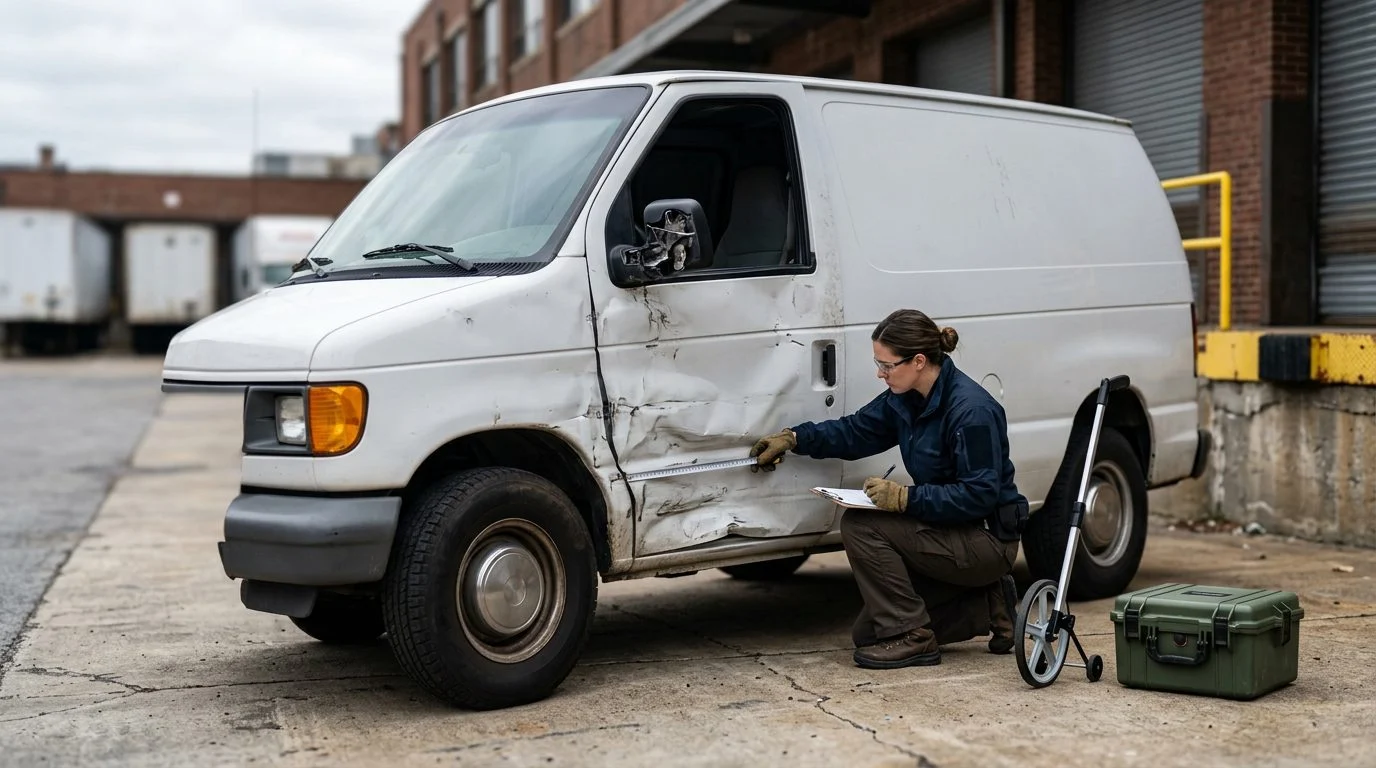
Truck Accidents | West Virginia
When a Driver Works for a Trucking Company, Who May Be Responsible?
Crashes involving commercial trucks can raise questions about the driver, the company that employs them, and others. Tell us what happened and we can talk through how it may apply to your situation.
Published November 3, 2026
Questions about trucking company responsibility for driver West Virginia crashes come up often after a serious collision. In many cases, the company may share responsibility, but the facts of the crash decide whether it does. A trucking company may answer for a driver’s crash in two main ways. The driver may have been working for it, or the company’s own decisions may have contributed to the crash. This page explains both routes in plain language, along with the rules and records that often matter.
The Short Answer: A Trucking Company May Be Responsible
Yes, a trucking company may be responsible for a crash involving its driver. Whether it is depends on the facts and on how the company is tied to the truck.
Responsibility usually comes from one of two directions. The first is the company’s legal answerability for what its driver did on the job. The second is the company’s own conduct, such as how it hired, trained, or dispatched the driver. Naming only the driver often leaves out part of the picture. The company, the truck’s owner, and other businesses in the delivery chain may each have a role to examine.
It includes the owner of the truck, the driver’s employer, and any entity that leases, rents, or otherwise holds legal control over the vehicle or operator. W. Va. Code § 55-7-32 applies only to claims arising after its July 1, 2024 effective date.
If a commercial truck crash hurt you or someone in your family, you may have a claim against the company behind the driver, and we can talk it through with you. Talk it through with Big Bubba — the first case review is free, confidential, and carries no obligation.
When the Driver Was Working for the Company
Under the common legal rule called respondeat superior, an employer may answer for harm caused by an employee acting within the scope of the job. This rule is a basic starting point for many truck claims.
Trucking company responsibility for driver West Virginia claims often turns on this scope question.
The scope question depends on details. Was the driver on a dispatched run? Was the truck hauling company freight? Was the driver following company instructions? Each answer can shape who may be liable.
Driver status matters too. Whether a driver is an employee or an independent contractor can change whether this principle applies. That question is often disputed in commercial truck claims.
Direct Claims Against the Trucking Company
A company may also face its own claims. These claims are separate from what its driver did, and they focus on the company’s decisions.
Claims about how a company hired, trained, supervised, or retained a driver may raise questions about what the company knew or should have known. For example, a claim may ask whether the company checked a driver’s record before putting that driver on the road. It may also ask whether the company kept a driver it had reason to question.
Dispatch and scheduling practices can also be examined. If a schedule pushed a driver past legal driving limits, that may be relevant to the crash. Maintenance decisions matter as well. Brakes, tires, lights, and steering are parts a company must keep in safe condition. A failure in any of them may be a possible contributing cause.
Federal and State Trucking Rules That May Be Relevant
Federal safety rules for commercial trucks may shape how a crash case is reviewed. These rules are a common source of evidence in truck claims.
Federal hours-of-service rules limit how long a property-carrying driver may drive. Under 49 C.F.R. § 395.3, a driver generally may not drive after 14 consecutive hours that began with coming on duty after 10 consecutive hours off duty. Within that period, the driver may drive a total of 11 hours. Weekly on-duty limits also apply.
How much weight they carry depends on how the rule applies to the facts of the crash.
Other federal rules cover vehicle upkeep. Under 49 C.F.R. § 396.3, a motor carrier must systematically inspect, repair, and maintain its vehicles. The parts must be in safe and proper operating condition at all times. Which rules apply depends on the carrier’s operations, cargo, and routes.
Leased Trucks, Owner-Operators, and Other Parties
More than one company can be a responsible party when a truck is leased, owned by someone else, or hauled under a contract.
Federal law may require written leasing arrangements. Under 49 U.S.C. § 14102, a carrier that uses trucks it does not own to transport property under an arrangement with another party may be required to make the arrangement in writing. It may also need to carry a copy in each truck, obtain liability and cargo insurance, and be responsible for complying with safety rules as if it owned them.
The truck’s owner, the carrier shown on the registration or placard, a broker, a shipper, or a maintenance contractor may each have a role. An owner-operator may also drive under another carrier’s authority. Identifying every party early matters, because insurance and responsibility can be divided among several companies.
Evidence That May Show Company Responsibility
The records a trucking company keeps often show what happened before a crash. That is why these records matter early.
Electronic logging device data, trip records, and dispatch messages may show where a driver was and how long he or she had been driving. Carriers must keep a driver qualification file for each driver they employ. A carrier also must request the driver’s motor vehicle record for the prior three years within 30 days after employment begins, under 49 C.F.R. § 391.23.
Maintenance records have a limited retention period. Under 49 C.F.R. § 396.3, a carrier keeps them for one year where the vehicle is housed or maintained, and for six months after the vehicle leaves its control. Because some records are kept for limited periods, it may help to act early.
Not sure what your next step is?
Talk it through with Big Bubba — the first case review is free, confidential, and carries no obligation.
Filing Deadlines and Comparative Fault in West Virginia
West Virginia generally allows two years to file a personal injury claim, and exceptions may apply. Under W. Va. Code § 55-2-12, a personal injury action generally must be brought within two years after the right to bring it accrues.
For a wrongful death claim, W. Va. Code § 55-7-6 generally requires the action to be commenced within two years after the death. Under W. Va. Code § 55-7-6(d), a wrongful death action shall be commenced within two years after the death of the deceased person, subject to the provisions of section eighteen, article two, chapter fifty-five, and exceptions may apply. The action is brought by the decedent’s personal representative. Families should note that this clock runs from the date of death.
West Virginia applies comparative fault, which expresses each person’s share of fault as a percentage, and liability is allocated in direct proportion to that percentage (W. Va. Code § 55-7-13a). Under W. Va. Code § 55-7-13c, fault chargeable to the injured person does not bar recovery unless that person’s fault is greater than the combined fault of all other persons responsible. If it is less, recovery is reduced in proportion to that person’s share of fault.
Common Questions
Can a trucking company be sued if its driver caused a crash?
A trucking company may be a defendant when its driver was working for it or when its own decisions contributed to the crash. Whether it is depends on the facts.
How long do I have to file a truck accident lawsuit in West Virginia?
West Virginia generally allows two years for a personal injury claim, and exceptions may apply. Wrongful death claims generally must be commenced within two years after the death (W. Va. Code § 55-7-6).
What is modified comparative fault?
It is a rule that reduces recovery by the injured person’s share of fault (W. Va. Code § 55-7-13c). It may bar recovery only if that share is greater than everyone else’s combined fault. W. Va. Code § 55-7-13c reads: “(c) Any fault chargeable to the plaintiff shall not bar recovery by the plaintiff unless the plaintiff’s fault is greater than the combined fault of all other persons responsible for the total amount of damages, if any, to be awarded.”
Can a family sue after a fatal truck crash?
Under W. Va. Code § 55-7-6, a wrongful death action is generally brought by the decedent’s personal representative. Damages may be distributed to surviving family members.

What to Know After a Truck Crash
If a commercial truck crash hurt you or someone you love, the company behind the driver may be part of your situation. Start by gathering what you already have. Bring any crash report, photos, medical records, and the name of the company printed on the cab or trailer.
We handle truck accident claims and wrongful death claims in West Virginia. You can request a free case review, which is confidential and carries no obligation to continue. Contact the firm to share what happened and to look at the facts of your crash together.