
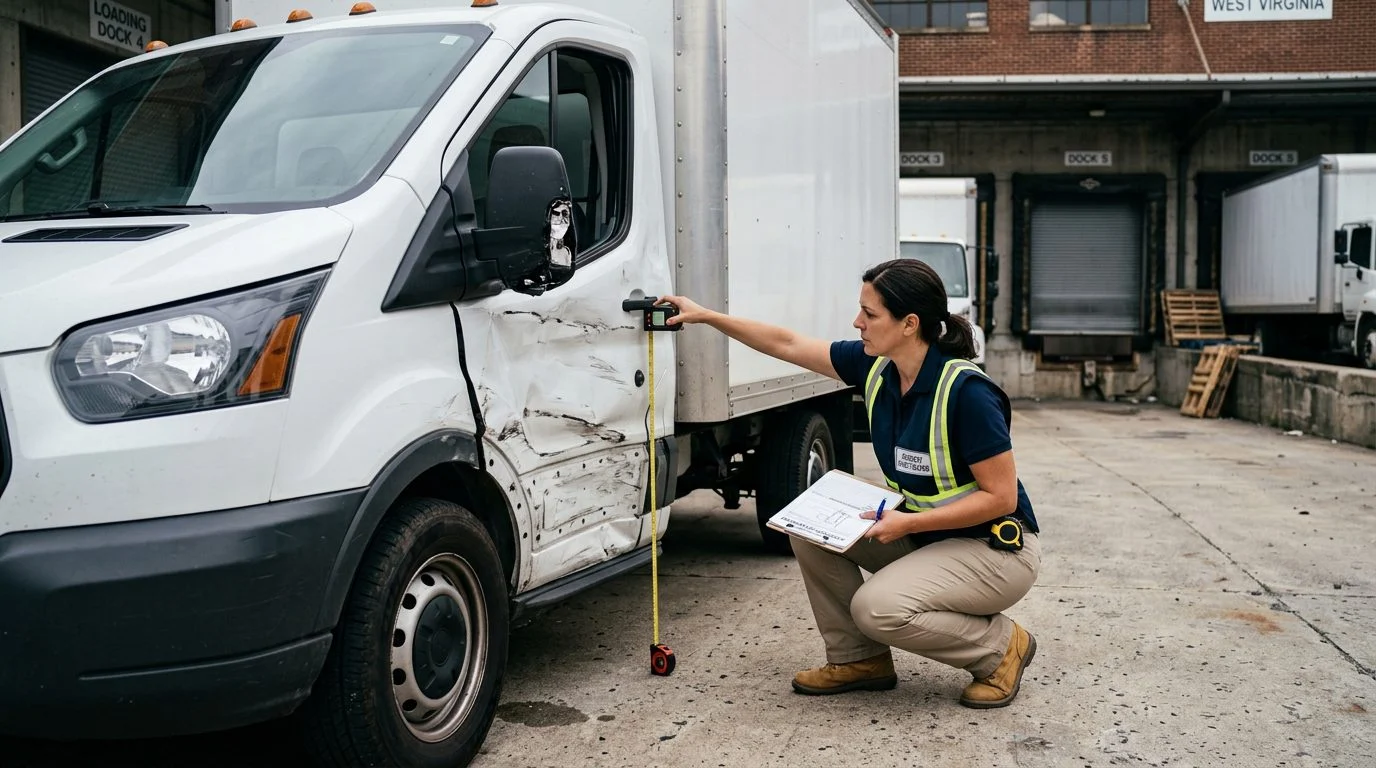
Truck and car crash claims in West Virginia
Trucking Company or Driver: Which Insurance Might Respond?
After a crash involving a commercial truck, several policies may be in play. Knowing which questions to ask early can help you understand your options.
Published November 10, 2026
After a truck crash in West Virginia, the question of who pays often starts with insurance, and the answer may involve more than one company. A trucking company, the driver, and the truck’s owner may each carry a policy, and any of them could be the one that responds.
A trucking company vs driver insurance comparison in West Virginia comes down to three facts: who employed the driver, who owned the truck, and why the truck was on the road. Those facts shape which policy may apply first. This page explains the options side by side.
Why the Insurance Question Comes Up After a Truck Crash
A commercial truck crash can involve several parties, and each one may have its own insurance.
The driver, the motor carrier (the company that operates the truck), the truck’s owner, and sometimes a separate leasing company may all play a role. Each may carry a different policy with different terms. That’s why an injured person often doesn’t know at first which insurer to look to.
Insurance questions also get tangled because the parties may be different people. A driver may work for one company, drive a truck owned by another, and carry a personal policy of their own. Each arrangement points toward a different policy.
This page compares the three policy types that may apply to a commercial truck crash. It shows how those policies can differ and which situations point toward each one.
If you can't tell which insurance policy may answer for your injuries after a truck crash, we invite you to talk with us about a free case review. Talk it through with Big Bubba — the first case review is free, confidential, and carries no obligation.

The Three Policies That May Apply
Three kinds of insurance may respond to a commercial truck crash: the carrier’s coverage, the driver’s personal policy, and the vehicle owner’s policy.
- Motor carrier liability coverage. This is the policy the trucking company carries for its operations. It may extend to drivers the company employs or authorizes. Federal rules require motor carriers to have minimum financial responsibility in effect before they operate. See 49 C.F.R. § 387.7.
- The driver’s personal auto policy. This policy is written for personal vehicles. It may or may not respond when the driver is working in a commercial truck, so the policy wording matters.
- The vehicle owner’s policy. This coverage is tied to the truck itself. The owner may be a company, a leasing firm, or an individual who is neither the carrier nor the driver.
A single crash can involve more than one of these policies at once. West Virginia’s commercial vehicle statute defines an “employer defendant” broadly. The definition covers the truck’s owner, the driver’s employer, and any entity that holds legal control over the truck or its operator. See W. Va. Code § 55-7-32.
Side-by-Side: How the Policies Differ
Carrier coverage is usually written for commercial trucking. A personal auto policy is usually written for everyday driving. The table shows the main differences.
| Carrier liability | Driver’s personal auto | Vehicle owner’s | |
|---|---|---|---|
| Whose policy | The trucking company | The driver | The truck’s owner |
| Written for | Company trucking operations | Personal vehicles | The truck itself |
| Who it may protect | Drivers the company employs or authorizes | The driver, depending on policy wording | People operating the truck, depending on policy wording |
| When it may apply | Work for the carrier | Personal driving, and work only if the policy allows | Crashes involving the owned truck |
| Common dispute points | Who controlled the truck and the scope of coverage | Business-use exclusions | Whether the driver was an authorized user |
Owner policies may focus on the vehicle. They may not cover the driver’s own conduct in the same way. Policy language and limits also vary from one insurer to the next. The full policy and its declarations page, which lists coverage and limits, control what applies.
How Coverage Can Differ in Practice
Coverage often shifts with the setup behind the trip, such as a lease, a contract, or the purpose of the drive.
- Leased trucks. A lease can shape which policy responds. 49 C.F.R. § 376.12 reads: “If the lessor purchases any insurance coverage for the operation of the leased equipment from or through the authorized carrier.” Federal rules require a lease to state compensation clearly. They also require it to say who handles items such as fuel, tolls, and permits. See 49 C.F.R. § 376.12.
- Owner-operators. A driver who owns the truck may carry the vehicle policy and their own liability coverage. Those policies may have different scopes. Federal law lets the Secretary of Transportation require a carrier that uses trucks it does not own to transport property under an arrangement with another party to obtain liability insurance on them. See 49 U.S.C. § 14102. See 49 U.S.C. § 14102.
- Company trucks driven by employees. The carrier’s policy may be the central source. The driver’s own policy may still be relevant, depending on the facts.
- Personal use or off-route driving. A truck used outside its work purpose may raise questions about which policy applies at all.
Which Situations Point to Which Policy
Your starting point often depends on the job the driver was doing when the crash happened.
- Driver on a delivery for a trucking company: The carrier’s liability coverage is often the first policy to examine. The driver’s own policy may also be relevant.
- Owner-operator hauling under a contract: The owner-operator’s coverage and the contracting company’s policy may both matter. The written contract or lease often shapes which one responds.
- Driver in a personal vehicle who was not working: The driver’s personal auto policy is more likely the source to examine.
- Truck used outside its work purpose: The carrier’s coverage may not reach the trip, so the reason for the drive needs a close look.
If another driver was at fault, that driver’s insurer may also be part of the picture. Under W. Va. Code § 55-7-13c, each defendant’s share of compensatory damages generally follows that defendant’s percentage of fault, but exceptions apply: joint liability may be imposed on two or more defendants who consciously conspire and deliberately pursue a common plan or design to commit a tortious act or omission, and a defendant shall be jointly and severally liable when that defendant’s driving under the influence, criminal conduct, or illegal disposal of hazardous waste is a proximate cause of the damages.
Why Coverage Questions Can Become Disputes and What Records Matter
Coverage questions often become disputes over one point: which policy applied at the moment of the crash.
Some insurers may dispute a claim. They may argue about which policy applies, the scope of coverage, or who was responsible for the truck at that time.
Records that may matter include the crash report, the policy and declarations pages, any lease or contract, and medical records. The medical records request guide explains how to gather medical documentation in West Virginia.
Federal rules may also matter. Proof of minimum financial responsibility is public information and must be produced on reasonable request. See 49 C.F.R. § 387.7. Interstate carriers may also need a USDOT number.
Common Questions
Does a trucking company’s insurance cover its driver?
It may, when the driver was operating the truck for that company’s business. West Virginia’s statute treats the driver’s employer as a possible employer defendant.
Can a driver’s personal auto policy apply to a truck crash?
It may, depending on the policy wording and what the driver was doing. Personal policies may not cover business driving.
Does West Virginia require auto insurance?
Yes. Insurance coverage can be an important part of a car accident claim.
Not sure what your next step is?
Talk it through with Big Bubba — the first case review is free, confidential, and carries no obligation.
Understanding Your Own Situation
If you were hurt in a truck crash and can’t tell which insurer may answer, you don’t have to sort it out alone.
Picture a delivery truck drifting into your lane on a West Virginia highway. The company, the driver, and the owner may each have a policy. You may have no idea which one to examine first. That uncertainty is hard to carry while you’re still recovering.
We handle truck accident claims and serve injury victims across West Virginia, including Charleston and Huntington. If you can’t tell which policy may apply to your crash, reach out to us to request a free case review.